


How to Use the Identity Theft and Assumption Deterrence Act
Identity theft costs Americans over $20 billion annually, and victims often feel lost about their legal options. The Identity Theft and Assumption Deterrence Act gives you concrete tools to fight back and recover damages.
We at Hays Cauley, P.C. help South Carolina residents navigate this federal law and hold identity thieves accountable. This guide walks you through filing claims, gathering evidence, and understanding the compensation you can recover.
What the Identity Theft and Assumption Deterrence Act Actually Protects
The Identity Theft and Assumption Deterrence Act, enacted in 1998, created the first federal framework to make identity theft a crime and give victims a path to recover damages. The law defines identity theft as knowingly using or transferring someone else’s means of identification to commit or help with unlawful activity. This covers Social Security numbers, driver’s licenses, dates of birth, government IDs, biometrics, credit card numbers, and cellular phone electronic serial numbers.
How the Act Handles Stacked Sentences
The Act applies when identity theft accompanies other federal crimes like wire fraud, mail fraud, or credit card fraud. Courts can stack sentences to 30 years or more in these cases. Federal agencies including the FBI, U.S. Secret Service, and U.S. Postal Inspection Service investigate these cases, often involving interstate activity that triggers federal jurisdiction. A conviction for basic identity theft carries up to 15 years in prison plus fines and forfeiture of property used in the crime.
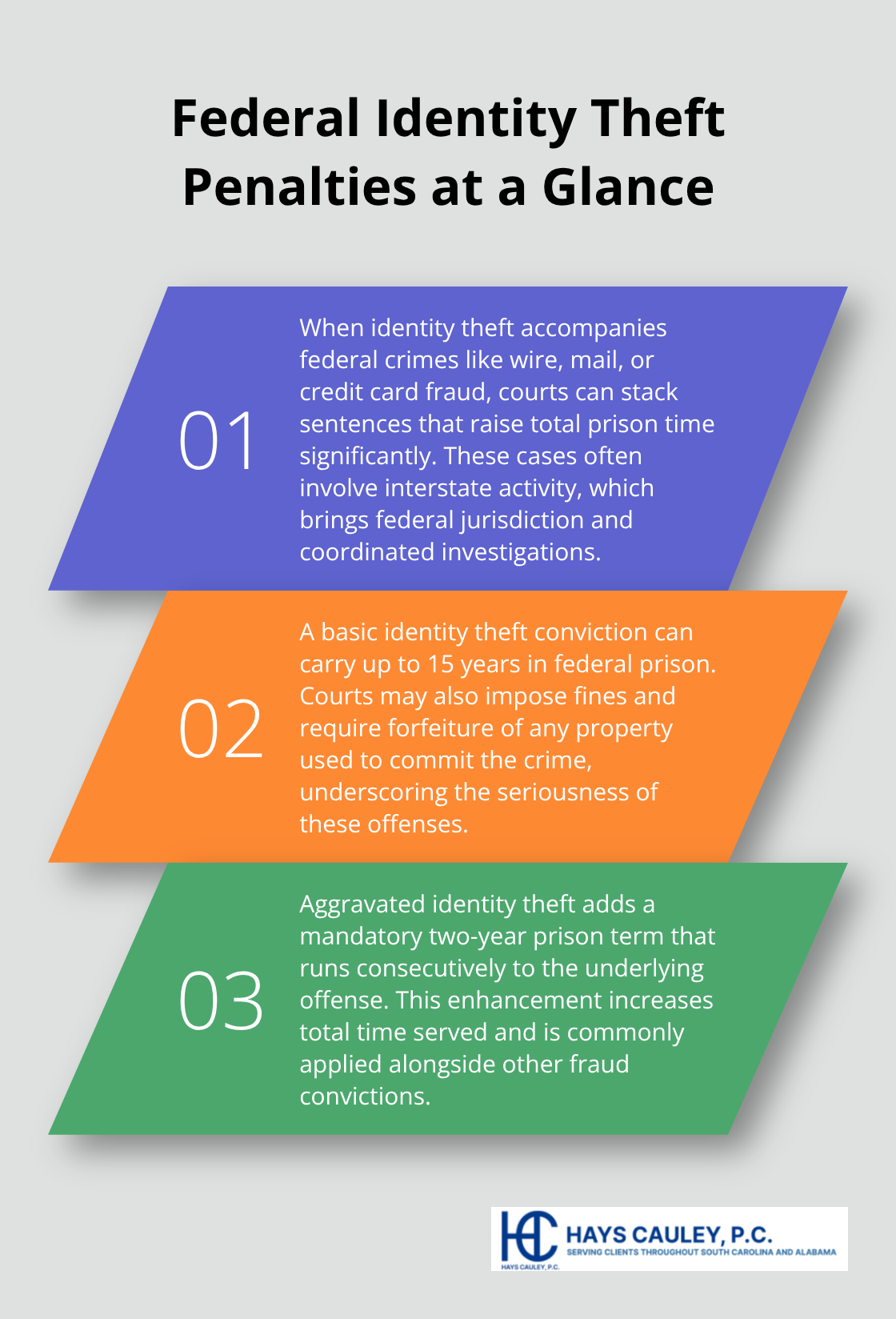
Aggravated identity theft, which occurs when identity theft accompanies certain other offenses, carries a mandatory two-year sentence that runs consecutively to the underlying offense.
Who Qualifies to File a Claim
You can file a claim if you are a victim of identity theft in South Carolina. The law defines victims broadly to include anyone whose means of identification was used without permission. You do not need to be a U.S. citizen to file, and you do not need to prove intent on the part of the thief beyond knowing use of your information.
What Courts Order as Restitution
Courts must order restitution to victims for direct losses, credit repair costs, attorney’s fees, and debts arising from the crime. The FBI recovered approximately 4.6 billion dollars and obtained restitution orders exceeding 78 billion dollars over a roughly five-year period ending in mid-2013, showing the scale at which courts enforce these remedies. In South Carolina, identity theft qualifies as a felony under both state and federal law, which strengthens enforcement and increases the possibility of criminal charges against offenders.
Understanding these protections sets the foundation for taking action. The next section walks you through the specific steps to file a claim and gather the documentation you need.
Steps to File a Claim Under the Identity Theft and Assumption Deterrence Act
Act Within 24 Hours of Discovery
Speed matters when identity theft strikes. Within the first 24 hours, you must freeze accounts with affected financial institutions, place a fraud alert with one of the three major credit bureaus-Experian, TransUnion, or Equifax-and pull your free credit reports from all three bureaus at annualcreditreport.com to identify fraudulent accounts and transactions. This immediate action stops new charges and signals creditors to verify your identity before opening additional accounts.

Document Every Detail
You must record everything from the moment you discover the theft: dates you noticed suspicious activity, account numbers involved, amounts stolen, and names of people you contacted. Keep records of phone calls, emails, letters sent, and fees paid for credit monitoring or fraud resolution services, since courts award restitution to cover these documented expenses. This paper trail becomes critical evidence when prosecutors pursue offenders and when you seek compensation.
File Your Federal Identity Theft Report
File an Identity Theft Report at IdentityTheft.gov to create a personalized recovery plan that creditors and law enforcement recognize. This federal resource, managed by the FTC, gives you a standardized document that accelerates the dispute process with credit bureaus and creditors. The report carries legal weight and streamlines your recovery across multiple agencies and financial institutions.
Report to Local Law Enforcement and Contact Creditors
File a police report in South Carolina and bring your FTC Identity Theft Report, government ID, proof of address, and copies of fraudulent statements or account notices. Request a copy of the police report for your records. Contact the fraud departments of each affected company-credit card issuers, banks, retailers, utilities-to freeze or close fraudulent accounts and stop new charges immediately. Each contact creates documentation that supports your claim.
Dispute Fraudulent Items and Monitor Progress
Dispute fraudulent items in writing with each credit bureau using copies of your FTC Identity Theft Report as evidence; bureaus must investigate within 30 days and remove items they cannot verify. The FTC’s centralized complaint system automatically routes your report to Equifax, Experian, and TransUnion, streamlining coordination among agencies. Work directly with creditors and bureaus to remove fraudulent information from your credit history and update your records. This systematic approach stops ongoing fraud, creates a paper trail for law enforcement, and establishes documented losses that support your restitution claim when offenders face prosecution.
Remedies and Damages Available Under the Identity Theft and Assumption Deterrence Act
Courts order restitution that covers far more than your direct financial losses. The FBI recovered approximately 4.6 billion dollars and obtained restitution orders exceeding 78 billion dollars over a roughly five-year period ending in mid-2013, demonstrating the substantial sums courts award to victims. Your restitution claim includes direct theft amounts, credit repair and monitoring costs, attorney’s fees you paid fighting fraudulent accounts, interest charges on accounts opened in your name, and the documented time you spent resolving the identity theft.
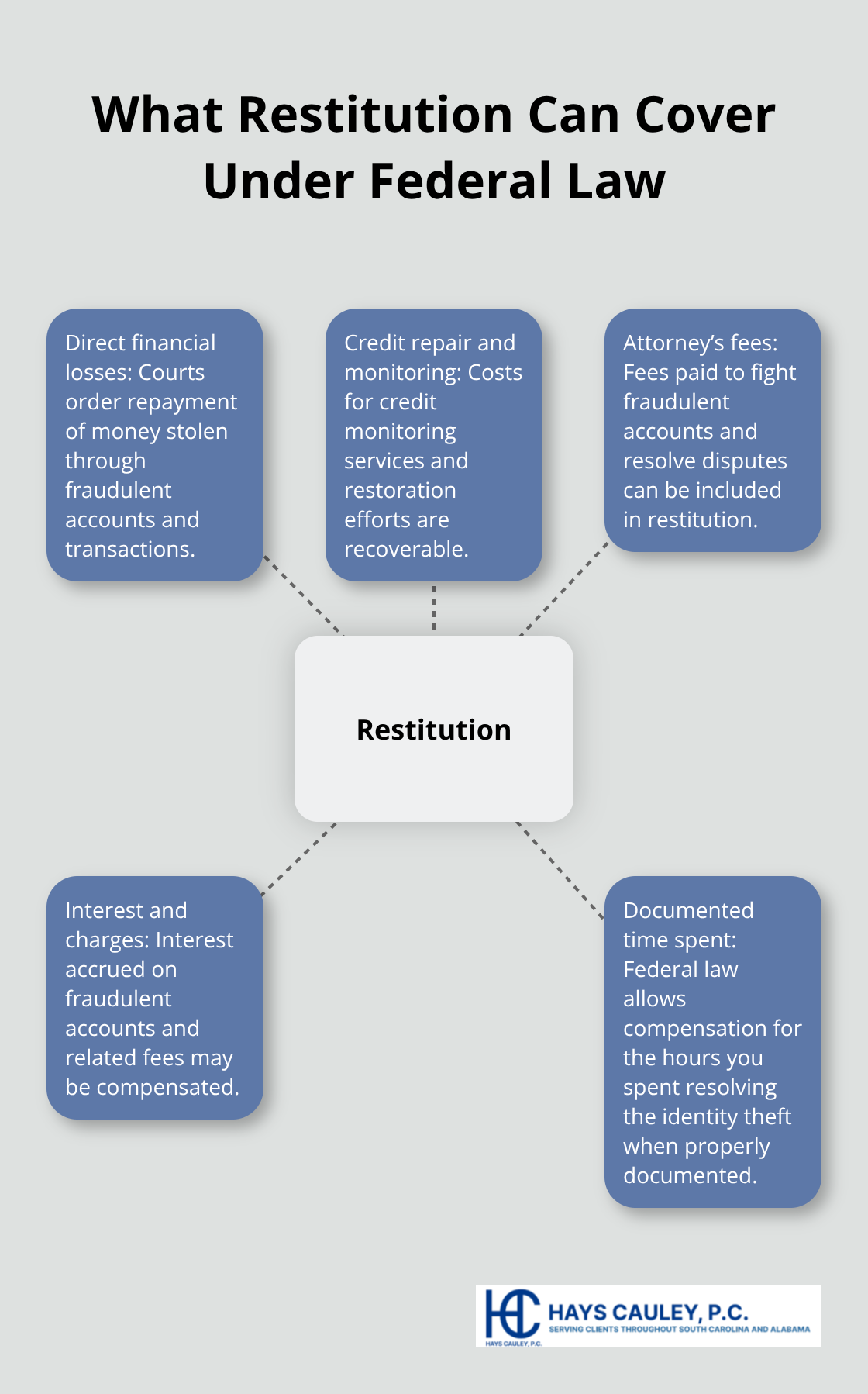
Every hour you spent on phone calls with creditors, every letter you mailed disputing fraudulent charges, and every credit monitoring subscription you purchased becomes part of your recovery calculation. Courts recognize that identity theft victims face real expenses beyond the stolen dollars themselves, and federal law mandates that offenders pay these costs back to you.
How Prosecutors Calculate Your Damages
Sentencing guidelines direct judges to calculate damages based on the number of victims affected, the number of identifiers stolen, and total financial losses incurred. When a thief uses your Social Security number, driver’s license, and credit card information, that counts as multiple means of identification, increasing both the criminal penalties and your potential restitution. Prosecutors present detailed loss statements showing each fraudulent account, each unauthorized charge, and each recovery expense you documented. If your identity was used to obtain a tax refund, open credit cards, or secure loans, the full amount of those frauds becomes part of the damage calculation.
What Courts Award in Real Cases
Courts have ordered restitution ranging from thousands to hundreds of thousands of dollars depending on the scope of the scheme and how thoroughly victims documented their losses. The key factor separating substantial awards from modest ones is documentation-victims who kept detailed records of every expense, every phone call, and every fraudulent transaction received significantly higher restitution. Federal courts treat identity theft as serious financial crime, and judges routinely impose restitution orders that hold offenders financially accountable for victim recovery costs.
How Your Documentation Translates to Dollars
Your paper trail directly translates into dollars recovered. When you documented phone calls to creditors, kept receipts for credit monitoring services, and recorded the hours spent disputing fraudulent accounts, you created the evidence prosecutors use to convince judges to order maximum restitution. The Identity Theft Enforcement and Restitution Act of 2008 specifically allows federal courts to order compensation for the time victims spend repairing harm caused by identity theft, recognizing that recovery work itself has measurable value. Hays Cauley, P.C. helps South Carolina residents quantify these damages and present them persuasively during prosecution and sentencing phases.
Final Thoughts
The Identity Theft and Assumption Deterrence Act transforms identity theft from a civil nuisance into a serious federal crime with mandatory restitution for victims. This federal law, enacted in 1998, gives you a legal framework to recover real money from offenders who steal your personal information. When you act quickly, document every expense, and follow the filing steps systematically, you position yourself to recover damages that extend far beyond your initial losses.
Speed and documentation determine your recovery amount. The moment you discover identity theft, your 24-hour window to freeze accounts, place fraud alerts, and file reports with the FTC prevents additional damage and creates the foundation for your claim. Every phone call to creditors, every receipt for credit monitoring, and every letter disputing fraudulent charges becomes evidence that prosecutors use to convince judges to order substantial restitution (victims who act quickly and maintain meticulous records recover significantly more than those who delay).
South Carolina residents facing identity theft should file an Identity Theft Report at IdentityTheft.gov, contact local law enforcement, pull credit reports from all three bureaus, and dispute fraudulent items in writing. We at Hays Cauley, P.C. help South Carolina residents navigate identity theft claims and hold offenders accountable under federal law. Contact us to discuss your case and learn how much restitution you can recover.