


Protecting Yourself from Medical Identity Theft in South Carolina
Medical identity theft affects thousands of South Carolina residents each year, putting both their finances and health at risk. Criminals steal personal medical information to obtain fraudulent healthcare services or prescription drugs.
We at Hays Cauley, P.C. see the devastating impact this crime has on families across our state. The good news is that you can take steps to protect yourself and your loved ones.
What Makes Medical Identity Theft So Dangerous
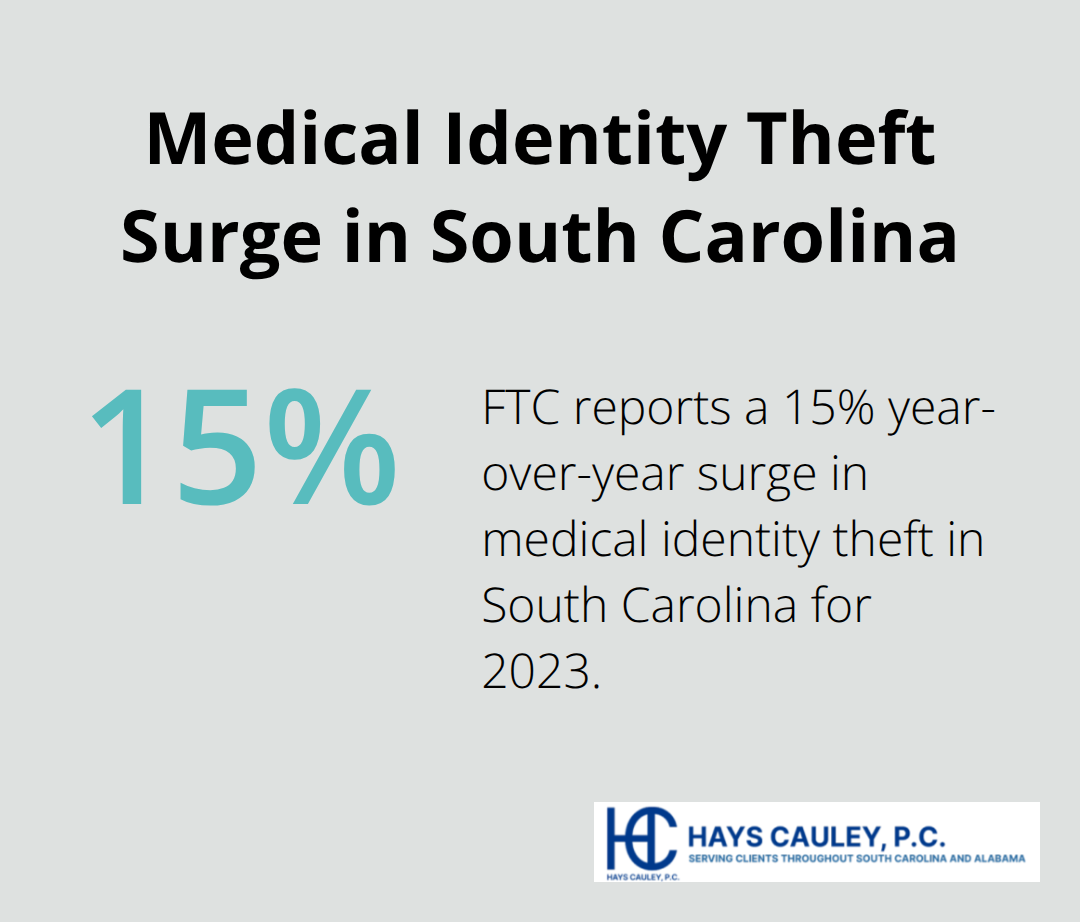
Medical identity theft occurs when criminals steal your personal health information to obtain medical services, prescription drugs, or submit fraudulent insurance claims. This crime takes several forms in South Carolina: thieves use your insurance information to get medical care, sell your prescription medications, or file fake claims with Medicare or Medicaid. The Federal Trade Commission reports that medical identity theft surged by 15% in South Carolina, with healthcare data breaches that affected 3.26 million consumers in 2023 (compared to just under 1 million in 2022).
The Financial Impact Strikes Hard
South Carolina victims face average out-of-pocket expenses of $3,500 per person when they deal with medical identity theft. Healthcare businesses caused the largest share of data breaches in our state last year. The average detection time spans several months without active monitoring, which allows thieves to rack up substantial fraudulent charges. Medical identity theft accounts for a significant portion of the $9,800 average financial loss that identity theft victims in South Carolina experienced in 2024.
Your Health Records Face Serious Threats
Criminals target patient records and insurance claims because medical information sells for high prices on the dark web. When thieves use your health insurance, their medical history mixes with yours and creates dangerous inaccuracies in your medical records. These false entries can affect future treatment decisions and potentially put your life at risk if doctors rely on incorrect information about allergies, medications, or medical conditions.
The Detection Challenge Makes Things Worse
Most victims don’t realize thieves have stolen their medical identity for months. This delay gives criminals time to cause maximum damage to both your finances and health records. The longer the theft continues undetected, the more complex and expensive the cleanup process becomes (often requiring legal intervention to resolve disputes with healthcare providers and insurance companies).
Now that you understand the serious nature of medical identity theft, you need to know how to spot the warning signs before significant damage occurs.
How Do You Spot Medical Identity Theft Early
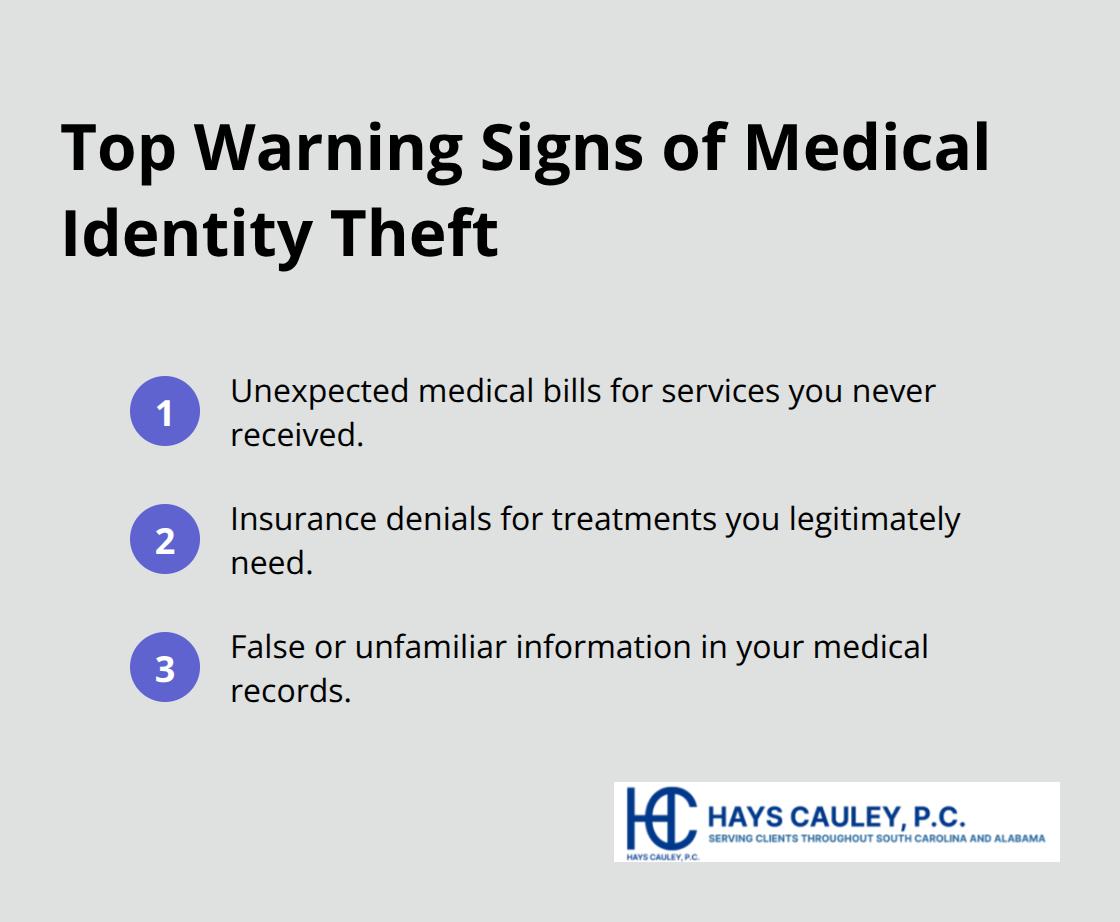
Medical identity theft leaves a paper trail that South Carolina residents can track if they know what to watch for. The South Carolina Attorney General’s office suggests checking bank statements weekly, but medical identity theft requires different monitoring strategies. You need to watch for three main warning signals that criminals have stolen your medical information.
Unexpected Medical Bills Signal Trouble
Medical bills for services you never received represent the clearest sign of medical identity theft. These bills often arrive weeks or months after criminals use your insurance information. The Federal Trade Commission reported 18,935 cases of identity theft in the state in 2022, with healthcare businesses causing the largest share of data breaches that affected South Carolina consumers. Check every medical bill carefully for unfamiliar provider names, dates of service, or procedures you never had.
Thieves commonly use stolen medical information to obtain expensive treatments like surgeries, diagnostic tests, or prescription medications. Your insurance company may send Explanation of Benefits statements that show services billed to your account that you never received. These statements arrive separately from provider bills and often contain different details about the same fraudulent services.
Insurance Denials Reveal Hidden Fraud
Insurance companies deny coverage when your benefits reach their limits or when conflicting medical information appears in your records. If your insurer denies a claim for a service you need because they claim you already received similar treatment elsewhere, this indicates medical identity theft. Medicare and Medicaid fraud cases often surface this way in South Carolina.
The South Carolina Department of Revenue blocked over 5,000 fraudulent tax returns in 2024, and similar verification processes help insurance companies catch medical fraud. Contact your insurance company immediately when you receive unexpected denials or notices about reaching benefit limits you should not have reached (especially for services like physical therapy or prescription refills).
Medical Records Contain False Information
Review your medical records annually to spot unauthorized entries. Criminals who use your medical information leave traces in your permanent health records. Look for incorrect personal information, medical conditions you do not have, medications you never took, or treatments you never received. These false entries can affect future medical care and insurance coverage.
Healthcare providers must respond to requests for correcting medical records within 30 days according to federal law. The Red Flags Rule requires healthcare organizations to implement policies to detect medical identity theft, but patients must actively monitor their own records to catch problems early. Once you spot these warning signs, you can take specific steps to protect your medical information from further theft.
How Do You Protect Your Medical Information
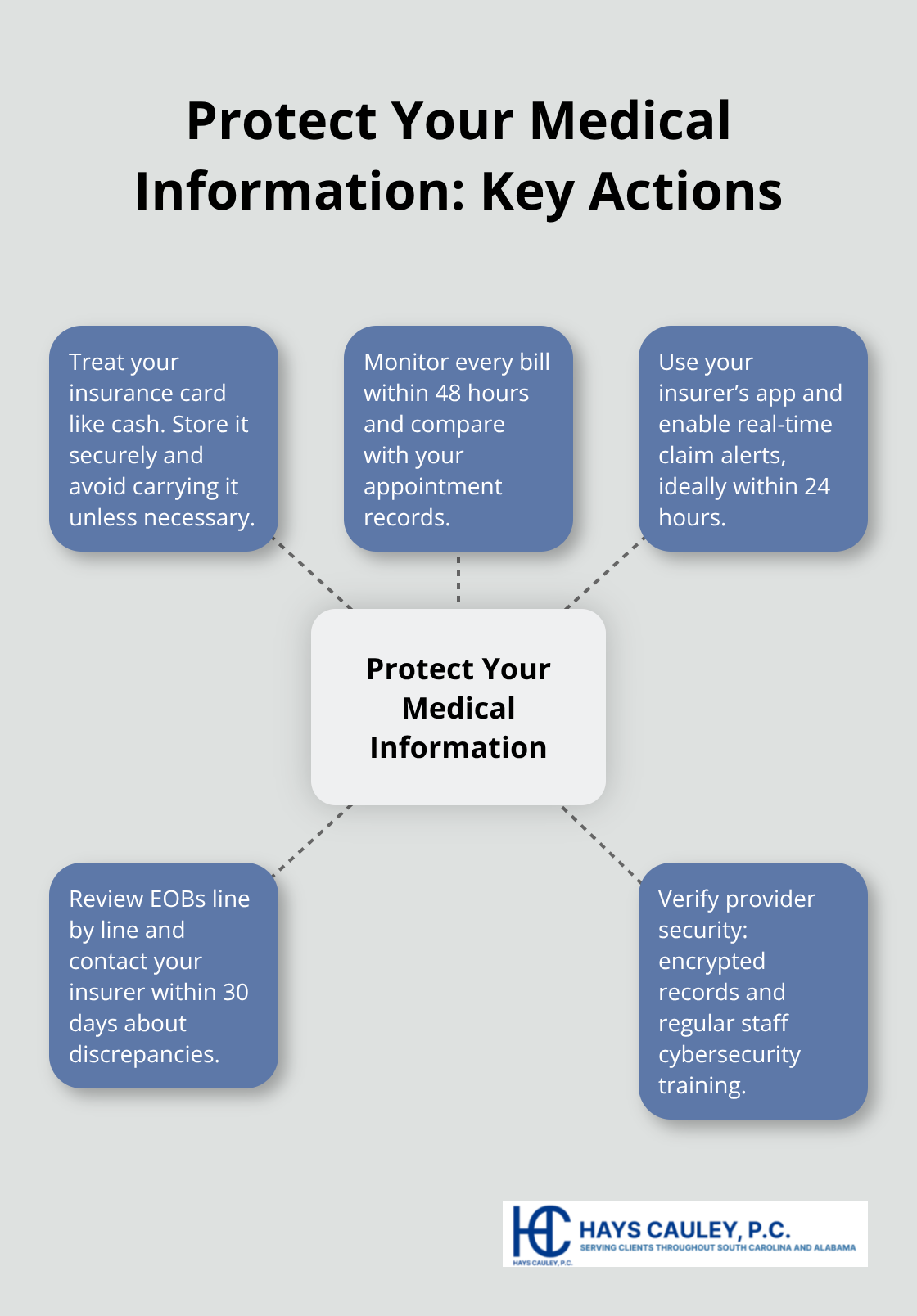
Protect your medical information with active steps that go beyond hope that healthcare providers keep your data safe. The most effective protection starts when you treat your medical insurance card like cash. Store it in a secure wallet location and never leave it visible in your car or carry it when unnecessary. Make photocopies of both sides and store them separately from the originals. When healthcare providers request your Social Security number, ask if they accept alternative identification methods. Many offices can use your insurance member ID or driver’s license number instead.
Monitor Every Medical Transaction
Check your medical bills within 48 hours of receipt and compare each charge against your personal records of appointments and treatments. The Federal Trade Commission advises consumers to request free annual credit reports, but medical protection requires weekly attention to bank statements and monthly review of insurance statements. Download your insurance company’s mobile app to track claims in real-time. Most major insurers send alerts within 24 hours when claims process under your policy.
Set up automatic notifications for any claim over $100 to catch fraudulent activity immediately. Review your Explanation of Benefits statements line by line, focus on provider names, service dates, and procedure codes. Contact your insurance company within 30 days if you spot discrepancies (most insurers have strict deadlines for fraud reports).
Verify Provider Security Before Treatment
Ask healthcare providers direct questions about their data protection practices before you share personal information. Demand to know if they use encrypted systems for patient record storage and whether staff receive regular cybersecurity training. Healthcare businesses caused the largest share of South Carolina data breaches that affected 3.26 million consumers in 2023.
Refuse treatment from providers who cannot demonstrate basic security measures like secure patient portals and encrypted email systems. Check if medical websites use secure connections by looking for https in the web address (legitimate providers display their security certifications prominently). Legitimate providers will answer security questions without hesitation and often showcase their security credentials openly. Consider using identity theft protection services to monitor your personal information across multiple platforms.
Final Thoughts
Medical identity theft protection demands consistent vigilance and immediate action when problems arise. South Carolina residents who monitor their medical bills weekly, verify healthcare provider security practices, and review insurance statements monthly create strong defenses against criminals. The combination of secure information storage, regular account monitoring, and prompt response to suspicious activity provides the most effective protection strategy.
Contact law enforcement immediately when you discover fraudulent medical charges or unauthorized insurance claims. File reports with both local police and the Federal Trade Commission through IdentityTheft.gov within 24 hours of discovery. Document all communications with healthcare providers and insurance companies with certified mail to create paper trails for potential legal action.
South Carolina’s Consumer Identity Theft Protection Act provides structured legal remedies for victims, including the right to seek actual damages and attorney fees from violators (the South Carolina Department of Consumer Affairs offers free assistance through their Identity Theft Unit and comprehensive recovery toolkits). When insurance companies refuse to remove fraudulent charges or healthcare providers deny access to your medical records, legal intervention becomes necessary. We at Hays Cauley, P.C. help South Carolina consumers navigate these complex situations through our consumer protection practice.