


Employment identity theft happens when criminals use your personal information to commit fraud in your name. At Hays Cauley, P.C., we’ve seen firsthand how devastating this crime can be for victims.
The financial and emotional toll can last years. This guide walks you through what you need to know to protect yourself and recover if it happens to you.
How Employment Identity Theft Actually Happens
The Basic Mechanics of the Crime
Employment identity theft occurs when someone uses your Social Security number or other personal details to get hired at a job in your name. The criminal collects wages under your SSN, which means the employer reports those earnings to the IRS and Social Security Administration under your name. You never worked there, never earned that money, but the government records show you did.
The scale of this problem is staggering. The Government Accountability Office identified 1.3 million SSNs in 2016 that showed signs of employment-related identity fraud, with wages reported on W-2 forms that the actual person never claimed on their tax return. In some cases, the same SSN had W-2 wages reported across five or more states. The IRS identified more than 818,000 cases of employment-related identity fraud in 2018 alone, though this number likely understates the full scope because many cases go undetected.
How Criminals Obtain Your Information
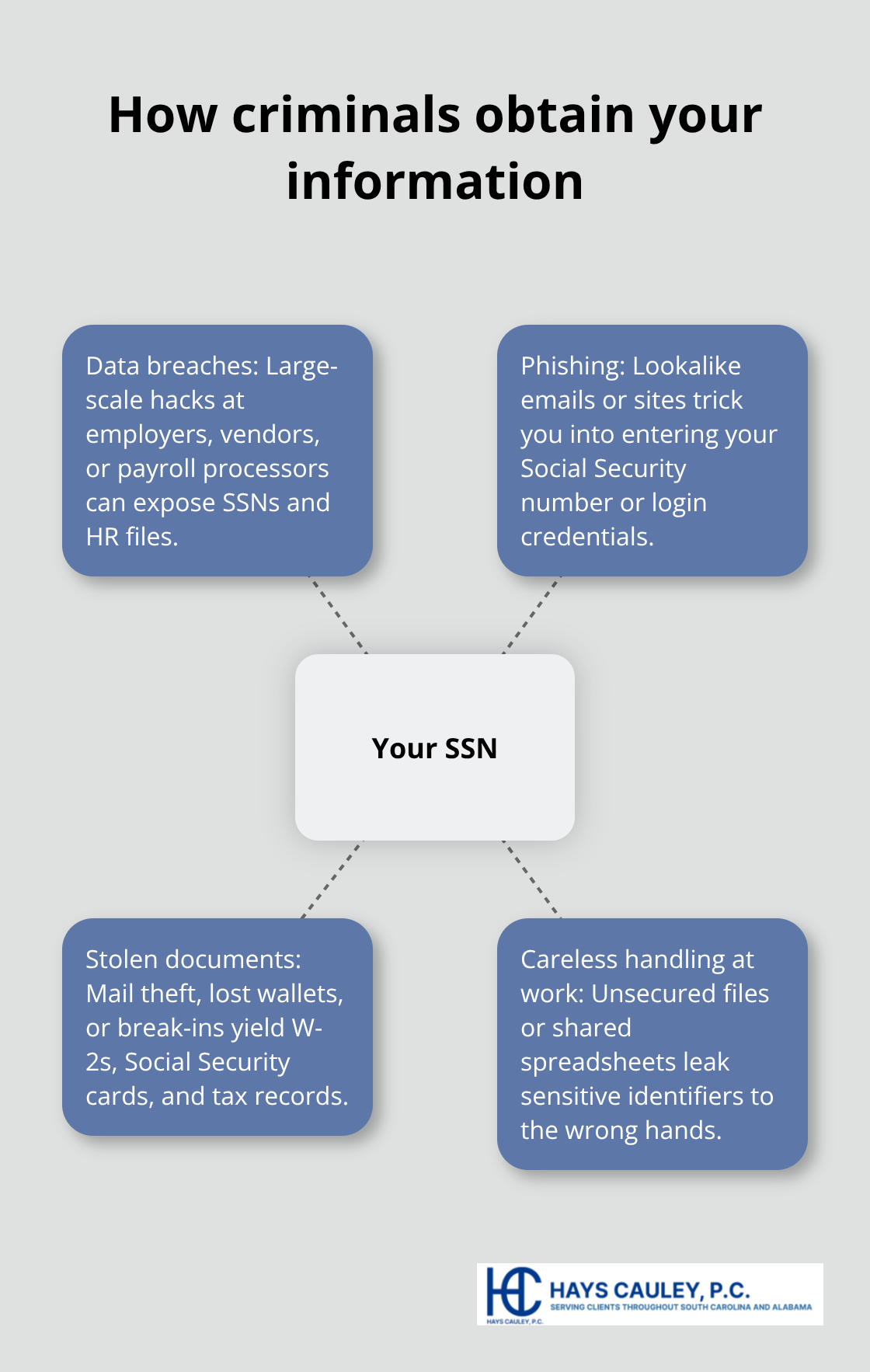
Criminals obtain your information through data breaches, phishing emails, stolen documents, or careless data handling at work. A phishing email might ask you to confirm your Social Security number or login credentials by clicking a link that looks legitimate but isn’t. Once they have your SSN, they use it to apply for jobs they’re not qualified for, knowing they might fail a background check under their real identity.
The fraudster may fabricate work experience or credentials to make the application seem viable. Your SSN makes them appear legitimate to payroll systems, allowing them to bypass initial screening processes that would otherwise flag inconsistencies.
The Damage Unfolds Later
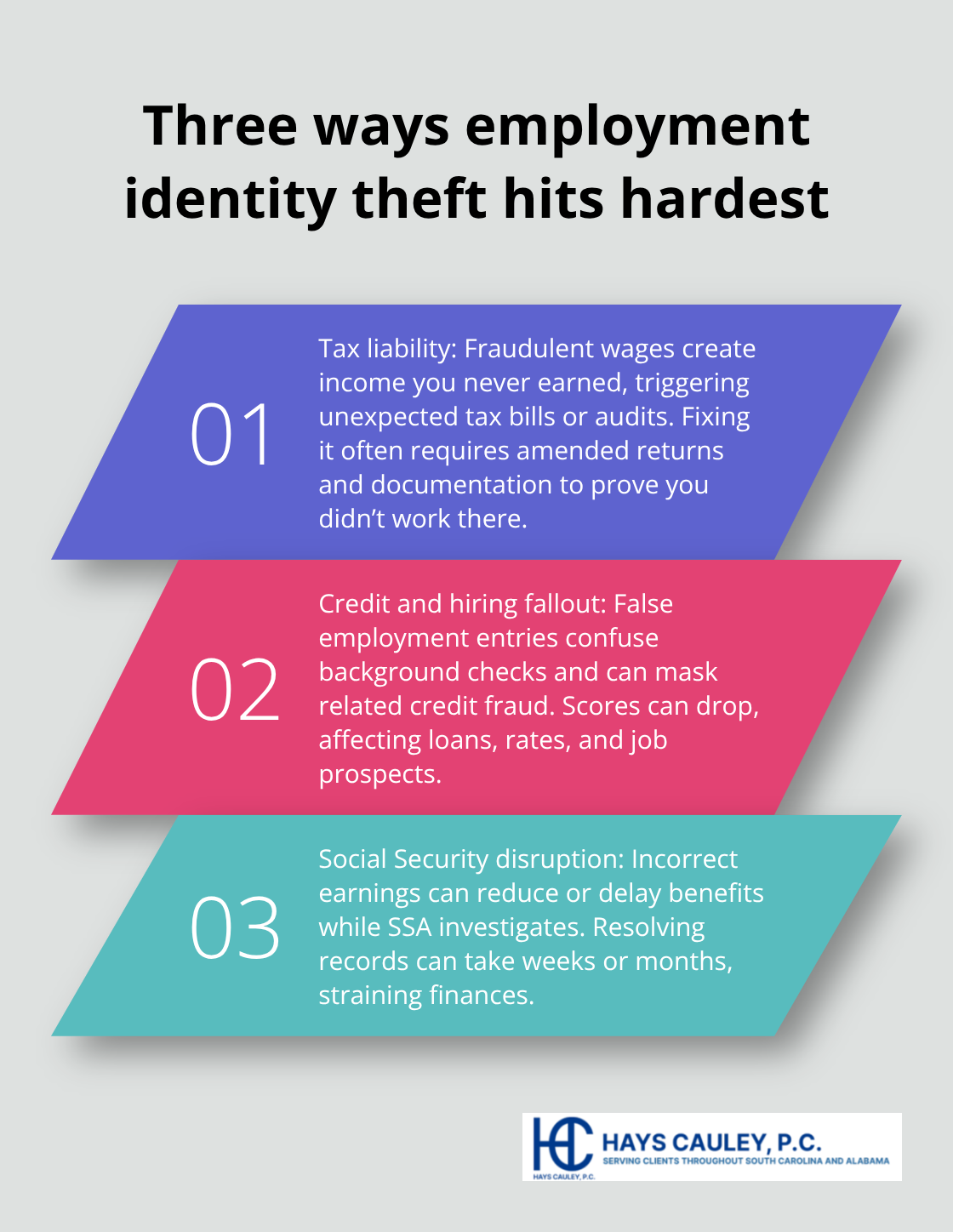
The real damage unfolds when you file your taxes, claim Social Security benefits, or apply for a job yourself and discover someone else’s employment history attached to your name. You may owe taxes on income you never earned. Your Social Security benefits could be reduced or delayed due to false earnings records. Your credit report might list employers you’ve never worked for (creating confusion during background checks and hiring decisions).
This tangled mess requires immediate action across multiple agencies-the IRS, Social Security Administration, and Federal Trade Commission-to untangle your records and restore your financial standing.
The Real Cost of Employment Identity Theft
Tax Liability on Income You Never Earned
Employment identity theft creates immediate and long-lasting financial damage that extends far beyond a single stolen wage report. When someone uses your SSN to work, the IRS records income under your name that you never earned. This creates a tax liability you didn’t incur. If the fraudster’s employer withholds taxes, you might receive a refund you’re not entitled to, triggering an audit. If they don’t withhold, you owe the full tax bill on phantom income. The Government Accountability Office found that among 1.3 million compromised SSNs in 2016, many victims faced wage reports across multiple states, multiplying the tax complications exponentially. You’ll need to file amended returns, gather documentation proving you didn’t work at those employers, and potentially hire a tax professional to untangle the mess. The IRS won’t simply accept your word-you need evidence.
Credit Damage and Employment Screening Problems
Your credit takes a separate hit because false employment records appear on background checks and credit reports. Employers conducting pre-employment screening see jobs you never held, creating confusion during hiring decisions. If the fraudster opened credit accounts or took loans using your identity alongside the employment fraud, your credit score plummets further, affecting your ability to get mortgages, car loans, or favorable interest rates for years.
This damage persists long after you discover the fraud.
Social Security Benefits Disruption
False earnings records can reduce your monthly Social Security benefits if you’re retired, or delay benefits entirely while the Social Security Administration investigates the discrepancies. The agency must verify your actual work history against the fraudulent records in their system, a process that takes weeks or months. During this time, you may not receive payments you’re entitled to, creating financial hardship when you depend on those funds most.
The Psychological and Emotional Toll
The emotional toll is severe-victims report anxiety, stress, and a pervasive sense of violation that persists long after records are corrected. You’re fighting government agencies to prove a negative (that you didn’t work somewhere), which requires sustained effort across multiple bureaucracies simultaneously. Many victims describe the recovery process as more exhausting than the initial fraud discovery. The frustration of dealing with unresponsive agencies, repeated requests for documentation, and slow progress toward resolution compounds the original trauma of identity theft.
What Comes Next in Your Recovery
Understanding the full scope of damage helps you prepare for the steps ahead. The path to recovery involves notifying multiple agencies, gathering specific documentation, and following precise procedures to restore your records.
How to Stop Employment Identity Theft Before It Happens
Check Your Credit Reports Regularly
Your first line of defense is catching fraud early, before it compounds into years of tax and benefit problems. Check your credit reports from all three bureaus-Equifax, Experian, and TransUnion-at least once yearly through annualcreditreport.com, which provides free reports under federal law. Look specifically for employers you’ve never worked for, accounts you didn’t open, or inquiries from companies where you never applied for jobs. Many victims spot employment fraud this way months before the IRS or Social Security Administration contact them.
If you find suspicious activity, place a fraud alert with one bureau and it automatically applies to all three, forcing creditors to verify your identity before opening new accounts. This one step stops criminals from compounding the original theft by taking out loans or credit cards in your name.
Protect Your Social Security Number Offline
Keep your Social Security number offline and out of reach-don’t carry your card, don’t store it on your phone, and never email it. Criminals obtain SSNs through data breaches at companies where you shop or work, phishing emails designed to look like legitimate requests from banks or the IRS, and stolen documents left unsecured in your home or car.
Use a password manager like Bitwarden or 1Password to generate unique passwords for each online account so a single breach doesn’t expose your entire digital life. When using public Wi-Fi at coffee shops or airports, connect through a VPN like ProtonVPN or Mullvad to encrypt your data and prevent hackers from intercepting your information while you’re job searching or checking sensitive accounts.
Act Immediately When You Suspect Fraud
The moment you suspect employment fraud-whether you receive a W-2 from an unknown employer, an IRS notice about income you didn’t earn, or see wages on your Social Security statement from a job you never held-file a report with the Federal Trade Commission at IdentityTheft.gov or call 877-438-4338. The FTC provides a personalized recovery plan based on your situation.
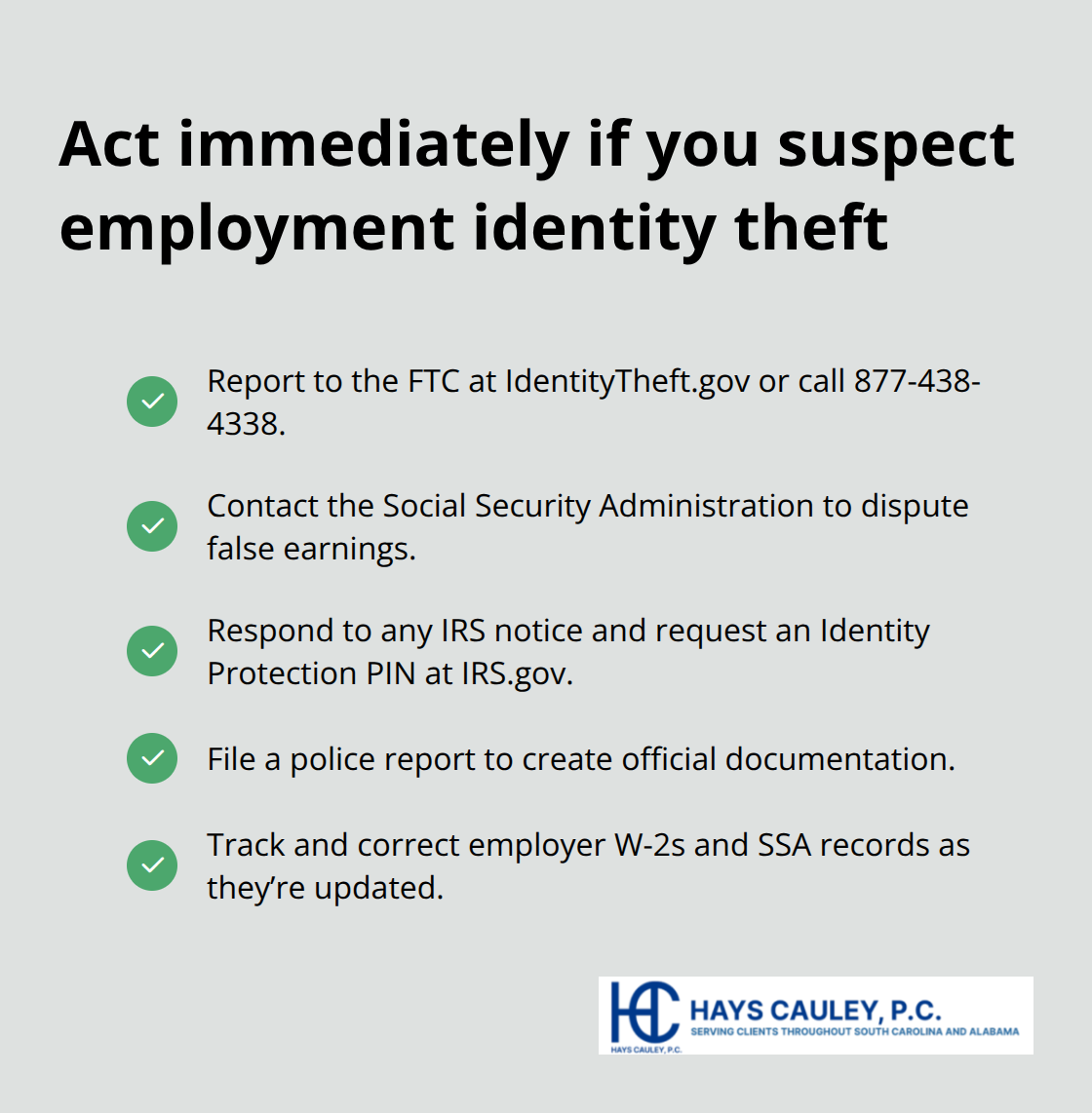
Next, contact the Social Security Administration to dispute the false earnings and request a corrected statement. If the IRS sent you a notice, respond immediately and apply for an Identity Protection PIN through IRS.gov, which prevents someone else from filing a fraudulent return under your SSN. File a police report to create an official record-this documentation strengthens your case with government agencies and gives you legal standing if you need to challenge fraudulent records.
Verify Your Earnings and Correct False Records
Check your SSA earnings statement online by creating an account at ssa.gov to monitor for future discrepancies. Contact the employers who reported the false wages and request corrected W-2 forms showing zero earnings. Don’t ignore these notices hoping they’ll resolve themselves-each month of delay allows the fraud to spread further through government systems and damages your credit more severely. The faster you act, the faster agencies can correct their records and prevent the fraudster from claiming additional wages under your identity.
Final Thoughts
Employment identity theft definition comes down to this: someone uses your personal information to obtain employment and collect wages in your name, leaving you with tax bills, damaged credit, and disrupted benefits. The scale is real-1.3 million SSNs showed signs of this fraud in 2016 alone, and the IRS identified over 818,000 cases in 2018. The damage compounds quickly across multiple government systems, making early detection and swift action your best defense.
If you suspect you’re a victim, move fast and file a report with the Federal Trade Commission at IdentityTheft.gov immediately-they’ll provide a personalized recovery plan tailored to your situation. Contact the Social Security Administration to dispute false earnings on your record and request corrected statements. Apply for an Identity Protection PIN through IRS.gov to lock down your tax account against fraudulent filings, and file a police report to create official documentation that strengthens your case with government agencies.
Recovery takes time-weeks or months depending on how many agencies and employers are involved. We at Hays Cauley, P.C. understand how overwhelming this process feels, and we’re here to help consumers navigate identity theft and related financial issues when they need guidance most.