


Identity Theft Attorney SC: Finding Help When Your Identity Is Stolen
Identity theft can happen to anyone, and the consequences are serious. Criminals steal personal information through data breaches, phishing scams, and mail theft, leaving victims to deal with fraudulent accounts and damaged credit.
At Hays Cauley, P.C., we help South Carolina residents recover from identity theft and protect their rights. An identity theft attorney SC can guide you through the recovery process and hold bad actors accountable.
How Identity Theft Happens and Why You’re at Risk
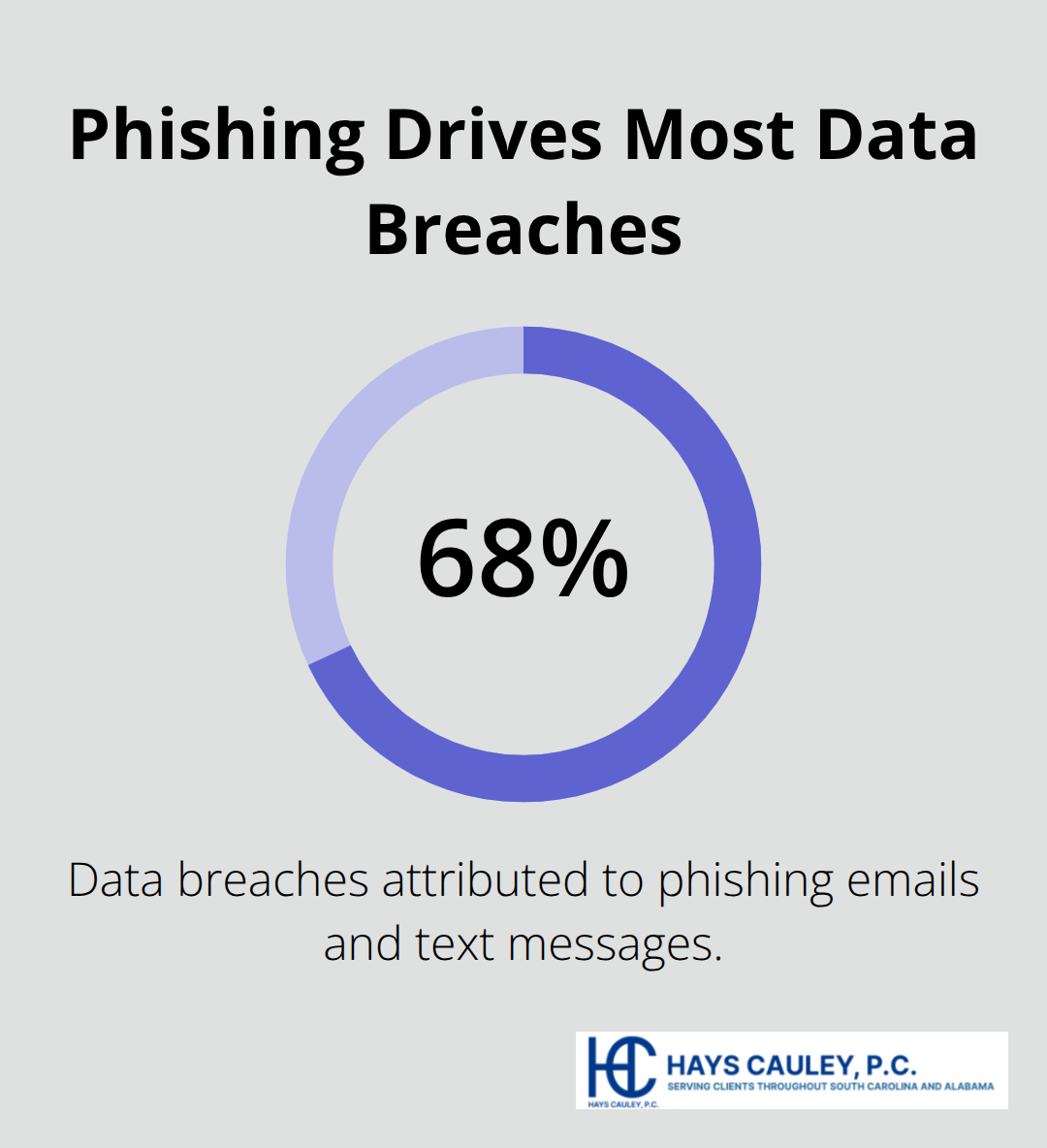
Criminals in South Carolina use four primary methods to access your personal information, and understanding these tactics helps you spot threats before damage occurs. Phishing emails and text messages account for 68% of data breaches according to Verizon’s 2023 Data Breach Investigations Report, making this the most dangerous attack vector. These messages impersonate banks, government agencies, or legitimate companies and direct you to fake websites designed to harvest your login credentials, Social Security numbers, or financial account details.
The second method involves data breaches at retailers, employers, or healthcare providers where hackers infiltrate company databases containing thousands of customer records at once. South Carolina ranks 13th nationally in identity theft reports per 100,000 residents according to the Department of Revenue Security Center, indicating elevated risk in our state. Mail theft remains a surprisingly effective tactic where criminals steal bank statements, tax forms, or credit card offers directly from your mailbox to access account numbers and personal details. Card skimming devices installed at gas pumps or ATMs silently capture your card data when you swipe, giving thieves everything needed to make fraudulent purchases or create counterfeit cards.
Watch for These Red Flags Immediately
The warning signs of identity theft appear quickly once criminals use your information, and catching them early prevents months of recovery work. Check your credit report if you notice accounts you never opened, unexpected credit inquiries from lenders you didn’t contact, or collection notices for debts you don’t recognize. Tax-related identity theft occurs when a criminal files a return using your Social Security number to claim your refund, which you’ll discover when the IRS notifies you that a return was already filed. Unauthorized charges on your credit cards or bank accounts, calls from debt collectors about accounts you never established, and address changes you didn’t authorize on your financial accounts all signal active identity theft. The Federal Trade Commission reports that victims typically discover fraud within two to four weeks, making monthly account reviews essential. Unfamiliar inquiries on your credit report often precede fraudulent account openings, so monitoring your credit actively gives you a head start on stopping criminals before they cause maximum damage.
The Real Cost of Identity Theft
Identity theft victims spend an average of 200 to 300 hours resolving fraud across accounts, creditors, and credit bureaus, which translates to weeks of your time dealing with bureaucracy and disputes. Financial losses extend beyond stolen money to include fraudulent charges, unauthorized loans taken in your name, and the cost of credit monitoring or legal help needed to restore your credit. The emotional toll is substantial-victims report stress, anxiety, and violated feelings that persist long after accounts are closed and fraudulent information is removed from credit reports. Some victims face employment consequences when criminals use their identity to obtain jobs, creating wage records under their name that complicate tax filings and background checks. Recovery timelines vary dramatically depending on the type and extent of fraud, with some cases resolved in weeks while others require months or years to fully restore credit and remove all false information from reporting agencies. Once you understand how identity theft happens and the damage it causes, taking immediate action becomes your priority-and knowing what steps to take next can mean the difference between a quick recovery and years of financial complications.
Immediate Steps to Take After Identity Theft
Act Within 48 Hours of Discovering Identity Theft
The first 48 hours after discovering identity theft determine whether you stop criminals from causing additional damage or watch helplessly as they open new accounts and drain resources. Contact Equifax at 888-836-6351, Experian at 888-397-3742, and TransUnion immediately to place a fraud alert on your credit file. A fraud alert forces lenders to verify your identity before opening new accounts, which blocks most fraudulent applications within minutes of placement. South Carolina law requires credit bureaus to place a fraud alert within five business days at no cost, and once you notify one bureau, the other two receive automatic notification. After placing the fraud alert, file a complaint with the Federal Trade Commission at FTC.gov or call 1-877-438-4338 to create an official record of the theft.
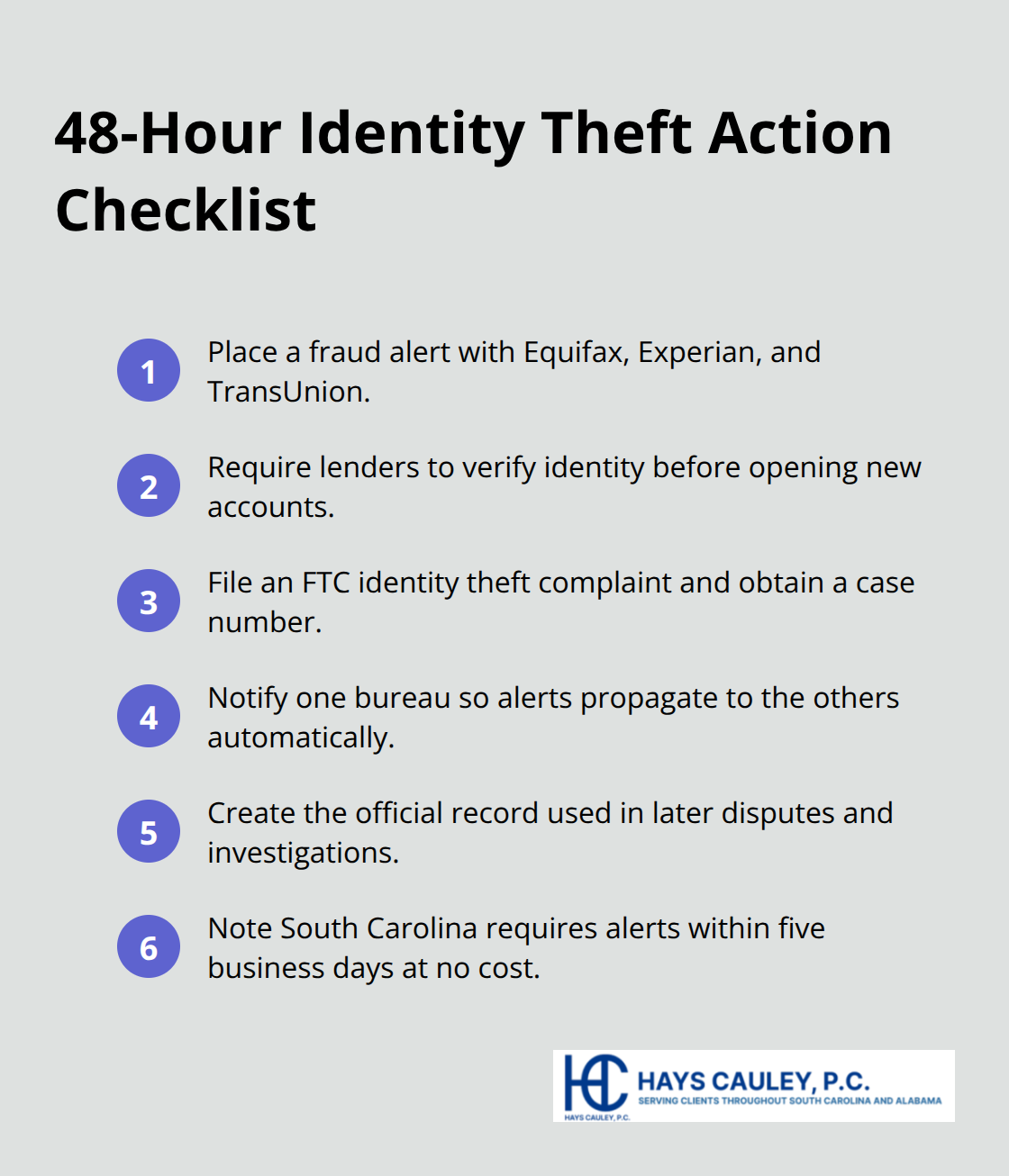
The FTC maintains a national identity theft database that law enforcement agencies access during investigations, and your complaint becomes part of your official recovery documentation when disputing fraudulent accounts later.
Secure Your Accounts and Create Strong Passwords
Contact your bank and credit card companies directly to report unauthorized charges and close compromised accounts before criminals make additional purchases. Open new accounts with different passwords that contain at least 12 characters mixing uppercase, lowercase, numbers, and symbols-longer passwords defeat most automated hacking attempts that rely on common word combinations. This step prevents thieves from accessing your remaining financial resources while you work through the recovery process.
Monitor Your Credit Reports Actively
Monitor your credit reports from all three bureaus weekly during the first month after discovery, then monthly for at least one year. The Federal Trade Commission reports that victims who monitor actively catch additional fraudulent accounts within two weeks on average, preventing months of additional damage. Pull your free annual credit reports at annualcreditreport.com and review every account, inquiry, and address listed for anything unfamiliar. Check your credit reports for accounts opened in your name at medical providers, utility companies, and retailers-identity thieves often target these institutions because they perform less rigorous identity verification than banks.
Document Everything and File Official Reports
File a police report with your local law enforcement agency and request a copy to provide creditors and credit bureaus-this document proves you reported the crime and strengthens your position when disputing fraudulent accounts. Keep detailed records of every action taken including dates, times, names of representatives spoken with, reference numbers, and amounts involved in the fraud. Document your expenses for credit monitoring, mailed notices, and any time spent resolving the theft, as these costs may be recoverable through civil claims against the responsible parties. If you discover tax-related identity theft, file Form I-381 with the South Carolina Department of Revenue and call 803-898-7638 immediately to prevent the thief from claiming your refund.
Know When to Seek Legal Assistance
Once you complete these immediate steps, you’ve stopped the bleeding and created a paper trail for your recovery. However, removing fraudulent accounts from your credit report, disputing false information with creditors, and protecting yourself against aggressive debt collectors often requires professional guidance-which is where an identity theft attorney becomes invaluable to your case.
How an Identity Theft Attorney Can Help
Removing Fraudulent Accounts From Your Credit Report
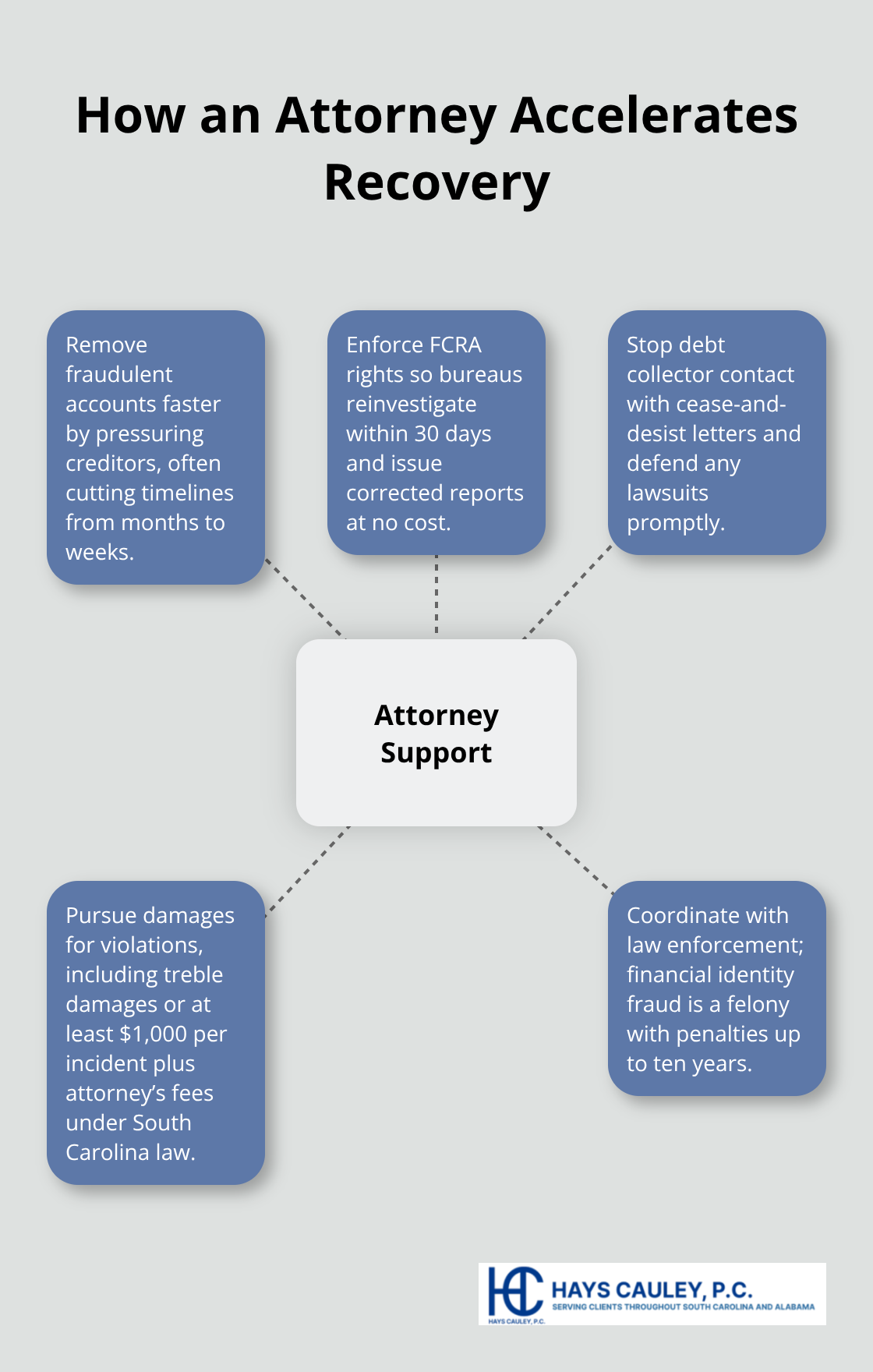
Fraudulent accounts damage your credit score and financial stability, but removing them requires persistence that most victims lack time for. When you contact creditors directly to dispute fraudulent charges, they often deny your claims or move slowly through their verification process, leaving false accounts on your credit report for months. An identity theft attorney handles these disputes professionally and knows which creditors respond to legal pressure rather than consumer requests. Your attorney contacts creditors on your behalf with documentation of the fraud, which accelerates removal timelines from months to weeks in most cases. Many creditors maintain dispute procedures designed to frustrate consumers into giving up, but they treat attorney correspondence with urgency because legal liability becomes a real concern. Under South Carolina law, willful violations of identity theft protections result in three times actual damages or at least $1,000 per incident, plus attorney’s fees, which motivates creditors to cooperate quickly.
Disputing False Information With Credit Bureaus
Your attorney files disputes with credit bureaus under the Fair Credit Reporting Act, which requires agencies to reinvestigate inaccurate information within 30 days and provide you with a corrected credit report at no cost. Credit bureaus often ignore consumer disputes or conduct superficial investigations that leave false accounts in place, but attorney involvement signals that you have legal representation and will pursue violations if the agency fails to act properly. The Fair Credit Reporting Act imposes liability on bureaus that fail to reinvestigate disputes or remove inaccurate information after a judgment, with damages accruing daily up to $1,000 per day until the error is corrected. This financial exposure motivates credit bureaus to conduct thorough investigations and remove fraudulent accounts promptly rather than delay tactics that work against unrepresented consumers.
Stopping Aggressive Debt Collectors
Debt collectors aggressively pursue identity theft victims because fraudulent accounts often get sold to collection agencies that don’t know the debt is fraudulent. Collectors call repeatedly, send threatening letters, and sometimes file lawsuits against victims for debts they never incurred, which damages your credit further and creates legal exposure you shouldn’t face. An identity theft attorney sends cease-and-desist letters that stop collector contact immediately under the Fair Debt Collection Practices Act, and responds to lawsuits with fraud defenses that protect you from judgments. If a collector violates the law by continuing contact after receiving notice or using deceptive tactics, your attorney pursues counterclaims that generate damages to offset your recovery costs.
Coordinating With Criminal Investigations
South Carolina Code Section 16-13-510 makes financial identity fraud a felony with penalties up to ten years imprisonment, which means criminals who steal your identity face serious criminal consequences if law enforcement prosecutes. Your attorney coordinates with police investigations and provides documentation that strengthens criminal cases against identity thieves, which removes the source of your problems rather than just treating the symptoms. This coordination ensures that law enforcement has the evidence needed to pursue criminal charges while your attorney handles the civil recovery process simultaneously.
Final Thoughts
Identity theft recovery demands speed and persistence, but you don’t have to navigate this process alone. The first weeks after discovering fraud determine whether you regain control quickly or spend months fighting creditors and credit bureaus. Acting within 48 hours to contact credit bureaus, file FTC complaints, and document everything creates the foundation for successful recovery.
Creditors and credit bureaus respond differently to attorney correspondence than consumer requests, moving from delay tactics to cooperation when legal liability becomes real. An identity theft attorney SC files disputes under the Fair Credit Reporting Act, coordinates with law enforcement on criminal investigations, and stops debt collectors from pursuing fraudulent debts in your name. This professional approach transforms recovery from a months-long struggle into a managed process with clear timelines and measurable progress.
We at Hays Cauley, P.C. help South Carolina residents recover from identity theft and protect their rights when criminals steal personal information. Contact us to discuss your situation and learn how legal representation can protect your rights and accelerate your recovery. Serving South Carolina, including Greenville, Columbia and Charleston, we’re ready to help you move forward.