


Identity theft affects roughly 26 million Americans annually, with victims spending an average of 100+ hours resolving the damage. The question of whether identity theft insurance is worth it depends entirely on your financial situation and risk tolerance.
At Hays Cauley, P.C., we help clients understand the real costs of identity theft and evaluate whether insurance fits their protection strategy. This guide breaks down what coverage actually covers, what it costs, and when it makes financial sense for you.
What Identity Theft Insurance Actually Covers
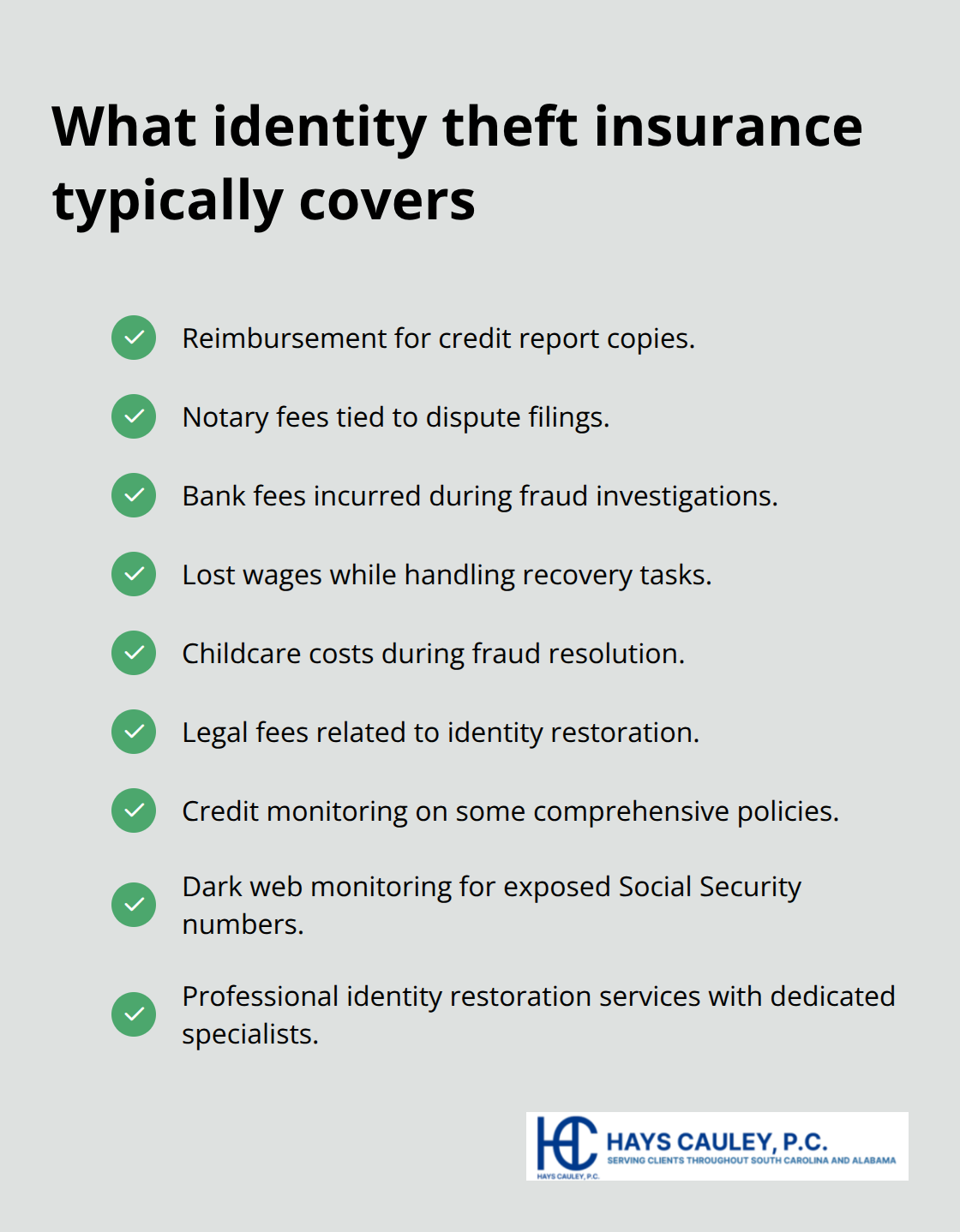
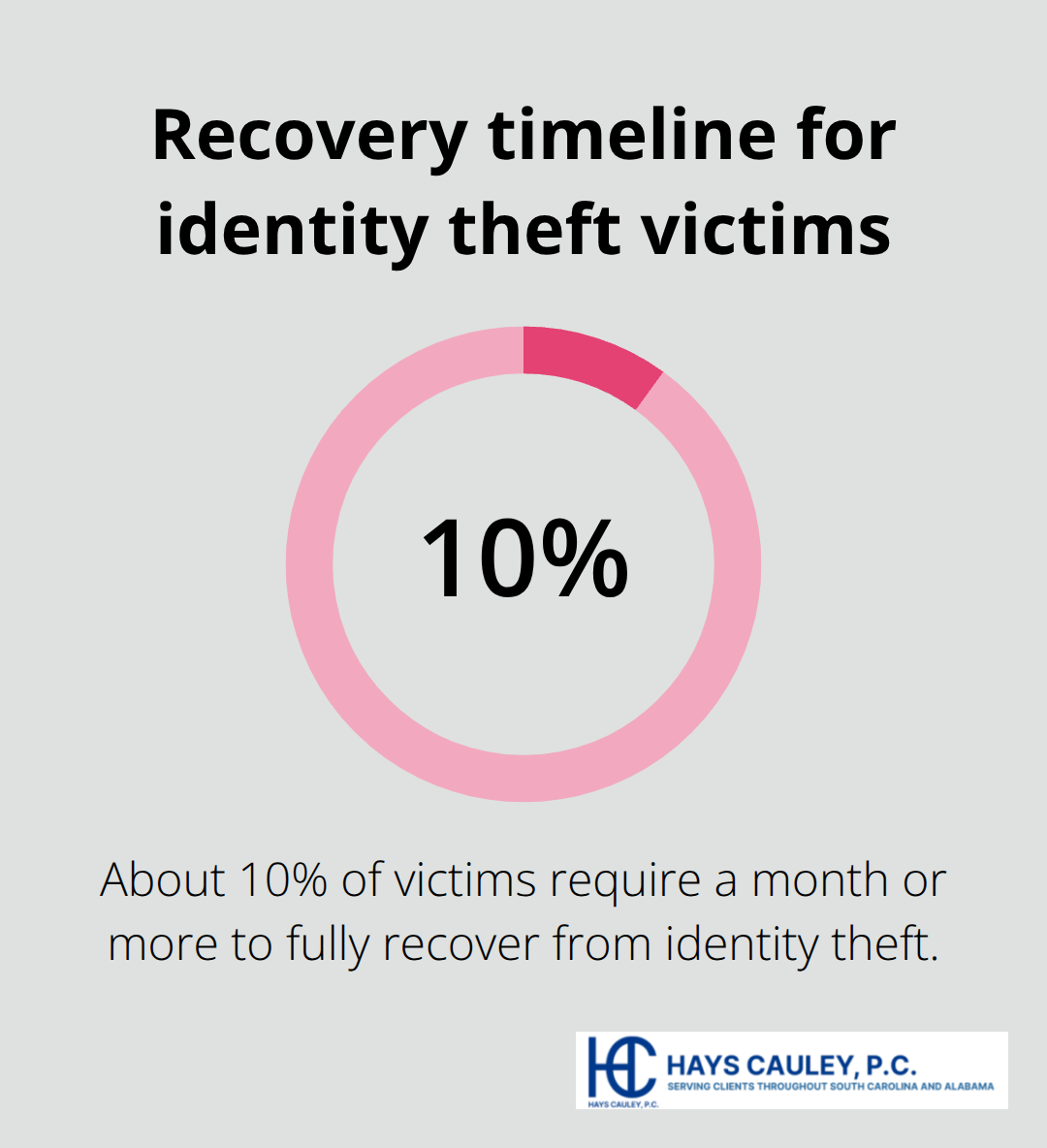
Identity theft insurance reimburses you for expenses tied to recovering your identity, not the stolen money itself. This distinction matters enormously. If a criminal opens a credit card in your name, the Federal Trade Commission reports that federal law caps your liability at $50 for unauthorized charges. Your credit card issuer absorbs most losses if you report fraud promptly. Identity theft insurance steps in for the costs that fall outside this protection: credit report copies, notary fees, bank fees, lost wages while you handle recovery calls, childcare costs during fraud resolution, and legal fees. More comprehensive policies add credit monitoring, dark web monitoring for your Social Security number, and identity restoration services where a dedicated specialist manages the entire recovery process. LifeLock Ultimate Plus offers up to $3 million in reimbursement for stolen funds and related expenses plus a 100% restoration guarantee. GEICO Identity Protection, powered by Iris Powered by Generali, provides up to $3 million in identity fraud insurance with 24/7 certified identity theft resolution specialists. These restoration services carry real value: the Federal Trade Commission documented that most victims resolved financial and credit problems within a week, but about 10% took a month or more, and the process demands coordination with creditors, placing fraud alerts, and replacing lost documents.
What Insurance Costs Monthly
Plans range from $7.50 to $19.99 monthly depending on coverage breadth and family size. LifeLock Standard costs around $7.50 per month for one adult, $12.49 for two adults, and $18.49 for two adults with up to five children. LifeLock Ultimate Plus runs $19.99 monthly for a single adult with higher rates for families. GEICO Identity Protection starts at $7.99 per month with annual payment discounts available. These costs assume you commit to a full year; monthly pricing typically runs higher.
Understanding Coverage Limits and Deductibles
The average American loses about $43 billion annually to identity fraud according to the Federal Trade Commission, meaning that a $19.99 monthly plan costs roughly $240 annually while protecting against substantially larger losses. Most policies carry deductibles ranging from zero to several hundred dollars before reimbursement kicks in, so read the fine print carefully. Coverage limits typically cap at $10,000 to $15,000 for standard policies, though LifeLock and GEICO offer substantially higher limits at $3 million. These higher limits matter if identity theft affects multiple accounts or requires extensive legal action to resolve.
Your actual financial exposure depends on what protections you already have in place. Credit card companies limit liability under federal law, and some employers offer free monitoring through benefits packages. Before purchasing a policy, check whether you already have coverage through homeowners or renters insurance, or whether a recent data breach provided you with complimentary monitoring services. This inventory of existing protections shapes whether identity theft insurance fills a genuine gap in your defense strategy.
What Identity Theft Actually Costs You, Serving South Carolina, including Greenville, Columbia and Charleston
Immediate Financial Damage
Without insurance, identity theft victims face immediate and long-term financial damage that extends far beyond the fraudulent charges themselves. The Federal Trade Commission reported that Americans lost approximately $43 billion to identity fraud in 2023, but this aggregate number masks the individual burden. Victims spend an average of 100+ hours resolving identity theft, which translates to roughly 2-3 weeks of full-time work just to restore your financial standing. The Department of Justice found that most victims resolved financial and credit problems within a week, but roughly 10% required a month or more to fully recover, especially when fraud involves multiple accounts or fraudulent tax filings.
During recovery, you pay out-of-pocket for credit report copies, notary fees, document replacement, and potentially legal consultation if creditors dispute your claims. Many victims also lose wages while handling recovery calls during business hours, and childcare costs mount if resolution requires in-person meetings. Bank fees accumulate as institutions investigate fraudulent transactions on your accounts.
Hidden Liability Gaps
One critical reality separates credit card fraud from identity theft: your credit card company caps your liability at $50 under federal law, but this protection only applies to unauthorized charges you report promptly. Criminals often open utility accounts, rent apartments, obtain employment, or file fraudulent tax returns using stolen identities. These damages fall entirely on you since they don’t involve credit card transactions and therefore fall outside federal liability protections.
Long-Term Credit and Employment Consequences
Identity theft depresses your credit score, sometimes by 100+ points, making it substantially harder to qualify for mortgages, auto loans, or favorable interest rates for years afterward. Employers increasingly run credit checks during hiring, so identity theft can cost you job opportunities even after you’ve technically resolved the fraud. Recovery from severe identity theft cases requires hiring attorneys or working with restoration services, adding thousands in costs that insurance would cover but your pocket cannot.
Calculating Your True Exposure
The decision to purchase identity theft insurance becomes clearer when you calculate your actual exposure. If you have $100,000+ in assets, maintain multiple credit accounts, and conduct substantial online activity, the $240-$300 annual cost for comprehensive coverage represents reasonable protection against potentially six figures in recovery expenses and lost opportunity costs. This financial reality shapes whether insurance fits your protection strategy-and whether alternative approaches might serve you better.
When Identity Theft Insurance Makes Sense, Serving South Carolina, including Greenville, Columbia and Charleston
Who Benefits Most From Coverage
Identity theft insurance makes financial sense for specific groups of people, not everyone. If you earn less than $50,000 annually and maintain minimal credit accounts, the $240–$300 yearly cost likely outweighs your actual risk exposure. You’d be better served by freezing your credit with Equifax, TransUnion, and Experian (free), monitoring your credit reports quarterly, and using strong passwords. However, if you own substantial assets, maintain multiple credit lines, conduct significant online activity, or work in a field requiring background checks, identity theft insurance becomes genuinely valuable. Remote workers face elevated risk since they handle sensitive documents and financial transactions outside traditional office security. People who rarely check their credit reports or ignore monitoring altogether should seriously consider coverage since they won’t catch fraud early without it.
The Value of Professional Restoration Services
The Federal Trade Commission data showing that 10% of victims require a month or more for full recovery applies disproportionately to people without restoration support. LifeLock’s $19.99 monthly plan for a single adult includes dedicated US-based restoration specialists, credit monitoring across all three bureaus, dark web monitoring for your Social Security number, and up to $3 million in reimbursement. GEICO Identity Protection at $7.99 monthly provides similar dark web and credit monitoring with 24/7 certified resolution specialists. These restoration services eliminate the burden of coordinating with creditors, placing fraud alerts, and replacing documents yourself.
The Self-Protection Alternative
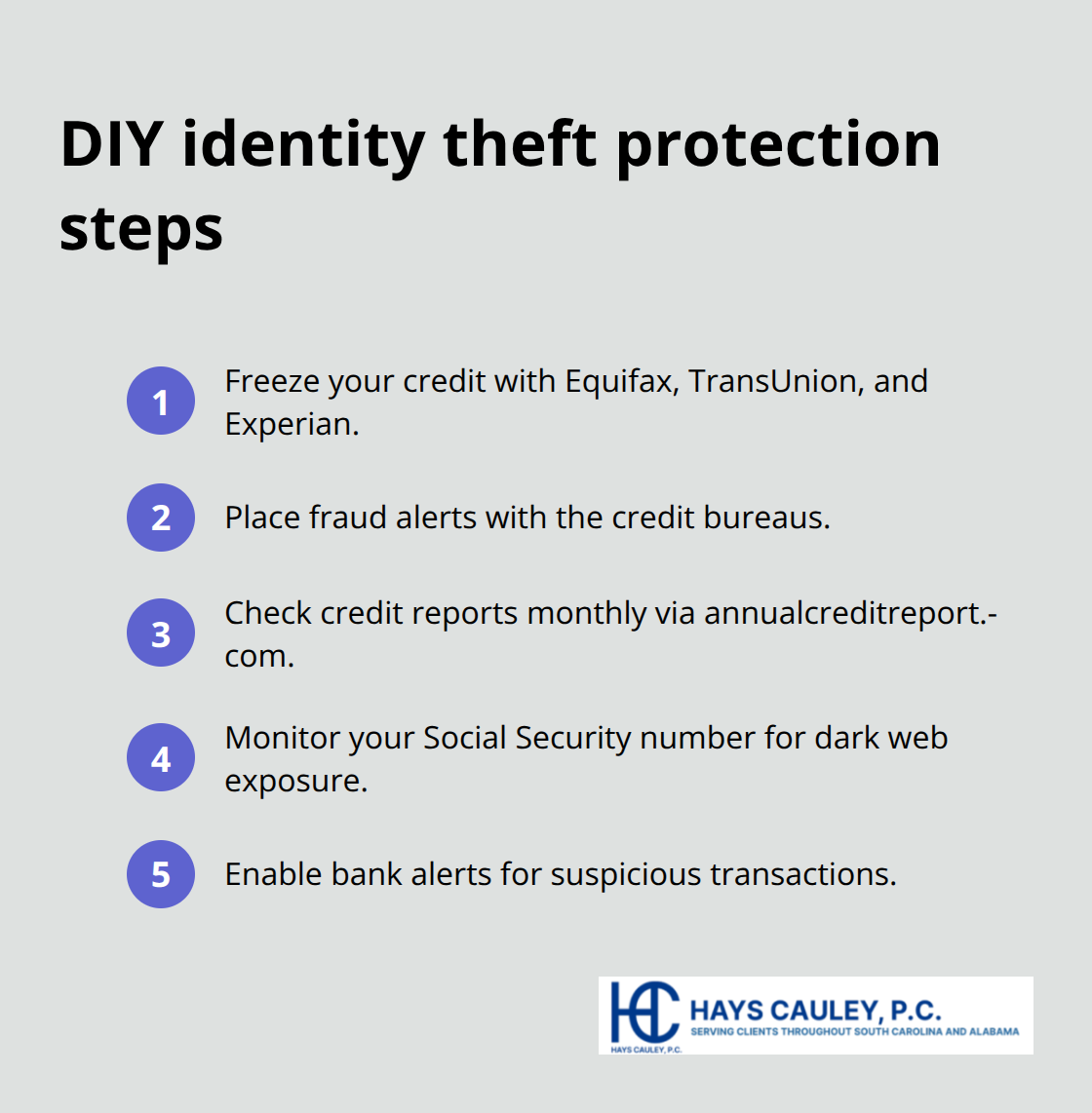
The alternative protection approach works if you have discipline and time. Freeze your credit immediately, place fraud alerts with the credit bureaus, check your credit reports monthly using free federal resources at annualcreditreport.com, monitor your Social Security number on the dark web using free tools like Have I Been Pwned, and set up bank alerts for suspicious transactions. This approach costs nothing but demands consistent attention.
Credit card companies already limit your liability at $50 for unauthorized charges under federal law, and many employers offer free identity monitoring through benefits packages.
Evaluating Your Existing Protections
Before purchasing insurance, contact your employer’s human resources department and review any homeowners or renters policies you hold since some already include identity theft coverage. If you experienced a recent data breach, you likely received complimentary monitoring from the breached company for 12–24 months, which reduces immediate insurance necessity. The critical question is whether you’ll actually execute these protective steps or whether paying for automated monitoring and restoration services provides enough value to justify the expense.
Making Your Decision
Your specific vulnerability to identity theft and whether insurance fits your circumstances depends on your financial situation, assets, and commitment to active protection. Some people execute protective steps consistently while others genuinely need paid coverage and professional restoration support to stay protected.
Final Thoughts
Identity theft insurance worth it depends on your specific circumstances, not on marketing claims or influencer endorsements. The math is straightforward: if you own substantial assets, maintain multiple credit accounts, or work remotely, paying $240–$300 annually for comprehensive coverage with professional restoration services makes financial sense. The alternative-spending 100+ hours resolving identity theft yourself while managing creditor disputes, document replacement, and potential legal fees-carries hidden costs that far exceed insurance premiums.
If you earn modest income, maintain minimal credit exposure, and commit to active protection through credit freezes and regular monitoring, identity theft insurance becomes an unnecessary expense. Your credit card company already limits your liability at $50 under federal law, and free federal resources at identitytheft.gov provide recovery guidance if fraud occurs. The real decision hinges on three factors: your financial exposure, your willingness to execute protective steps consistently, and whether professional restoration support justifies the cost.
Before purchasing any policy, inventory your existing protections by checking whether your employer offers free identity monitoring through benefits, reviewing your homeowners or renters insurance for existing coverage, and verifying whether recent data breaches provided complimentary monitoring. If you’ve experienced identity theft or face questions about your specific protection strategy, we at Hays Cauley, P.C. help consumers navigate credit reporting, identity theft, and debt-related issues. Contact us for guidance on whether insurance fits your situation and what protective steps make sense for your circumstances.