


Is Identity Theft Monitoring Really Necessary in South Carolina?
Identity theft affects thousands of South Carolina residents each year, with financial losses reaching millions of dollars statewide. Many people wonder if investing in identity theft monitoring services provides real protection or just peace of mind.
We at Hays Cauley, P.C. see firsthand how identity theft devastates families and businesses across our state. The question isn’t whether identity theft happens here-it’s whether monitoring services actually prevent it.
How Bad Is Identity Theft in South Carolina
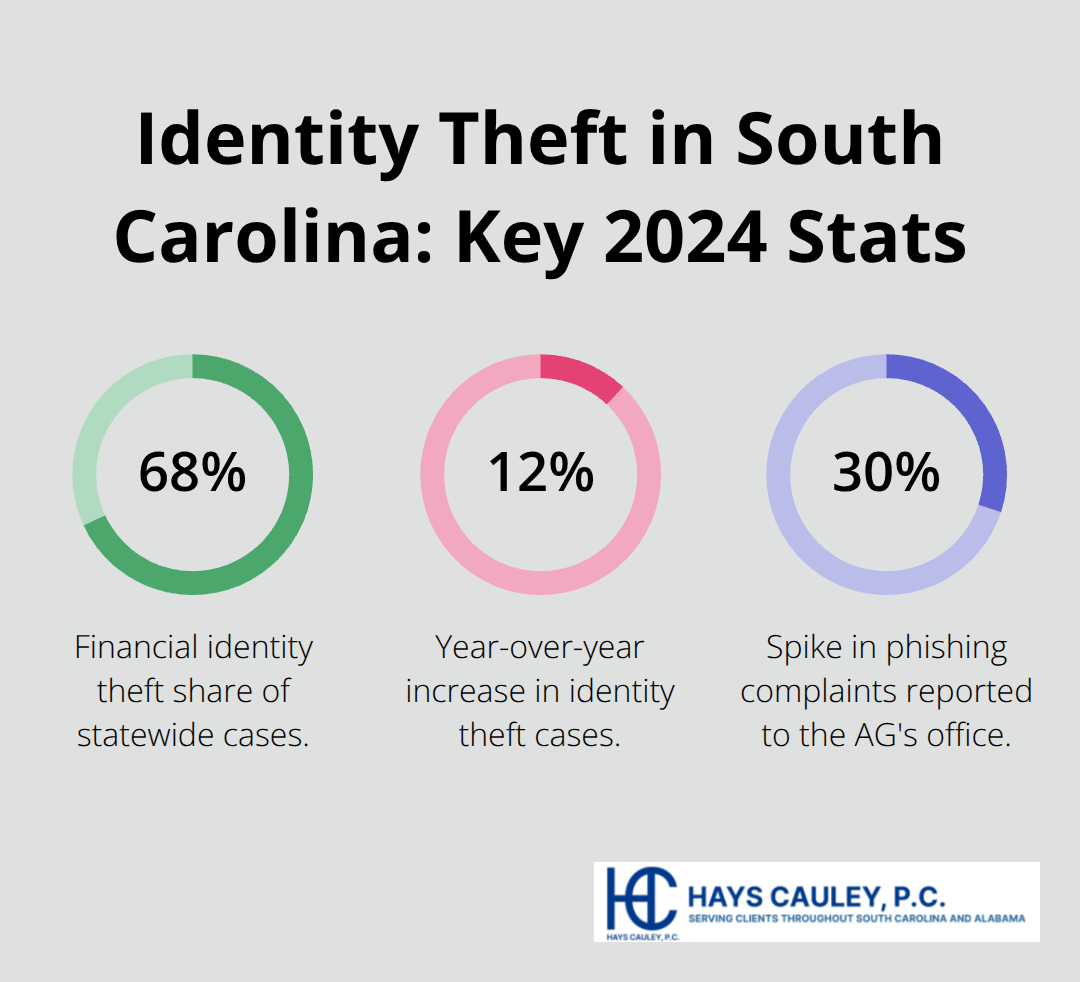
South Carolina recorded over 15,000 identity theft cases in 2024, which represents a 12% increase from the previous year according to Federal Trade Commission data. Financial identity theft dominated these incidents and accounted for 68% of all cases statewide. Medical identity theft also surged by 15% and targeted patient records and insurance claims. The South Carolina Attorney General’s office documented a 30% spike in phishing complaints, while Charleston police alone discovered 25 credit card skimmers throughout the year.
The Real Cost to South Carolina Families
The average South Carolina identity theft victim lost $9,800 in 2024, with out-of-pocket expenses that averaged $3,500 per person. Data breaches tripled the number of affected consumers to 3.26 million individuals in 2023, up from just under 1 million in 2022. Healthcare businesses accounted for the largest share of breaches and affected over 1.5 million South Carolinians through 62 separate incidents. The South Carolina Department of Revenue blocked over 5,000 fraudulent tax returns in 2024 and prevented millions in losses, but thousands more slipped through their defenses.
Why Traditional Protection Falls Short
Credit card skimmers and phishing attacks bypass most standard security measures. AT&T’s massive data breach exposed 72 million customer records (found on the dark web), which proved that even major corporations cannot protect personal information. South Carolina maintains one of the lowest phishing success rates at 3.74%, yet criminals adapt quickly to new methods. Multi-bureau credit monitoring detects fraudulent activities 30% faster than single-bureau systems, but detection still occurs after damage begins.
The Gap Between Prevention and Reality
Most consumers believe their banks and credit card companies will catch fraud immediately. However, the average detection time for identity theft spans several months without active monitoring. Dark web scanning prevented over 5,000 potential identity theft cases in South Carolina in 2024, yet millions of personal records remain exposed online. Identity theft protection services resolve cases in an average of 30 days compared to 180 days without assistance (a significant difference for victims who face mounting financial pressure).
These statistics raise important questions about whether monitoring services actually provide the protection they promise.
What Do Monitoring Services Actually Do
Identity theft monitoring services operate through three primary mechanisms that work around the clock to detect suspicious activities. Real-time credit monitoring tracks changes across all three major credit bureaus and sends instant alerts when new accounts open, credit inquiries occur, or personal information changes.
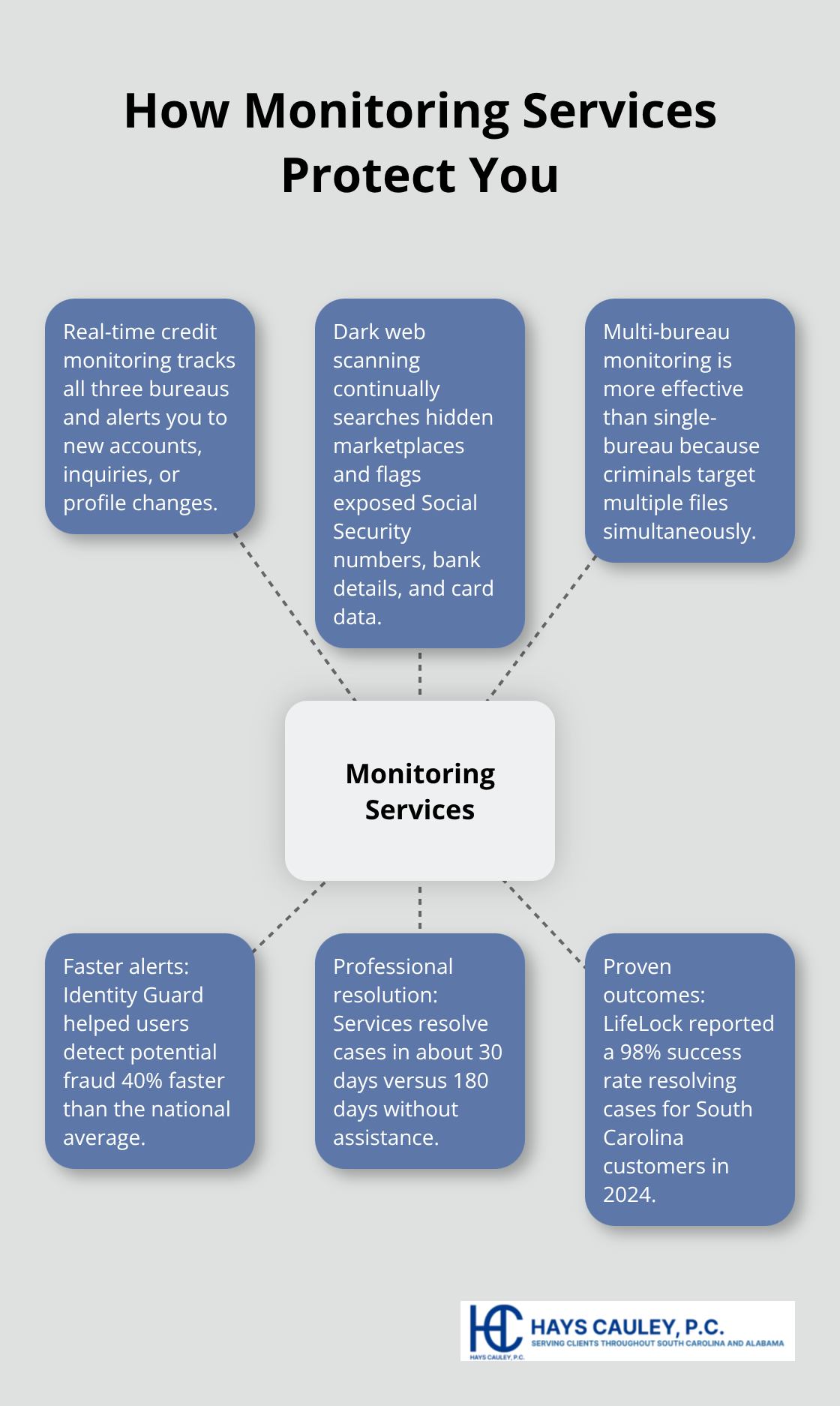
LifeLock reported a 98% success rate in resolving identity theft cases for South Carolina customers in 2024, while Identity Guard’s alert system helped users detect potential fraud 40% faster than the national average. Multi-bureau monitoring proves significantly more effective than single-bureau systems because criminals often target multiple credit files simultaneously.
Dark Web Surveillance Networks
Dark web scanning represents the most aggressive monitoring approach available to consumers today. These services continuously search hidden internet marketplaces where stolen personal information sells for profit. Dark web scanning prevented over 5,000 potential identity theft cases in South Carolina in 2024 according to industry reports, though this technology cannot prevent theft that has already occurred. The scanning process identifies Social Security numbers, bank account details, and credit card information before criminals can use them, but alerts typically arrive after data breaches have already happened.
Recovery Support When Theft Occurs
Recovery services provide the most tangible value when identity theft actually strikes. Many providers offer insurance coverage that ranges from $500,000 to $1 million, while IdentityForce covers lost wages up to $2,000 per week for five weeks. This wage replacement feature helped South Carolina victims save an average of $7,500 in lost wages during 2024. LifeLock’s customer support resolved 92% of user issues within the first call, which matters because victims face time-sensitive deadlines for reporting fraud.
Cost Structure and Value Proposition
Family plans often provide better value than individual coverage, with Identity Guard offering comprehensive family protection for $24.99 monthly (annual subscriptions save consumers up to 25% compared to monthly billing). Credit monitoring costs consumers between $0 to $39.95 per month, yet only 8% of consumers enroll in these services according to Experian data. The question becomes whether these services justify their cost when free alternatives exist.
Are Free Alternatives Worth Using
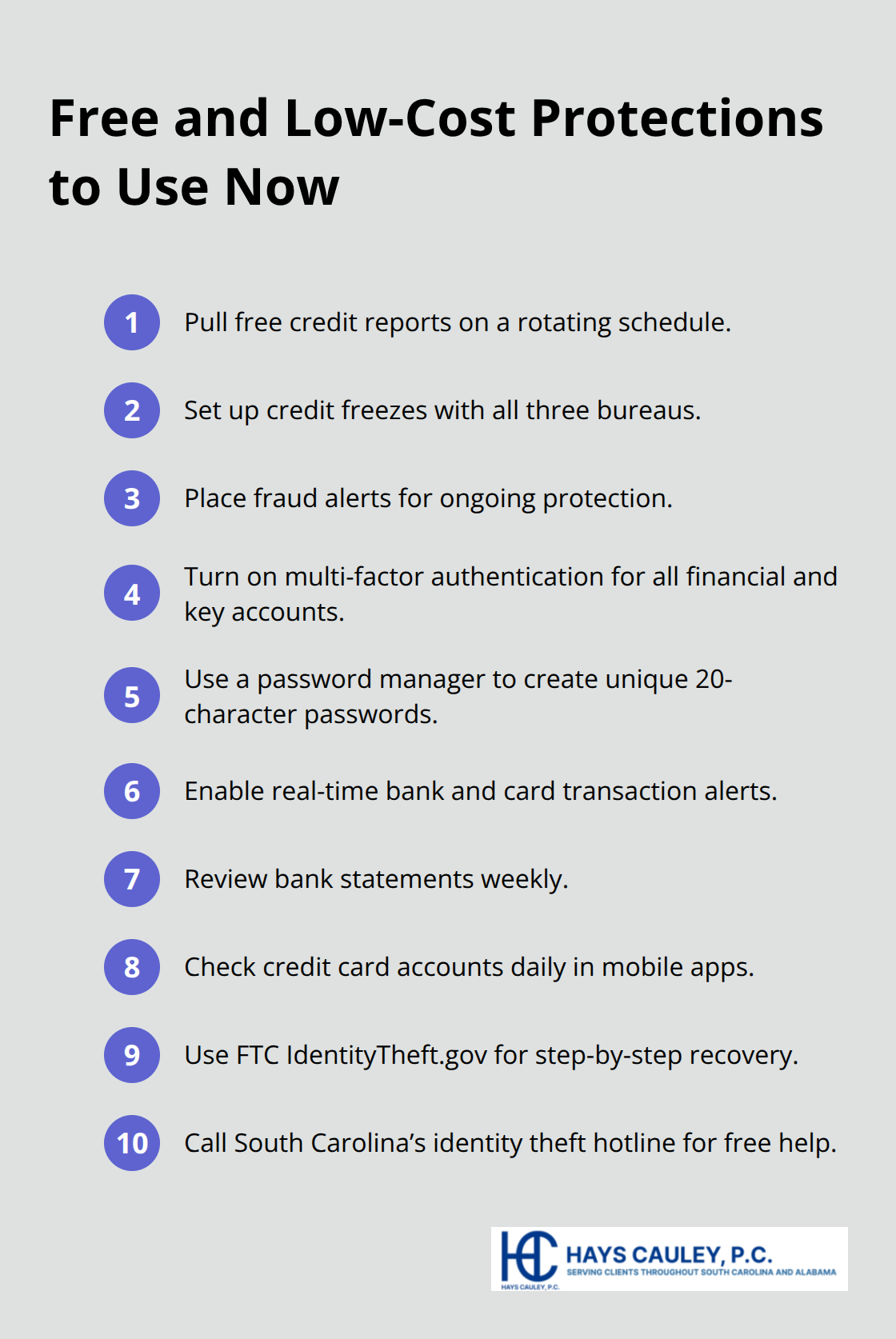
The Federal Trade Commission provides free annual credit reports from all three major bureaus through annualcreditreport.com, which remains the most reliable starting point for self-monitoring. South Carolina residents can access these reports every four months by rotating between Equifax, Experian, and TransUnion throughout the year. Credit Karma and Credit Sesame offer free daily credit score monitoring with basic fraud alerts, though they only track two bureaus instead of all three. The South Carolina Attorney General’s office recommends that residents check bank statements weekly and credit card accounts daily through mobile apps (this costs nothing but requires consistent discipline).
Government Protection Tools That Actually Work
The FTC’s IdentityTheft.gov provides a comprehensive recovery plan when theft occurs and connects victims directly to credit bureaus and financial institutions. South Carolina’s Department of Consumer Affairs operates a dedicated identity theft hotline that helped resolve over 3,000 cases in 2024 without fees. Credit freezes through all three bureaus cost nothing and prevent new accounts from opening, though you must unfreeze credit when you apply for loans or credit cards. Fraud alerts last 90 days initially and can extend to seven years for confirmed identity theft victims (this provides ongoing protection without monthly fees).
DIY Strategies That Reduce Risk
Multi-factor authentication on all financial accounts blocks 99.9% of automated attacks according to Microsoft security data, which makes it more effective than most monitoring services. Password managers like Bitwarden or 1Password generate unique 20-character passwords for every account and cost less annually than two months of premium monitoring services. Bank mobile apps allow you to set up account alerts that provide real-time notifications for transactions over specific amounts, often within minutes of suspicious activity. These free and low-cost methods require more personal involvement but deliver comparable protection to expensive monitoring services for most South Carolina residents.
Final Thoughts
Identity theft monitoring services provide valuable protection for South Carolina residents, but they don’t serve as magic bullets against fraud. The data shows these services resolve cases in 30 days versus 180 days without help, and dark web scans prevented over 5,000 potential thefts statewide in 2024. Free alternatives like credit freezes, fraud alerts, and regular account checks offer substantial protection at no cost.
The decision comes down to your risk tolerance and budget. High-net-worth individuals, business owners, and those who’ve experienced previous fraud benefit most from paid identity theft monitoring. For others, free credit reports combined with strong passwords and multi-factor authentication provide adequate protection (though they require more personal involvement).
Start with free tools and upgrade if your circumstances change. Set up credit freezes immediately, check bank statements weekly, and use unique passwords for every account. When identity theft causes significant financial damage or legal complications, professional help becomes necessary, and we at Hays Cauley, P.C. help South Carolina consumers navigate credit disputes and identity theft recovery.