


Identity theft affects thousands of South Carolina residents each year, with financial losses reaching millions of dollars statewide. Many consumers wonder: is identity theft protection worth it?
We at Hays Cauley, P.C. see firsthand how identity theft devastates families financially and emotionally. This guide examines whether paid protection services justify their costs or if free alternatives provide adequate security.
How Bad Is Identity Theft in South Carolina?
South Carolina faces a severe identity theft crisis that grows worse each year. In 2024, the state reported over 15,000 identity theft cases, which marked a 12% increase from 2023. Financial identity theft dominated these cases and accounted for 68% of all incidents.
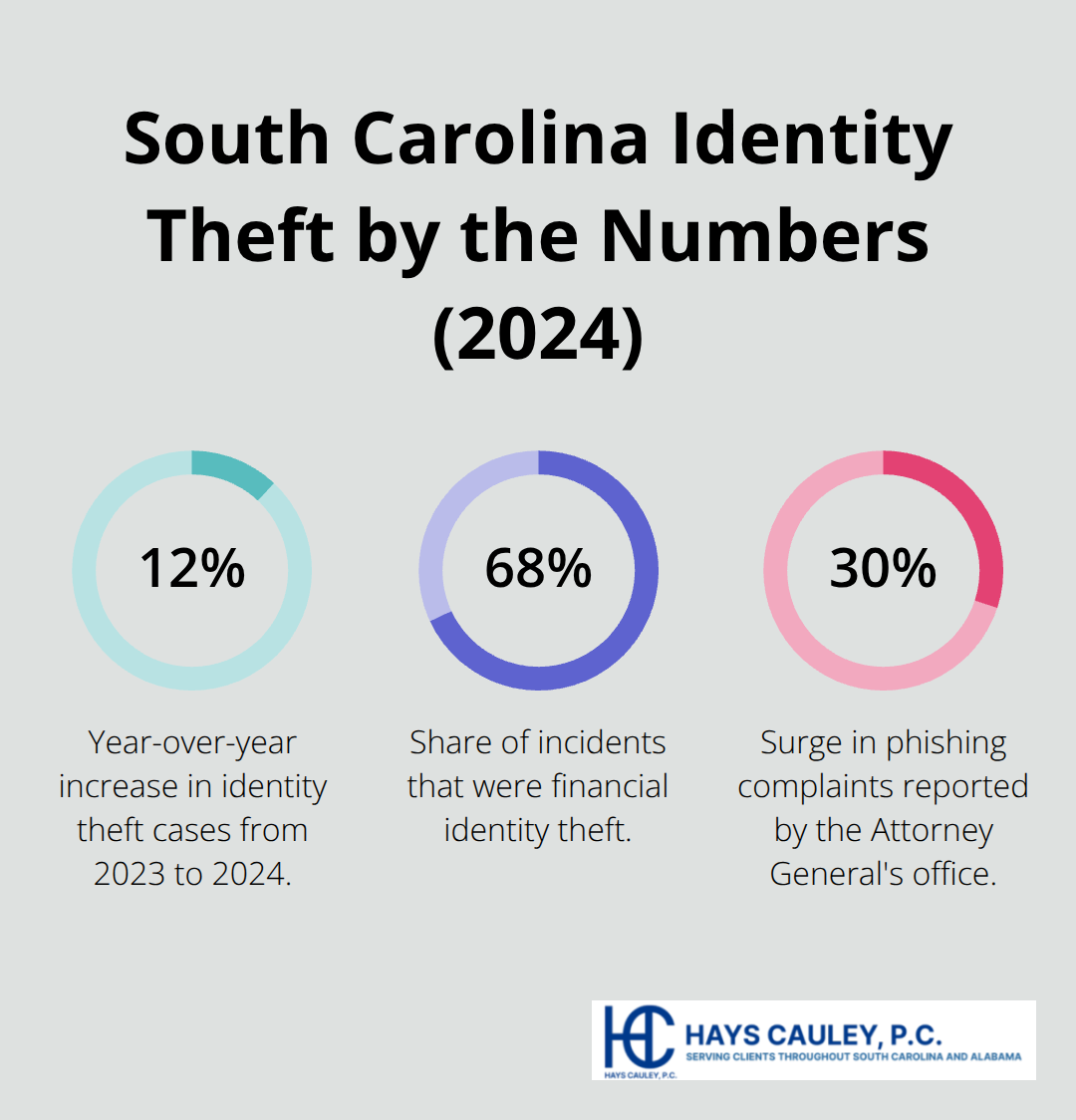
Medical identity theft rose by 15% according to the South Carolina Hospital Association, while the South Carolina Department of Revenue blocked over 5,000 fraudulent tax returns. The South Carolina Attorney General’s office documented a 30% surge in phishing complaints, and Charleston police discovered 25 skimming devices on ATMs and gas pumps throughout the year.
Digital Threats Target South Carolinians Daily
Criminals use sophisticated methods to steal personal information from South Carolina residents. Phishing emails trick victims into revealing passwords and account details. Skimming devices capture credit card data at gas stations and ATMs across major cities like Charleston, Columbia, and Greenville. Data breaches hit local businesses regularly – one major retailer breach in 2024 compromised information for over 100,000 South Carolina customers. Social media harvesting allows thieves to piece together personal details from public profiles. Mail theft remains common in suburban neighborhoods and gives criminals access to bank statements and pre-approved credit offers.
Financial Devastation Hits Hard
The financial impact on South Carolina victims reaches devastating levels. The average out-of-pocket cost for identity theft victims hit $3,500 in 2024. Credit fraud victims lost an average of $9,800 according to the Federal Trade Commission. Victims spend an average of 40 hours to resolve identity theft issues (based on Javelin Strategy & Research data). Lost wages compound the problem – some victims lose income while they deal with fraudulent accounts and damaged credit. Medical identity theft creates additional costs when victims must pay for medical services they never received or fight insurance claim denials.
Recovery Takes Months Without Help
Most victims struggle to restore their identities alone. Those without professional assistance take an average of 180 days to resolve their cases completely. The process involves contacting multiple credit bureaus, banks, and government agencies. Victims must file police reports, dispute fraudulent charges, and rebuild their credit scores. Some face years of credit problems that affect their ability to buy homes, cars, or qualify for loans. The emotional toll adds stress to families already dealing with financial hardship (particularly when medical records or tax information gets compromised).
These harsh realities raise important questions about protection options available to South Carolina residents.
What Do Identity Protection Services Actually Do?
Identity theft protection services monitor your personal information across multiple platforms and alert you to potential threats. LifeLock scans over 1 trillion data points daily and helps users detect potential threats 27% faster than the national average. Identity Guard’s AI system sends alerts within minutes and informs South Carolina users of suspicious activity an average of 15 hours before other services.
Core Protection Features
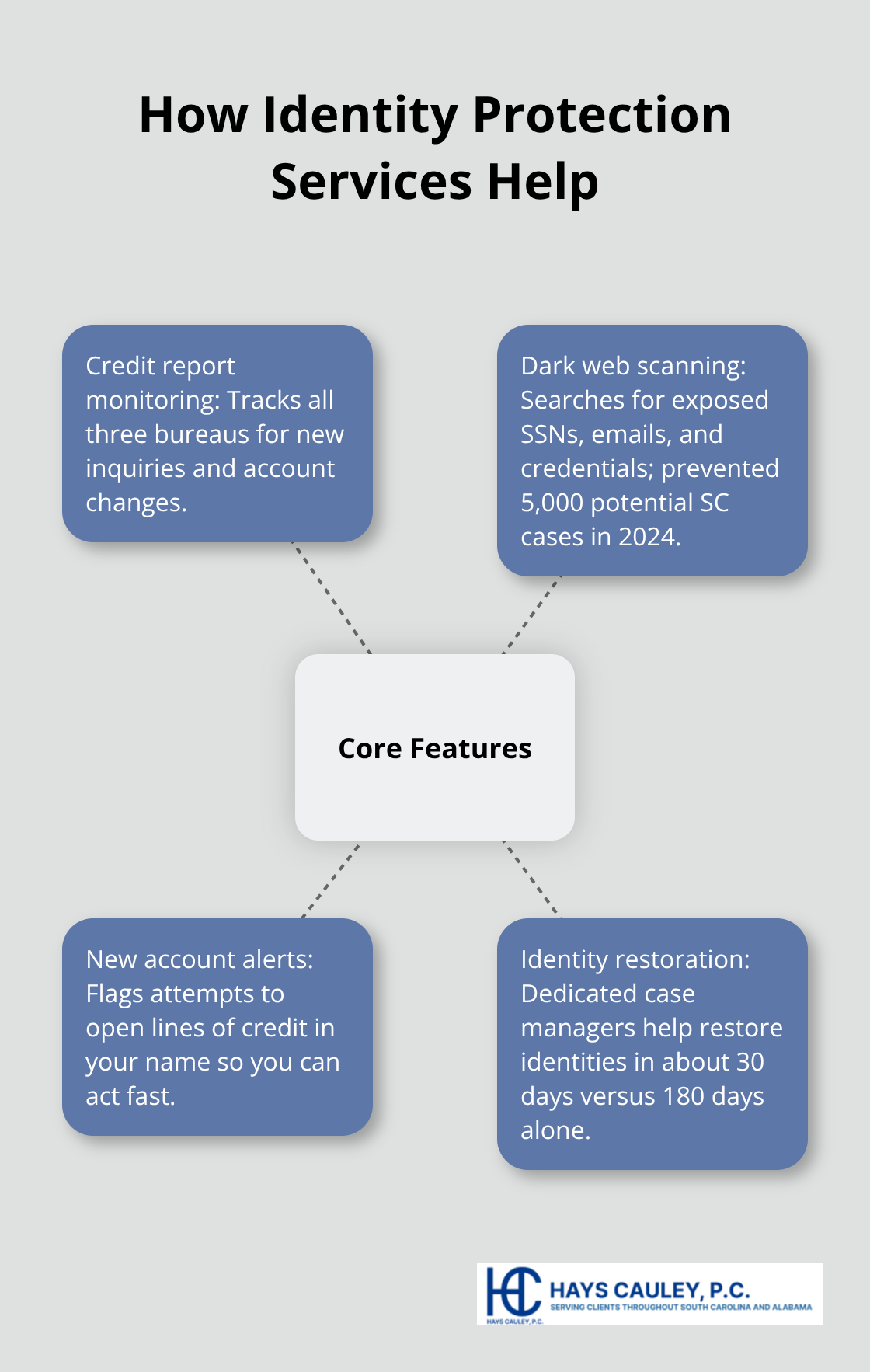
These services monitor credit reports from all three bureaus, scan the dark web for your personal information, and watch for new account openings in your name. Dark web scanning prevented over 5,000 potential identity theft cases in South Carolina in 2024 according to the Department of Consumer Affairs. Most services also provide identity restoration assistance through dedicated case managers who help victims restore their identities in an average of 30 days (compared to 180 days for those without such assistance).
Monthly Costs Range From Affordable to Premium
Popular identity protection plans cost between $10 and $30 monthly for individuals. LifeLock Essential costs $9.99 per month while their Ultimate Plus plan runs $29.99 monthly. Identity Guard offers basic monitoring for $8.99 monthly and comprehensive protection for $24.99. Family plans provide better value – Identity Guard covers two adults and unlimited children for $24.99 monthly. Annual payments typically offer 10-15% savings over monthly billing. Most services include $500,000 to $1 million in insurance coverage, which becomes vital given the average $9,800 loss from credit fraud in South Carolina.
Services Cannot Prevent All Identity Theft
These services have significant limitations that consumers must understand. They cannot prevent thieves from stealing your wallet or mail, and they cannot stop data breaches at retailers or healthcare providers. Credit monitoring services often generate false alarms while they lack timely alerts of actual fraud. Most identity theft insurance policies do not cover losses already protected under federal laws – the majority of identity theft victims in 2011 reported zero out-of-pocket losses from their incidents.
Two-thirds of identity theft cases involve stolen credit cards rather than full identity theft, and existing account fraud constitutes 80% of reported cases. Javelin Strategy & Research found that do-it-yourself safeguards prove as effective as paid identity theft protection services. This research raises important questions about monthly fees and leads us to examine what free alternatives South Carolina residents can use instead.
What Free Tools Actually Work for Identity Protection
South Carolina residents can protect themselves effectively without monthly fees through strategic use of free resources. Consumers receive free annual credit reports from Equifax, Experian, and TransUnion through annualcreditreport.com. Stagger these requests every four months to monitor your credit continuously throughout the year. Place a 90-day fraud alert on your credit file to obtain additional free credit reports from each bureau and require creditors to verify your identity before they open accounts. Security freezes on credit reports block new account openings entirely and cost nothing in South Carolina. These DIY approaches prove as effective as paid services according to Javelin Strategy & Research findings.
Monitor Your Information Daily Without Fees
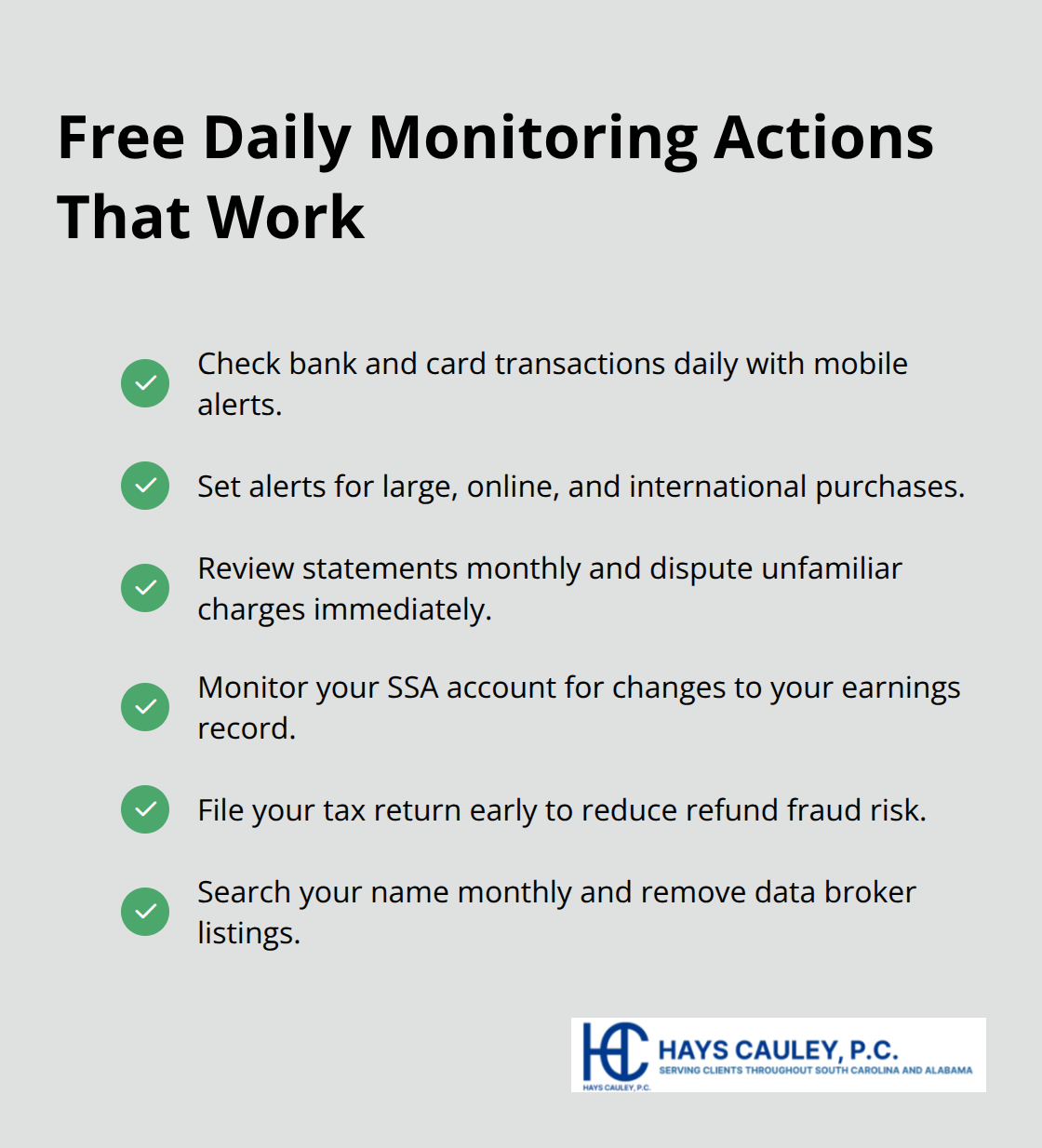
Check bank and credit card accounts daily through free mobile banking apps that send instant transaction alerts. Set up account notifications for purchases over specific dollar amounts, international transactions, and online purchases. Review monthly statements line by line and dispute unfamiliar charges immediately. Monitor your Social Security Administration account at ssa.gov to detect unauthorized access to your earnings record. File your tax return early each year to prevent identity theft (the South Carolina Department of Revenue blocked over 5,000 fraudulent returns in 2024). Google yourself monthly to find personal information posted online and request removal from data broker websites like WhitePages and Spokeo.
Government Resources Provide Real Protection
The South Carolina Department of Consumer Affairs offers free identity theft resources including complaint filing systems and educational materials about current scam trends. The Federal Trade Commission provides IdentityTheft.gov for reporting identity theft and creates personalized recovery plans at no cost. Sign up for fraud alerts through the Internal Revenue Service Identity Protection PIN program if you previously experienced tax-related identity theft. Use the National Do Not Call Registry to reduce telemarketing calls that often serve as phishing attempts (these calls frequently target personal information). These government resources cost taxpayers nothing and provide the same monitoring capabilities as services that charge $120 to $300 annually.
Final Thoughts
Paid identity theft protection makes financial sense for South Carolina residents who lack time to monitor their accounts daily or who have complex financial situations with multiple credit cards and investment accounts. Services with dedicated case managers prove valuable when you consider that professional assistance reduces recovery time from 180 days to just 30 days. The $120 to $300 annual cost becomes worthwhile if you earn more than minimum wage and cannot afford weeks away from work to resolve identity theft issues.
Most South Carolina residents can achieve effective protection through free alternatives that work just as well. Regular credit checks, fraud alerts, and security freezes provide the same core protection as paid services. The key lies in consistent daily account checks and immediate action when suspicious activity appears.
We at Hays Cauley, P.C. help South Carolina consumers navigate identity theft recovery and credit report disputes. Whether you choose paid protection or free alternatives, the answer to “is identity theft protection worth it” depends on your personal situation, income level, and ability to monitor your accounts consistently. South Carolina law provides strong legal protections for victims, including restitution rights under Section 17-25-322 (which allows courts to order full compensation for losses).