


South Carolina Identity Defense: Protecting Your Credit From Identity Theft
Identity theft is growing faster in South Carolina than many residents realize. Criminals steal personal information and damage credit scores, making it harder to borrow money or get hired for jobs.
At Hays Cauley, P.C., we help victims recover from identity theft and rebuild their financial lives. This guide shows you how to defend yourself and what steps to take if theft happens to you.
How Identity Theft Damages Your Credit in South Carolina
South Carolina recorded over 15,000 identity theft cases in 2024, a 12% jump from 2023, according to the South Carolina Department of Consumer Affairs. Financial identity theft accounts for 68% of those cases, with victims losing an average of $9,800 per incident. New-account fraud ranks as the most common type in the state-criminals open credit cards, loans, or other accounts in your name without permission. Those fraudulent accounts appear on your credit report within weeks, dragging down your credit score. The damage extends beyond numbers on a report. It affects your ability to borrow money, refinance a home, or qualify for a job. Employers in South Carolina increasingly pull credit reports during hiring, especially for positions involving financial responsibility or access to sensitive information. Medical identity theft also spiked 15% in South Carolina during 2024, creating dual damage: fraudulent medical bills tank your credit while incorrect medical records complicate your healthcare. The Federal Trade Commission found that inaccuracies appear on roughly 1 in 5 credit reports, so identity theft can hide among legitimate errors that take months to untangle.
How Fast Credit Damage Spreads
Once a criminal opens an account in your name, the damage accelerates rapidly. A single fraudulent account can drop your score 50 to 100 points or more, depending on the account size and your existing score. If the thief misses payments on that account, your score plummets further. Lenders see missed payments and assume you’re irresponsible, making them less willing to approve legitimate credit applications. The problem compounds because recovery takes time-victims spend months to years correcting fraudulent accounts and rebuilding credit. Some victims discover the theft only when they apply for a mortgage or car loan and face rejection.
Real-Time Monitoring Stops Fraud Before It Spreads
Real-time credit monitoring pulls reports from all three major bureaus and flags new accounts you didn’t open, unusual inquiries, and sudden balance changes within minutes. Speed matters because alerts arriving within minutes give you time to contact creditors and stop fraud before it spreads. Without monitoring, criminals open multiple accounts before you notice anything wrong. This is why the next section focuses on the specific steps you must take to protect your personal information and prevent theft from happening in the first place.
South Carolina Identity Defense: Protecting Your Credit From Identity Theft – How to Lock Down Your Personal Information
Monitor Your Credit Reports and Set Up Real-Time Alerts
Pulling reports from AnnualCreditReport.com three times yearly catches fraud, but this approach leaves gaps. The Federal Trade Commission found inaccuracies on roughly 1 in 5 credit reports, meaning you could spot errors months after they appear. Real-time credit monitoring from services covering all three bureaus-Experian, Equifax, and TransUnion-alerts you within minutes of new accounts, suspicious inquiries, or balance changes you didn’t authorize. This speed matters because criminals work fast; the longer fraud sits undetected, the more accounts they open and the deeper the damage spreads.
Set up online accounts directly with each bureau to monitor changes between annual reports. Review your Social Security Statement for errors, especially if you’re 60 or older and don’t have an online account with the Social Security Administration. These steps create multiple checkpoints that catch fraud before it multiplies.
Protect Your Social Security Number Like a Vault Combination
Your Social Security number is the master key to identity theft. Never email it, never share it on unsecured websites, and only provide it when absolutely necessary-many situations accept alternative identification instead. Criminals know that a stolen SSN opens doors to credit cards, loans, and fraudulent tax returns filed in your name.
Shred bank statements, credit applications, medical forms, and expired cards immediately; criminals dig through trash for personal documents. Local shred-a-thon events offer free disposal if you have large stacks. Store copies of your credit cards front and back in a safe location so you can report a missing card within hours, not days.
Strengthen Your Digital Defenses
Strong passwords are non-negotiable: use at least 16 characters mixing uppercase letters, numbers, and symbols, according to National Institute of Standards and Technology guidance. Enable two-factor authentication on banking, credit card, and email accounts-authenticator apps are more secure than text messages, which scammers intercept. These two steps block most common attacks that criminals attempt against your accounts.
Lock Down Your Credit File
Place a fraud alert with one credit bureau to block new account openings for one year; the alert automatically notifies the other two bureaus. For stronger protection, freeze your credit with all three bureaus at no cost in South Carolina and keep secure PINs to unfreeze when you actually need credit. This layered approach-professional monitoring plus personal vigilance-stops criminals before they inflict damage that takes months or years to repair. Even with these protections in place, identity theft can still occur, which is why knowing your response steps matters.
What to Do When Identity Theft Happens
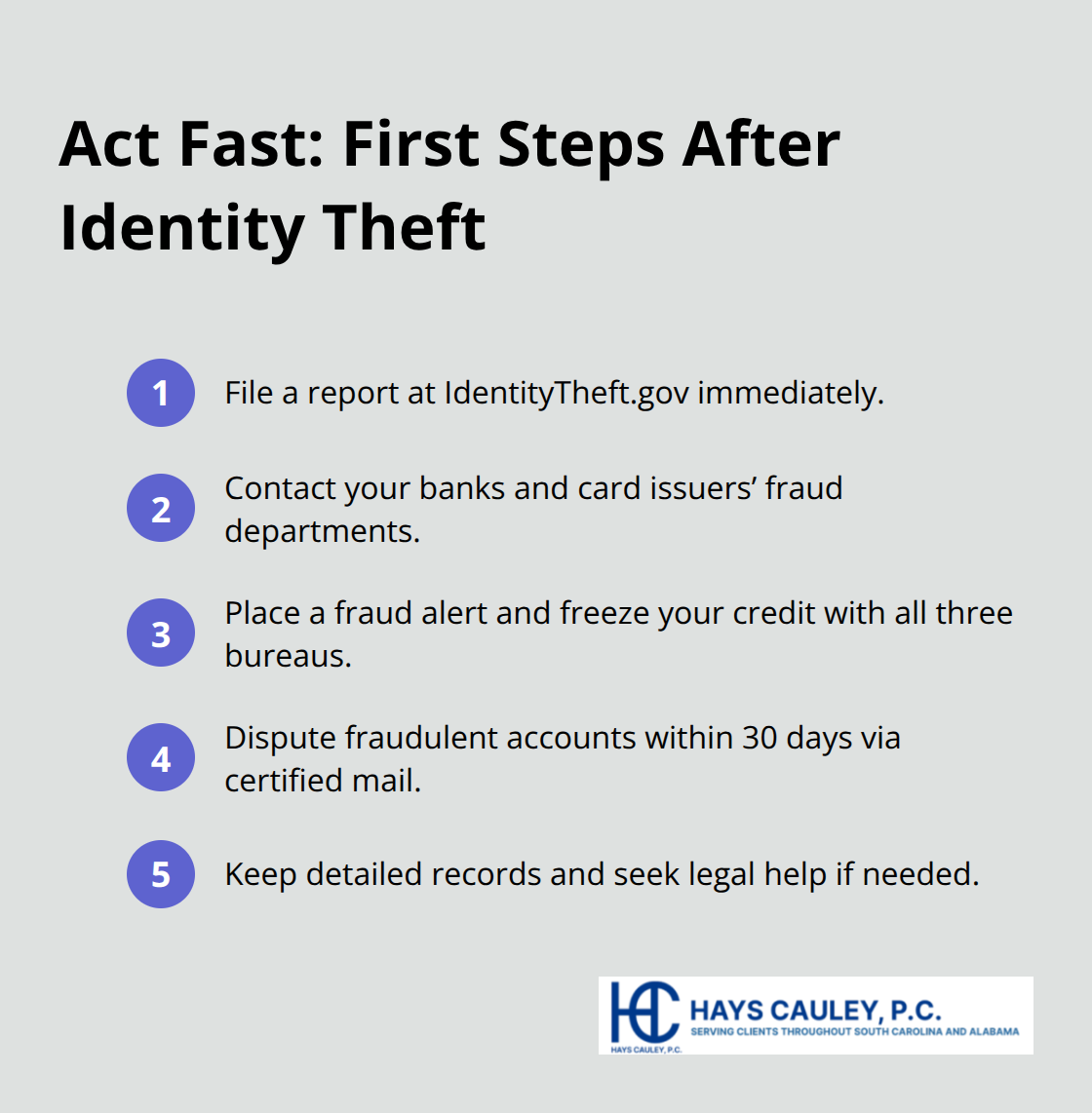
Act within 24 to 48 hours of discovering identity theft-every hour counts. The Federal Trade Commission recommends filing a report immediately at IdentityTheft.gov, which generates an official Identity Theft Report that creditors and credit bureaus must accept as proof of fraud. This report becomes your legal foundation for disputing fraudulent accounts and removes you from liability for unauthorized charges.
Contact Your Financial Institutions Immediately
Contact your banks and credit card companies directly by calling the numbers on the back of your cards, not numbers you find online, since criminals set up fake support lines. Report the theft to the fraud department, request they freeze all accounts and issue new cards, and ask them to reverse fraudulent charges. Document the names, dates, and confirmation numbers from every call you make. This documentation protects you if disputes arise later about what you reported and when.
File a Fraud Alert and Credit Freeze
Place a fraud alert immediately with one of the three credit bureaus-Equifax, Experian, or TransUnion-and that bureau must notify the other two. The fraud alert lasts one year and forces lenders to verify your identity by phone before approving new credit, blocking criminals from opening accounts silently. For maximum protection, place a credit freeze with all three bureaus at no cost in South Carolina and create secure PINs to unfreeze your file when you legitimately need credit.
Get Help From South Carolina Resources
In South Carolina, contact the SC Department of Consumer Affairs Identity Theft Unit at 800-922-1594 for one-on-one assistance and access to the ID Theft Toolkit, which provides step-by-step recovery guidance. The unit staff answer questions specific to your situation and connect you with resources tailored to South Carolina residents.
Dispute Fraudulent Accounts With Credit Bureaus
File disputes with the credit bureaus within 30 days via certified mail, including your FTC Identity Theft Report number. The Fair Credit Reporting Act requires bureaus to investigate within 30 days and remove verified fraudulent accounts from your report. Request copies of your credit reports every few months during recovery to confirm fraudulent accounts are removed and no new ones appear. If a bureau refuses to correct verified fraud after your dispute, you may have grounds for a civil claim under the Fair Credit Reporting Act.
Track Everything and Seek Legal Help if Needed
Keep detailed records of all actions taken: police reports, creditor communications, credit reports, and dispute letters. These records prove your efforts to recover and support any legal claims if creditors or bureaus refuse to cooperate. If you face resistance from creditors or credit bureaus, we at Hays Cauley, P.C. guide South Carolina residents through credit disputes and identity theft recovery when protections are breached or creditors refuse to cooperate. Serving South Carolina, including Greenville, Columbia and Charleston, we understand the specific identity theft threats residents face in your region.
Final Thoughts
South Carolina identity defense requires both prevention and swift action. The state recorded over 15,000 identity theft cases in 2024, with new-account fraud hitting hardest and victims losing an average of $9,800 per incident. These numbers reflect real damage to credit scores, borrowing ability, and employment prospects that take months or years to repair.
Proactive protection stops most threats before they start. Monitoring your credit reports from all three bureaus, securing your Social Security number, using strong passwords with two-factor authentication, and placing a fraud alert or credit freeze create multiple barriers that criminals struggle to penetrate. The cost of prevention is minimal compared to the time and money required to recover from identity theft.
When theft occurs despite your precautions, speed determines the outcome. Filing a report at IdentityTheft.gov within 24 to 48 hours, contacting your banks immediately, and disputing fraudulent accounts within 30 days limits the damage and accelerates recovery. If creditors or credit bureaus refuse to cooperate or correct verified fraud, we at Hays Cauley, P.C. help South Carolina residents navigate credit reporting disputes and identity theft recovery, and we serve South Carolina, including Greenville, Columbia and Charleston.