


Identity Theft and the Law in South Carolina What You Need to Know
Identity theft affects over 14 million Americans annually, with South Carolina residents facing unique legal challenges when their personal information gets stolen.
Understanding identity theft and the law becomes vital when criminals use your data to open accounts, make purchases, or commit fraud in your name.
We at Hays Cauley, P.C. see how devastating these crimes can be for families across our state, often leaving victims struggling with damaged credit and financial chaos for years.
South Carolina Identity Theft Laws and Penalties
South Carolina imposes severe criminal penalties that reflect the devastating impact identity theft has on victims. Section 16-13-510 of the South Carolina Code of Laws establishes financial identity fraud as a felony with a maximum prison sentence of 10 years plus discretionary fines the court determines. This classification means offenders face substantial consequences regardless of whether some criminal acts occurred outside state boundaries.
The law covers a broad range of personal information including social security numbers, driver’s license numbers, credit card numbers, and electronic identification numbers. Financial resources under the statute encompass checking accounts, savings accounts, loans, and retirement funds (giving prosecutors wide latitude to pursue cases).
Civil Remedies Provide Additional Recovery Options
Victims can pursue civil remedies beyond criminal prosecution. South Carolina law allows damages of three times actual damages or $3,000 per incident under Section 37-20-170. Courts may order restitution under Section 17-25-322, which requires offenders to compensate victims for financial losses.
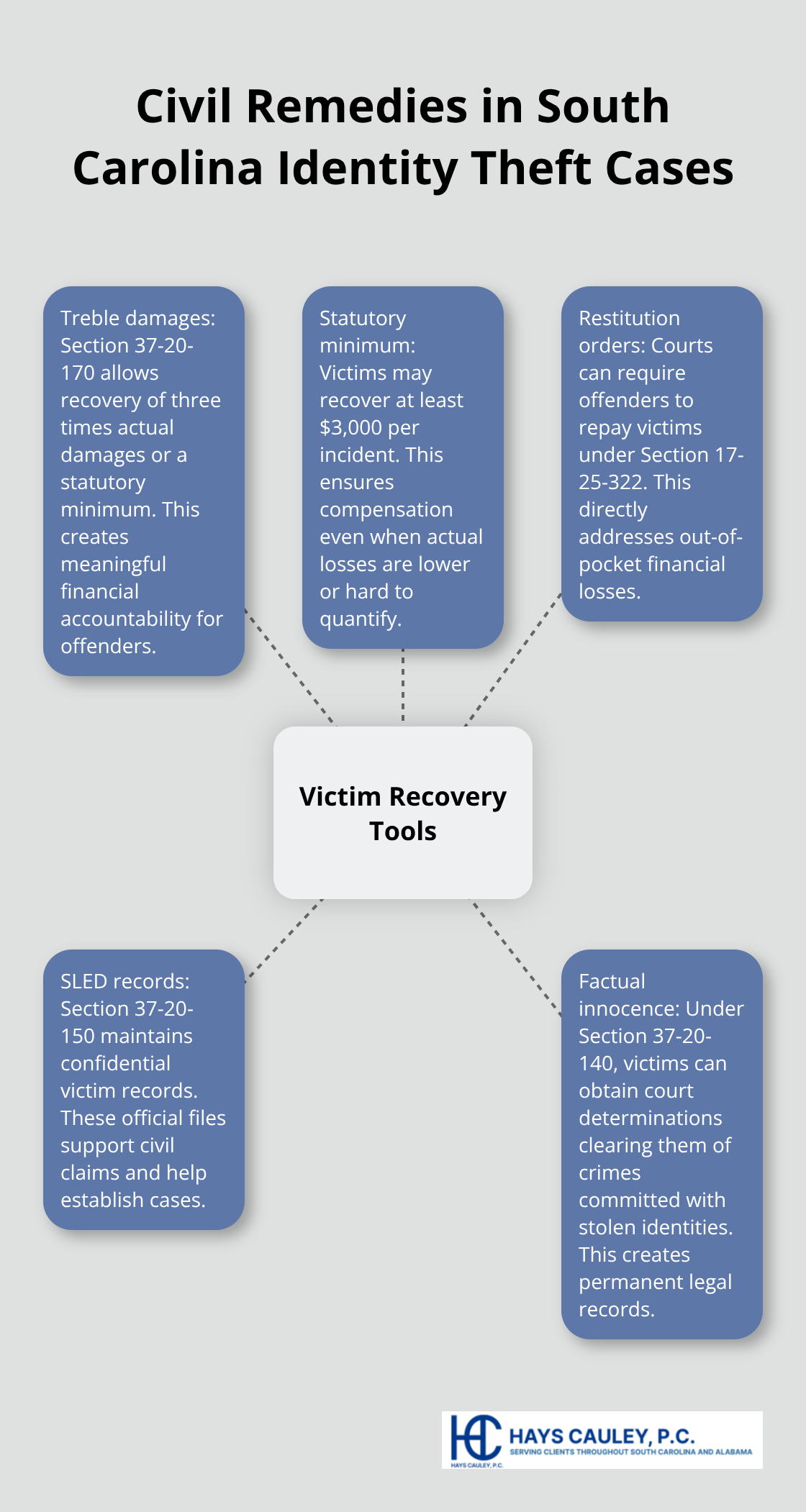
The State Law Enforcement Division maintains confidential records of identity theft victims under Section 37-20-150. This documentation supports civil claims and helps victims establish their cases. Victims can also petition for judicial determination of factual innocence under Section 37-20-140 when criminals commit crimes with their stolen identity.
Recent Legal Updates Strengthen Consumer Protections
South Carolina eliminated fees for credit freezes, which makes this protection accessible to all consumers under updated Section 37-20-160. The law now requires consumer reporting agencies to process security freeze requests within five business days and provide written confirmation with removal instructions.
New business disposal requirements under Section 37-20-190 mandate secure destruction of customer records that contain personal information. Companies face civil liability for negligence violations under Section 37-20-200 (creating stronger incentives for proper data protection).
These legal protections form the foundation of your rights as an identity theft victim, but knowing how to exercise these rights becomes equally important when criminals target your personal information.
Your Rights as an Identity Theft Victim in South Carolina
South Carolina law grants identity theft victims extensive documentation and report rights that form the foundation of recovery efforts. Section 37-20-130 allows consumers to initiate law enforcement investigations when they suspect identity theft, which gives victims legal power to demand police action. The State Law Enforcement Division maintains confidential victim records under Section 37-20-150, and this provides official documentation that supports insurance claims and legal proceedings. Victims can petition courts for factual innocence determinations under Section 37-20-140 when criminals commit crimes with stolen identities, and this creates permanent legal records that clear victims of wrongdoing.
Credit Protection Rights Stop Further Damage
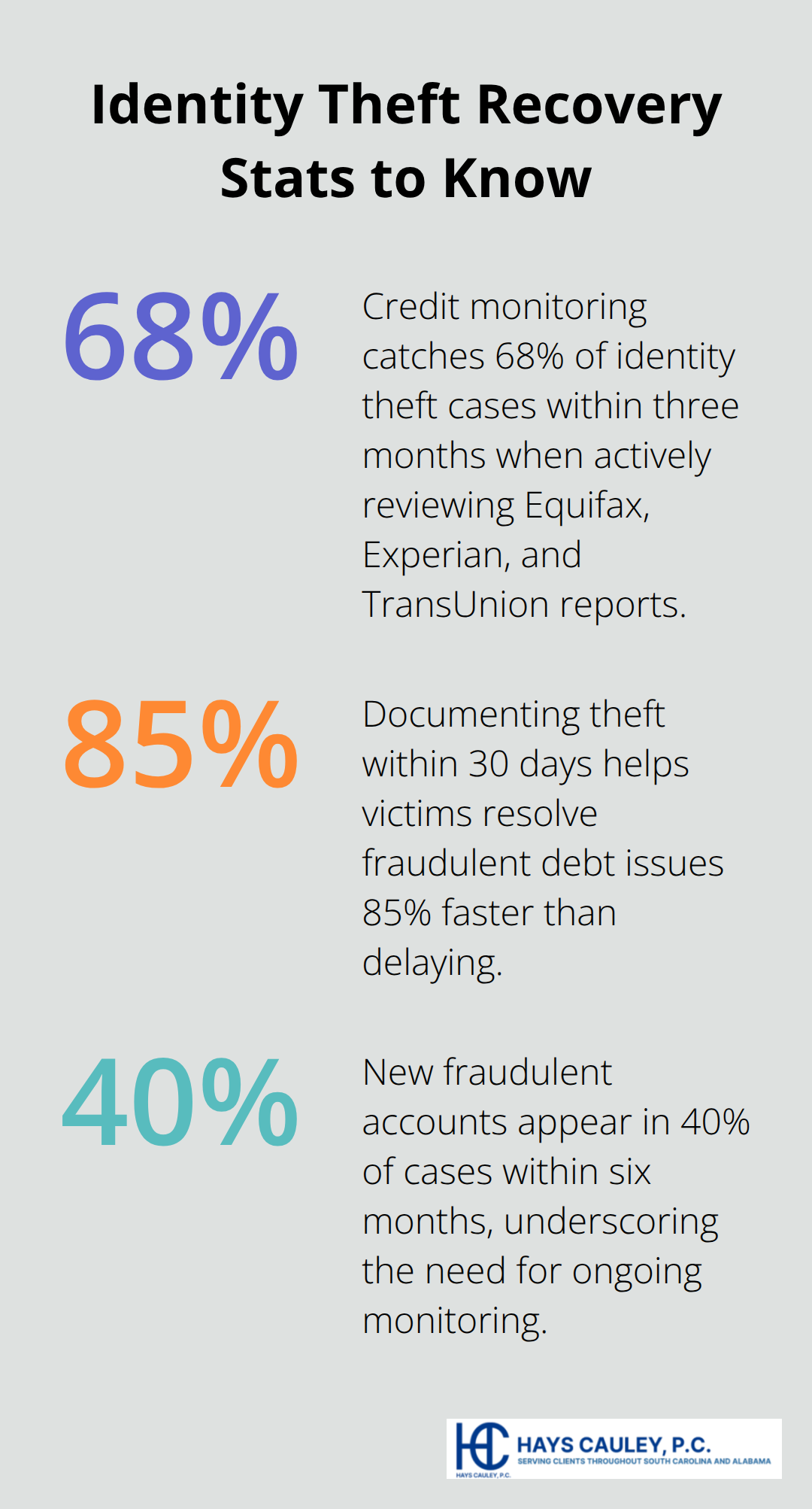
Consumer reporting agencies must process security freeze requests within five business days under Section 37-20-160, and South Carolina eliminated all fees for these freezes in recent updates. The law requires written confirmation with removal instructions, which gives victims complete control over credit access. Victims can dispute inaccurate information at no cost under Section 37-20-170, and this forces agencies to reinvestigate fraudulent accounts. The Federal Trade Commission reports that credit monitoring catches 68% of identity theft cases within three months when victims actively monitor their reports from Equifax, Experian, and TransUnion.
Debt Collection Protections Shield Victims
Section 37-20-200 creates civil liability for businesses that fail to secure personal information, and this gives victims legal recourse against negligent companies. The law prohibits debt collectors from pursuing fraudulent accounts once victims provide identity theft documentation. Courts can award damages of three times actual losses or $3,000 per incident under Section 37-20-170, which creates financial consequences for violations. The South Carolina Department of Consumer Affairs reports that victims who document theft properly within 30 days resolve fraudulent debt issues 85% faster than those who delay reporting.
Police Report Rights Establish Official Records
Victims have the right to file police reports regardless of where the theft occurred or the dollar amount involved. Law enforcement agencies cannot refuse to take reports based on jurisdiction issues when the victim resides in South Carolina. Police must provide case numbers and copies of reports, which victims need for credit disputes and insurance claims. These official documents carry legal weight that private documentation cannot match (making them essential for successful recovery efforts).
The next step involves taking immediate action to limit damage and protect yourself from further harm.
Steps to Take After Identity Theft in South Carolina
Contact your bank and credit card companies within 24 hours of discovering identity theft, as the Federal Trade Commission reports that victims who act within this timeframe limit their losses to an average of $1,200 compared to $4,800 for those who wait longer. Place fraud alerts with all three credit bureaus immediately through their automated systems, which takes under 10 minutes per bureau and provides 90-day protection. File your police report the same day, as South Carolina law requires this documentation for credit disputes and insurance claims under Section 37-20-130.
Document Everything From Day One
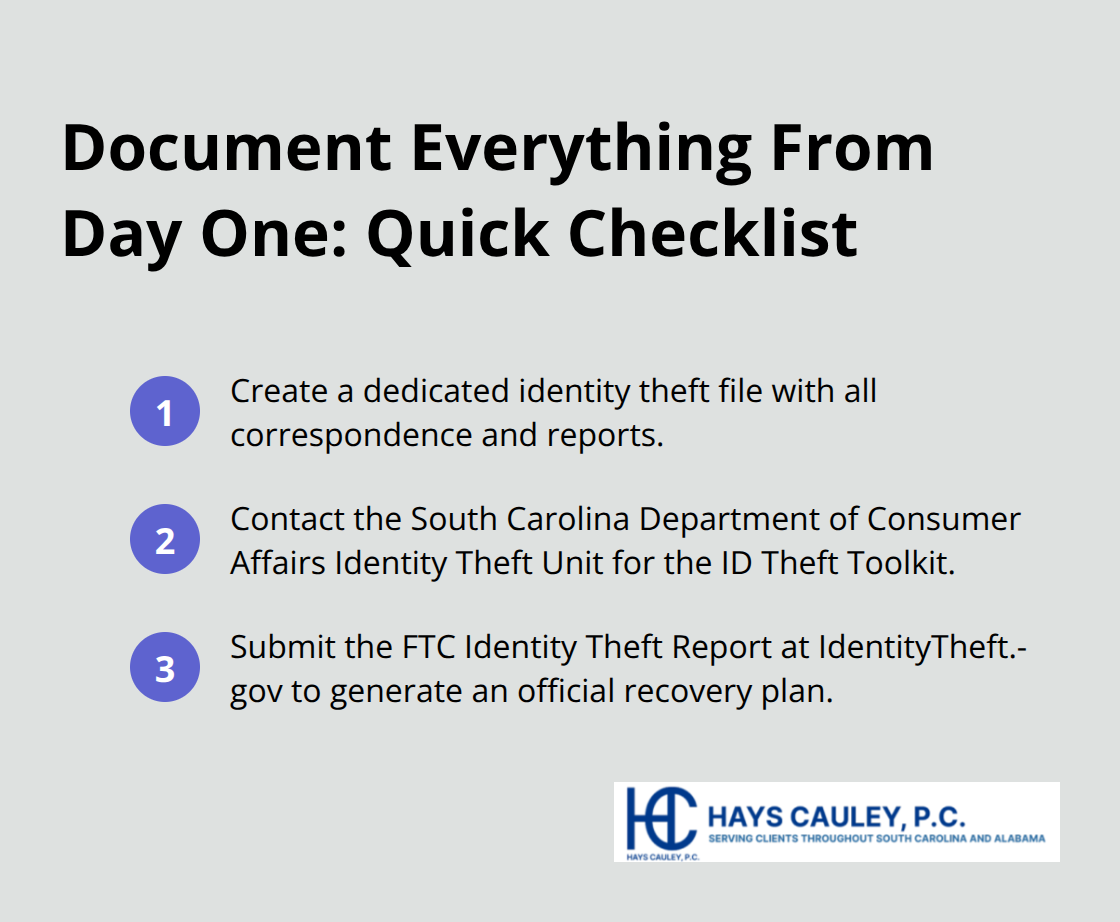
Create a dedicated identity theft file that contains all correspondence, police reports, and account statements, as the Identity Theft Resource Center shows that organized victims resolve cases 60% faster than those without proper documentation. Contact the South Carolina Department of Consumer Affairs Identity Theft Unit at 803-734-4200 to obtain their ID Theft Toolkit, which provides state-specific forms and checklists. Submit the FTC Identity Theft Report at IdentityTheft.gov, which generates an official recovery plan that creditors and government agencies nationwide accept.
Work With Law Enforcement Effectively
Police departments must accept your identity theft report regardless of where the theft occurred or the dollar amount involved when you reside in South Carolina. Request case numbers and copies of all reports, as you need these documents for credit disputes and insurance claims. Follow up with detectives weekly to track investigation progress (persistence often determines case priority). The State Law Enforcement Division maintains confidential victim records under Section 37-20-150, which provides official documentation that supports your legal proceedings.
Rebuild Your Financial Standing Systematically
Request free credit reports from all three bureaus after you file your police report, then dispute fraudulent accounts in written form with certified mail to create legal proof of your efforts. The South Carolina Department of Revenue estimates that victims who follow systematic dispute processes restore their credit scores to pre-theft levels within 12–18 months compared to 3–5 years for unorganized approaches. Monitor your credit weekly with free services from each bureau, as new fraudulent accounts appear in 40% of cases within six months according to Experian data. Replace all compromised financial accounts and identification documents immediately, which includes driver’s licenses and social security cards, to prevent ongoing misuse of your stolen information.
Final Thoughts
South Carolina provides comprehensive legal protections against identity theft through criminal penalties up to 10 years imprisonment, civil damages of three times actual losses or $3,000 per incident, and mandatory business data protection requirements. The state eliminated credit freeze fees and requires five-day processing times, while maintaining confidential victim records through the State Law Enforcement Division. These laws create a strong framework that protects consumers when criminals target their personal information.
Identity theft and the law work together to give you powerful tools for recovery when fraud occurs. Your legal protections include police report rights, credit dispute processes, debt collection shields, and judicial innocence determinations that clear your name from fraudulent crimes. The key lies in acting quickly and following proper procedures to maximize your legal protections under South Carolina law.
Complex cases with multiple fraudulent accounts, business negligence, or persistent credit reporting errors often require professional legal assistance. We at Hays Cauley, P.C. help consumers navigate credit reporting and debt-related issues when standard dispute processes fail to restore your financial standing. Legal intervention becomes necessary when creditors ignore documentation, credit bureaus refuse corrections, or debt collectors pursue fraudulent accounts despite proper identity theft reports (making professional guidance valuable for complex situations).