


Recognizing Different Types of Identity Theft in South Carolina
Identity theft affects thousands of South Carolina residents each year, with criminals using increasingly sophisticated methods to steal personal information. The various types of identity theft can devastate victims financially and emotionally.
We at Hays Cauley, P.C. see firsthand how these crimes impact families across our state. Understanding the warning signs helps protect you and your loved ones from becoming the next target.
How Financial Identity Theft Targets South Carolina Residents
Credit Card Fraud Dominates Identity Theft Cases
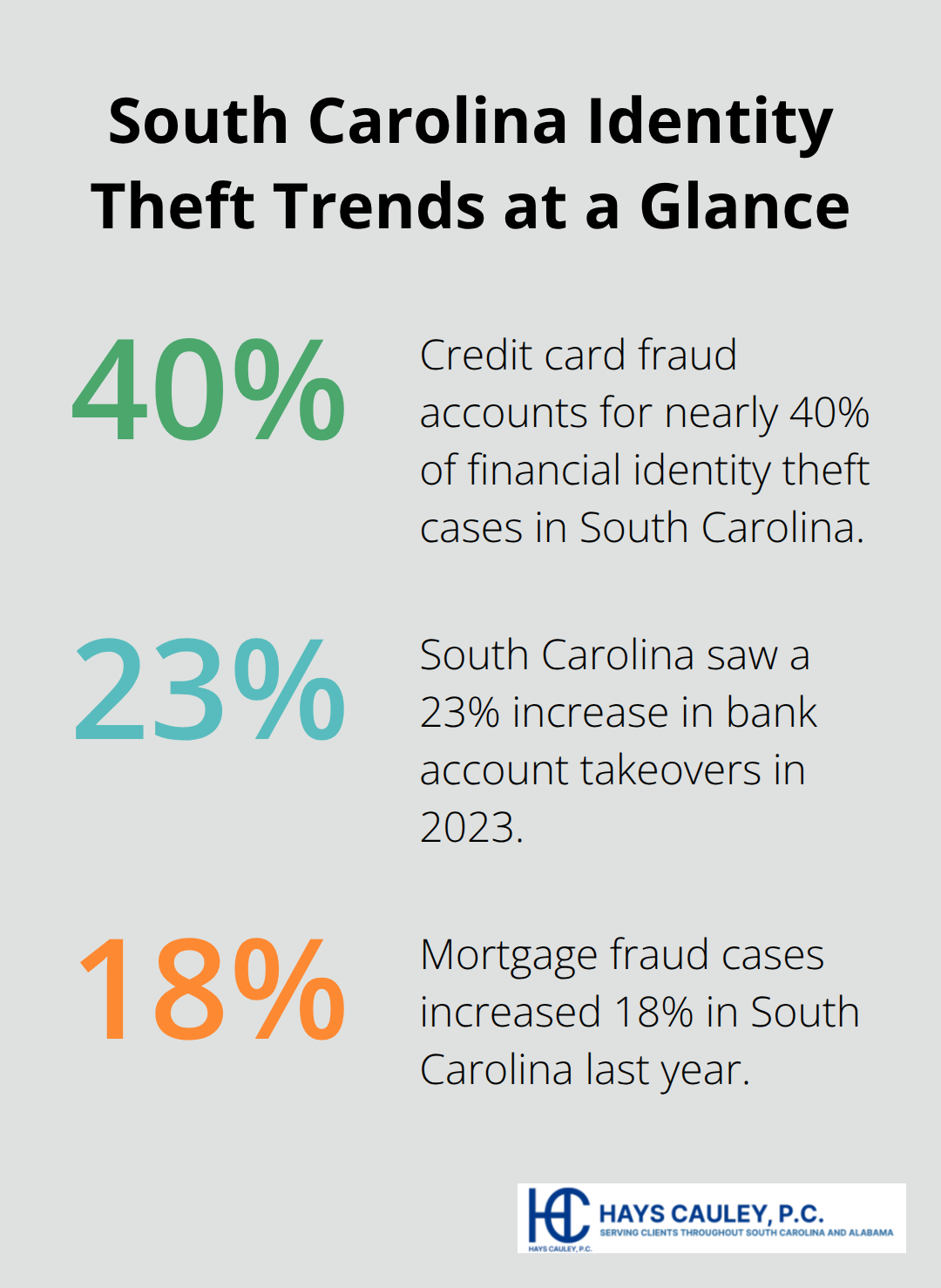
Credit card fraud represents the most common form of financial identity theft in South Carolina, with the Federal Trade Commission reporting it accounts for nearly 40% of all cases. Criminals obtain card numbers through devices that skim data at ATMs and gas stations, then make unauthorized purchases before victims notice the theft. The average South Carolina victim loses $1,847 per incident, and recovery takes 6–12 months to complete.
Monitor your statements weekly rather than monthly – fraudulent charges often appear within 48 hours of data theft. Set up text alerts for transactions over $50 and freeze your cards immediately when suspicious activity appears on your account.
Bank Account Takeovers Strike Without Warning
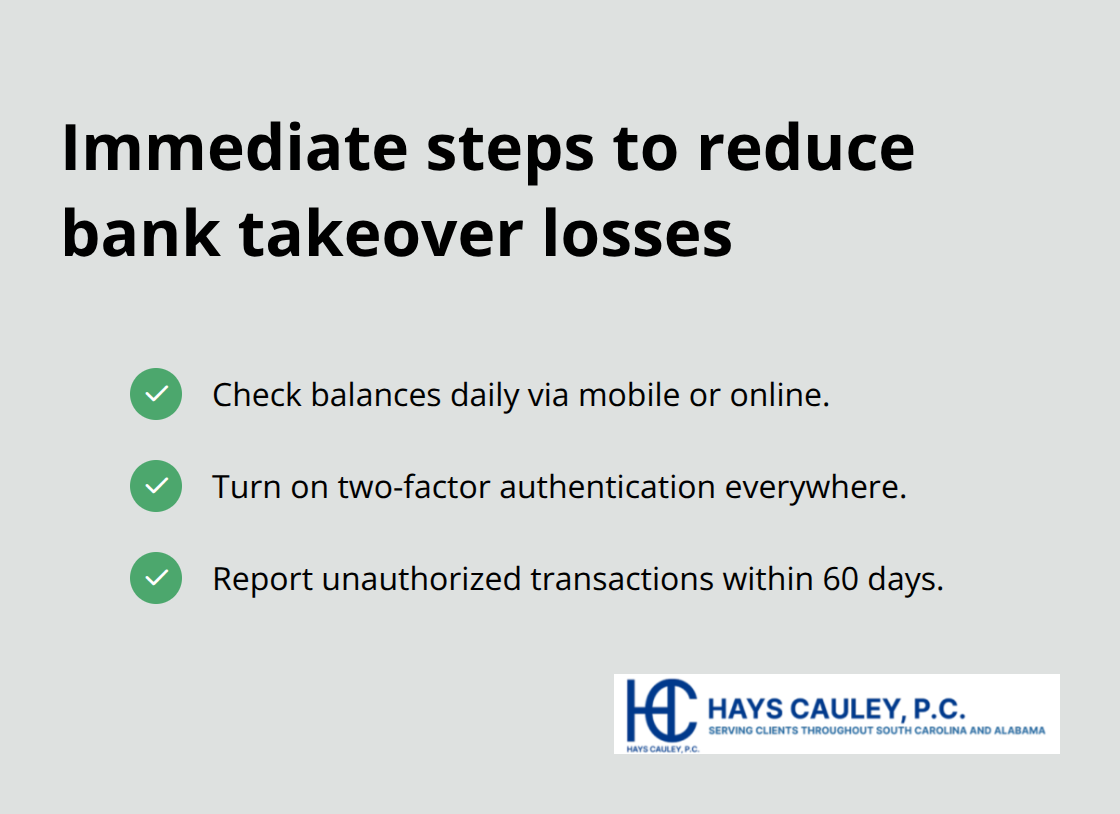
Bank account takeovers surge during tax season when criminals file fraudulent returns and redirect refunds to accounts they control. South Carolina experienced a 23% increase in these attacks during 2023, with victims who lost an average of $3,200 per incident. Criminals change online passwords, add new payees, and initiate wire transfers within hours of access.
Check your account balances daily through mobile apps and enable two-factor authentication on all platforms. Report unauthorized transactions within 60 days to maintain full federal protection (waiting longer reduces your recovery options significantly).
Mortgage and Loan Fraud Threatens Property Ownership
Criminals use stolen Social Security numbers and fabricated income documents to secure mortgages and personal loans, which leaves victims responsible for debts they never incurred. South Carolina mortgage fraud cases increased 18% last year, with fraudulent loan amounts that averaged $47,000. These schemes often remain undetected for months until collection agencies contact victims directly.
Pull your credit reports from all three bureaus quarterly and dispute any unfamiliar accounts immediately. Consider credit services that monitor your profile and alert you within 24 hours of new account activity or credit inquiries.
While financial identity theft creates immediate monetary damage, criminals also target medical records and government benefits to cause long-term harm that extends far beyond bank accounts.
How Medical and Government Identity Theft Devastates Lives
Healthcare Identity Theft Creates Life-Threatening Medical Records
Medical identity theft affects 2.3 million Americans annually according to the Medical Identity Theft Alliance, with South Carolina victims who face average costs of $13,500 per incident. Criminals use stolen insurance information to obtain prescription medications, medical procedures, and expensive treatments that contaminate victims’ medical histories with dangerous inaccuracies. Emergency rooms receive incorrect blood type information, wrong allergy data, and false medical conditions that can lead to deadly treatment decisions.
Contact your insurance company immediately when explanation of benefits statements show unfamiliar procedures or providers. Request copies of your medical records from all healthcare providers annually and dispute any treatments you never received. The South Carolina Department of Consumer Affairs reports that victims who act within 30 days recover 73% faster than those who wait longer.
Social Security Number Theft Opens Every Door for Criminals
Social Security Administration data shows that 1.2 million South Carolina residents had their numbers compromised in data breaches during 2023. Criminals use these numbers to claim unemployment benefits, open credit accounts, obtain employment with false identities, and file tax returns to steal refunds. The Social Security Administration receives over 700,000 fraud reports annually, with South Carolina that ranks 13th nationally for identity theft complaints per capita.
Monitor your Social Security earnings statement annually through the official SSA website (check for wages you never earned). Place fraud alerts on your credit reports immediately if you suspect your number was stolen. Contact the Social Security Administration’s fraud hotline at 1-800-269-0271 to report suspected misuse.
Tax Identity Theft Strikes During Season
The Internal Revenue Service blocked 4.7 million fraudulent tax returns in 2023, but criminals successfully filed returns with stolen Social Security numbers before legitimate taxpayers could submit their paperwork. South Carolina Department of Revenue issues identity verification notices when multiple returns appear under the same Social Security number, but this process delays refunds by 6–9 months. Tax identity theft victims lose an average of $3,100 and spend 200 hours to resolve the fraud according to Federal Trade Commission statistics.
File your tax returns as early as possible each year and never share Social Security numbers through email or text messages. The Federal Trade Commission provides IdentityTheft.gov for reporting identity theft and creates personalized recovery plans at no cost.
These government and medical identity theft schemes create complex problems that require immediate attention, but victims often miss the early warning signs that could prevent extensive damage to their financial and personal records.
How Do You Spot Identity Theft Before Major Damage Occurs
Track Your Financial Footprint Weekly
Check your bank statements and credit card accounts every seven days through mobile apps or online portals – the Federal Trade Commission reports that victims who monitor accounts weekly catch fraud 67% faster than those who check monthly. Download statements immediately and scan for transactions under $25, as criminals often test stolen cards with small purchases before they make larger ones. Set account alerts for all transactions over $10 and review them within 24 hours of receipt.
Pull your credit reports from Experian, Equifax, and TransUnion every four months rather than annually – this rotation catches new accounts within 120 days instead of a full year wait. The South Carolina Department of Consumer Affairs found that victims who check reports quarterly recover 40% faster than those who follow annual schedules. Look for unfamiliar addresses, incorrect employment information, and accounts you never opened.
Recognize Communication Red Flags Immediately
Legitimate financial institutions never request Social Security numbers, passwords, or account details through email or text messages – criminals send 15 billion phishing messages annually (according to the Anti-Phishing Working Group). Delete emails with urgent language like “immediate action required” or “account suspension threats,” and never click links in unexpected messages from banks or government agencies.
Phone scammers impersonate IRS agents and demand immediate payment through gift cards or wire transfers, but the real IRS only contacts taxpayers through postal mail for initial contact. Hang up on callers who threaten arrest or demand payment over the phone – the Social Security Administration reports these tactics in 76% of government impersonation scams.
Deploy Monitoring Services That Actually Work
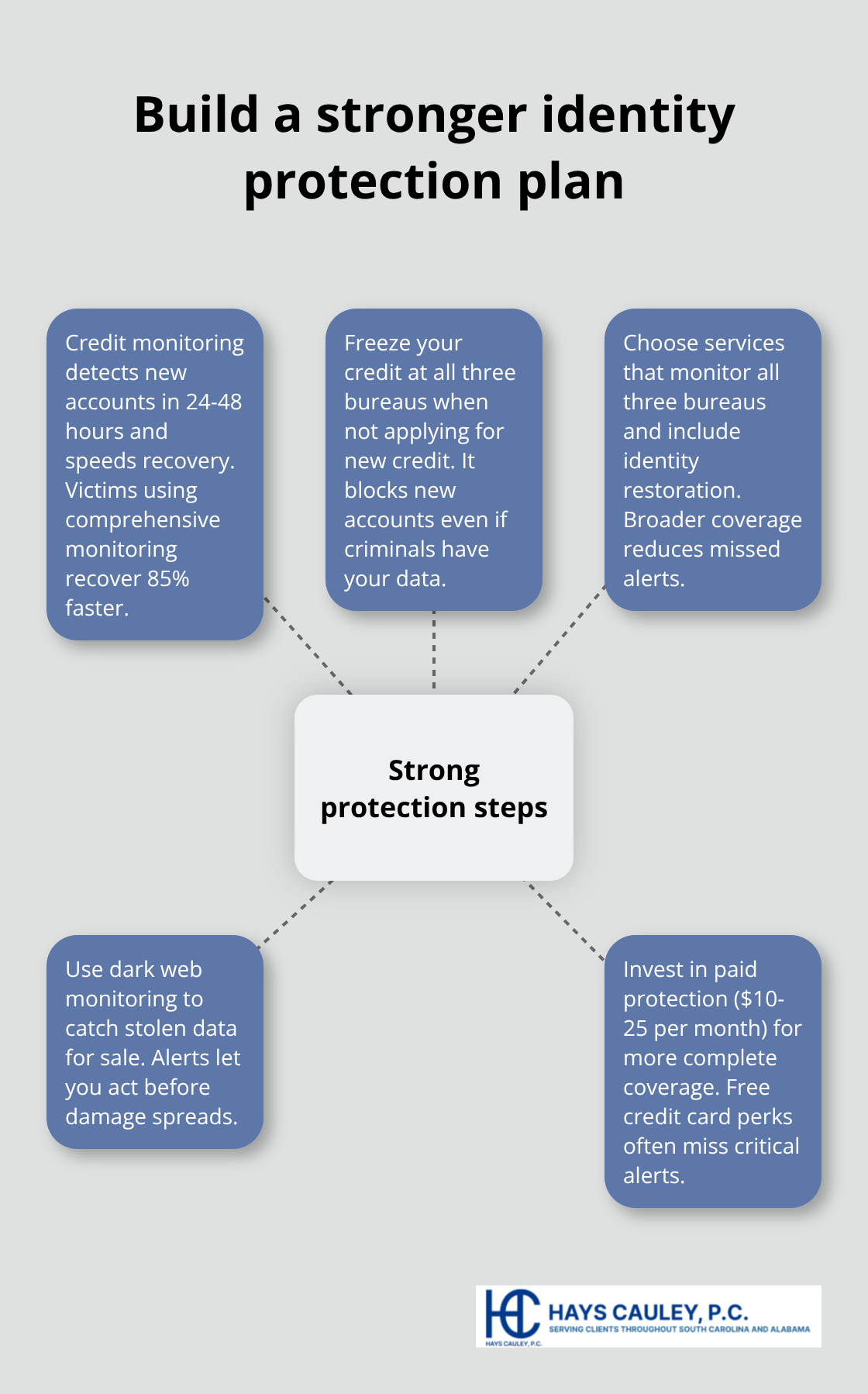
Credit monitoring services detect new accounts within 24–48 hours, while identity theft protection services scan the dark web for stolen personal information and alert you when data appears for sale. Choose services that monitor all three credit bureaus and provide identity restoration assistance – victims who use comprehensive monitoring recover 85% faster according to Identity Theft Resource Center data. Free services from credit card companies often miss important alerts, so invest in paid protection that costs $10-25 monthly for complete coverage.
Freeze your credit reports at all three bureaus when you’re not actively applying for new accounts – this prevents criminals from opening accounts even with complete personal information. South Carolina residents can freeze and unfreeze reports online within minutes, and the process costs nothing under federal law.
Watch for Medical Identity Theft Signs
Monitor your medical records and insurance statements for services you never received or providers you never visited. Medical identity theft creates dangerous situations when criminals use your insurance for treatments that alter your medical history with incorrect diagnoses or medications. Review explanation of benefits statements immediately and contact your insurance company about any unfamiliar charges or medical procedures listed under your name.
Final Thoughts
The types of identity theft that target South Carolina residents continue to evolve, from credit card fraud that affects 40% of victims to medical identity theft that costs an average of $13,500 per incident. Financial criminals steal $1,847 per victim through unauthorized purchases, while tax identity theft delays refunds for 6–9 months and costs victims $3,100 on average. Quick action makes the difference between minor inconvenience and devastating financial damage.
Victims who monitor accounts weekly catch fraud 67% faster, while those who check credit reports quarterly recover 40% faster than annual checkers. Report suspicious activity within 60 days to maintain full federal protection for bank accounts. South Carolina residents have multiple resources available when identity theft strikes (contact the South Carolina Department of Consumer Affairs at 1-844-TELL-DCA for immediate assistance, file reports through IdentityTheft.gov for personalized recovery plans, and reach out to the Social Security Administration’s fraud hotline at 1-800-269-0271 for Social Security number theft).
We at Hays Cauley, P.C. help South Carolina consumers navigate credit issues and identity theft problems through dedicated consumer protection legal services. Take immediate action when you suspect identity theft to protect your financial future. Use available resources to prevent criminal exploitation of your personal information.