


Best Identity Theft Protection Service for Your Security
Identity theft happens fast, and South Carolina residents face real risks from criminals targeting Social Security numbers, bank accounts, and medical records. The best identity theft protection service combines real-time monitoring, quick alerts, and recovery support when fraud strikes.
We at Hays Cauley, P.C. understand how devastating identity theft can be, which is why this guide walks you through what protection services actually do and how to pick the right one for your situation.
What Identity Theft Protection Services Actually Do
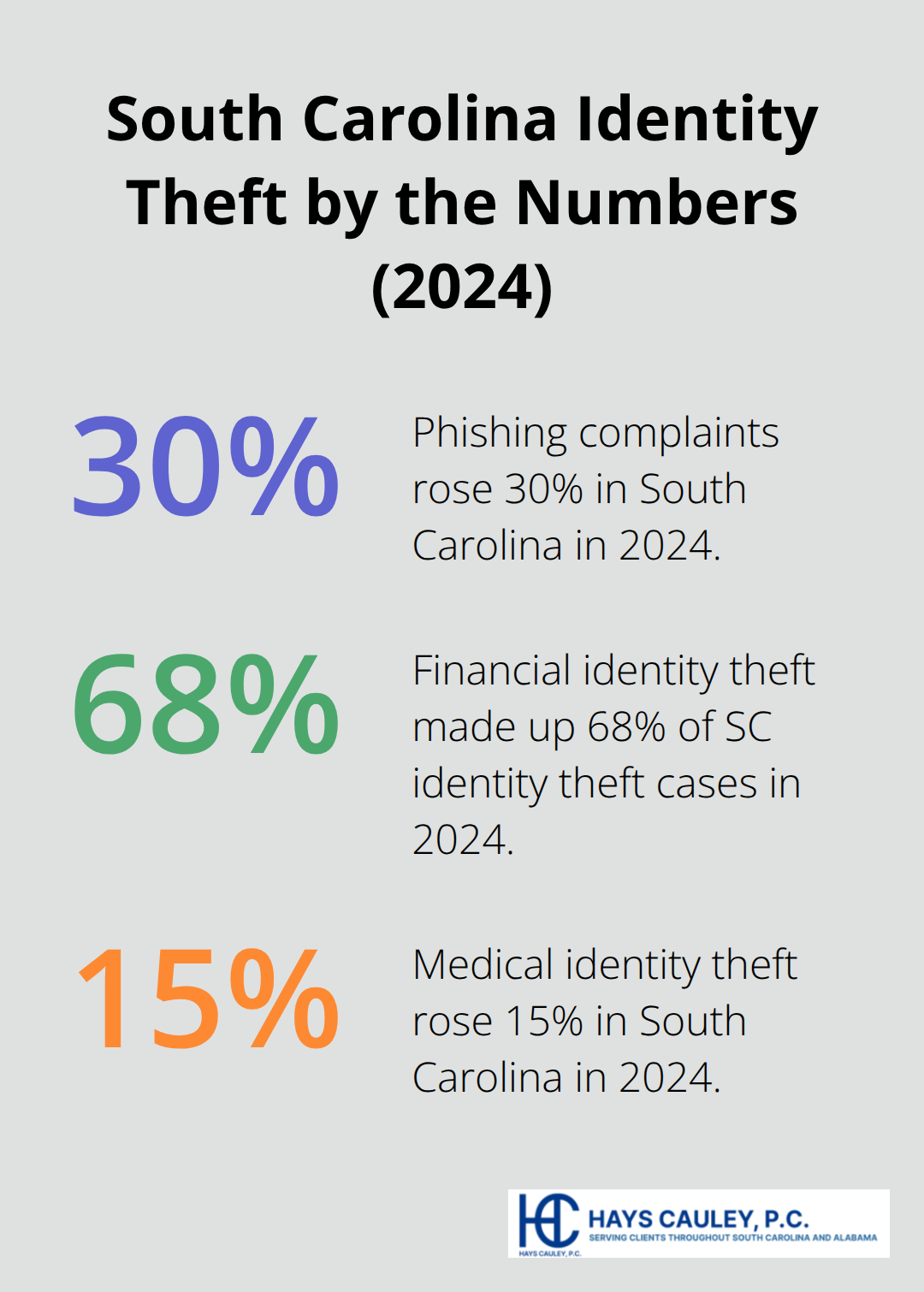
Identity theft protection services work around the clock to catch fraud before it drains your accounts or ruins your credit. The best services monitor all three credit bureaus simultaneously, not just one, because criminals often open accounts across multiple bureaus to avoid detection. LifeLock monitors over 1 trillion data points daily, including credit applications, court records, and social media activity, while Identity Guard uses IBM Watson AI to scan the internet for threats. When suspicious activity appears, real-time alerts reach you through email, text, and push notifications within minutes, giving you a narrow window to freeze accounts or contact your bank before damage spreads. South Carolina saw phishing complaints spike 30% in 2024 according to the South Carolina Attorney General’s Office, making these alerts essential for stopping scams before they take hold. The average South Carolina victim lost $9,800 from credit fraud in 2024 according to the Federal Trade Commission, so speed matters when you respond to alerts.
Three-Bureau Credit Monitoring Catches More Fraud
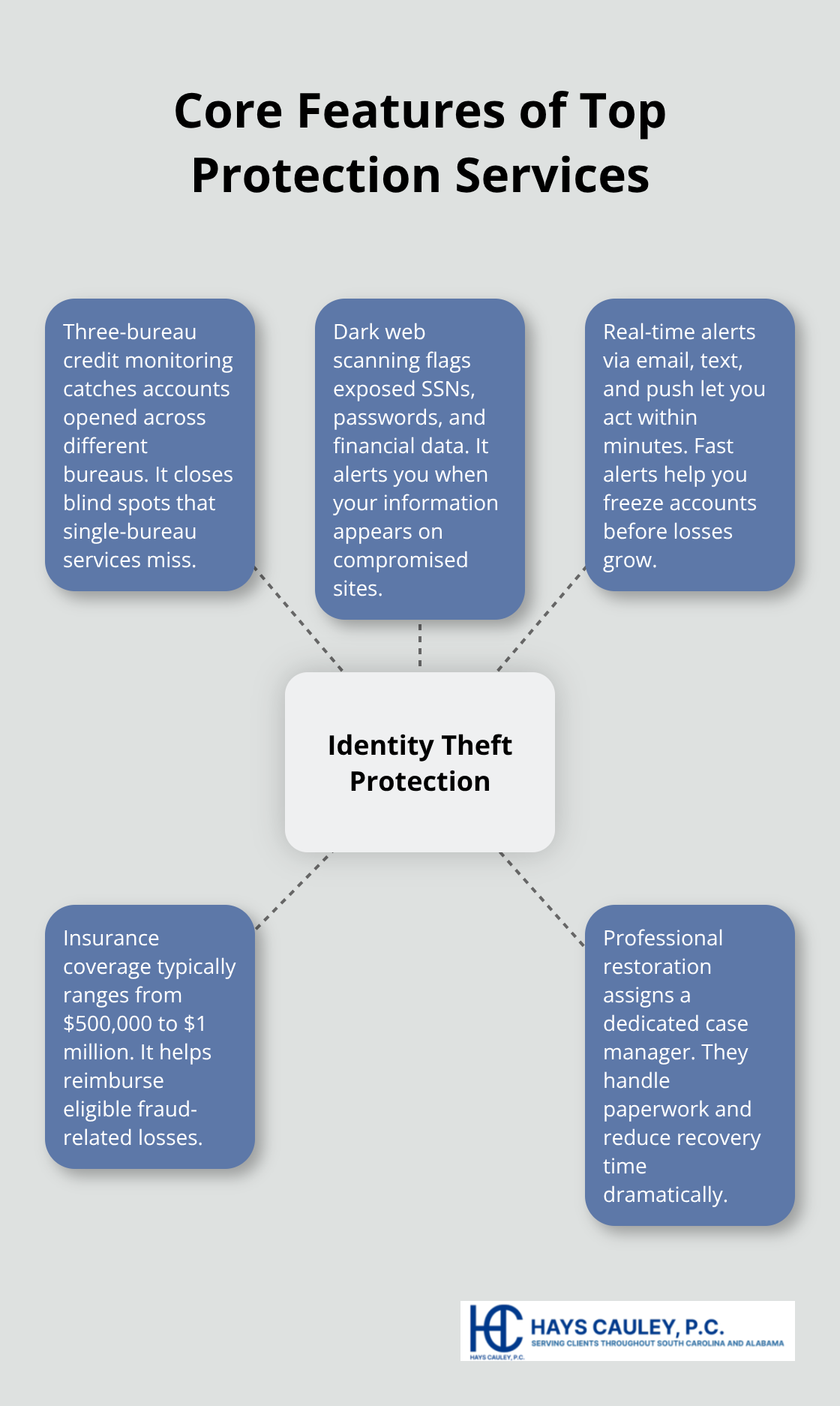
Single-bureau monitoring leaves massive blind spots because credit bureaus don’t always share information instantly. Identity Guard includes three-bureau credit monitoring on mid-tier plans starting around $7.50 per month, while Aura covers all three bureaus at approximately $12 per month. Dark web scanning represents another critical feature-these services alert you if your Social Security number, passwords, or financial information appear on compromised sites where criminals buy and sell stolen data. Most top providers offer identity theft insurance covering $500,000 to $1 million in fraud-related losses, though coverage amounts vary by plan.
Professional Restoration Saves Time and Money
If identity theft occurs, dedicated restoration services with licensed case managers reduce recovery time to roughly 30 days on average, compared to 180 days without professional help according to industry data. When you suspect identity theft in South Carolina, filing an Identity Theft Affidavit (Form I-381) with the South Carolina Department of Revenue starts the official recovery process. A quality protection service handles much of this paperwork for you rather than leaving you to navigate the system alone. If credit reporting issues arise alongside identity theft, legal guidance can help you protect your rights and hold companies accountable for errors on your credit reports.
Selecting the Right Protection Plan for South Carolina Residents
Three-Bureau Monitoring Stops Criminals Cold
Three-bureau credit monitoring should be non-negotiable when comparing services because single-bureau monitoring leaves critical gaps. Identity Guard starts around $7.50 per month with three-bureau coverage on mid-tier plans, while Aura begins at approximately $12 per month and includes all three bureaus plus home and auto title monitoring. Criminals exploit the delays between credit bureaus, so monitoring all three simultaneously catches fraud that single-bureau services miss entirely.
Dark Web Scanning Prevents Thousands of Cases
Dark web scanning matters more than marketing suggests-South Carolina dark web monitoring features prevented over 5,000 potential identity theft cases last year according to the South Carolina Department of Consumer Affairs. When evaluating plans, look for services that monitor across multiple data types beyond just credit reports. LifeLock scans credit applications, court records, and social media activity, while Identity Guard uses IBM Watson AI to track threats across the internet. This multi-layered approach catches fraud attempts that criminals hide in plain sight.
Family Plans Protect Your Household Affordably
Family plans deserve serious consideration if you have dependents. Aura covers up to five adults and unlimited children for roughly $24.99 per month, making household protection more affordable than purchasing individual plans separately. Pricing ranges from budget options like Surfshark Alert starting around $2.19 per month to comprehensive plans exceeding $14.95 monthly, but cheaper doesn’t mean better protection.
Insurance Coverage and Support Response Times Matter
Insurance coverage amounts vary dramatically between providers, so verify what you’re actually protected against before committing. Most top services offer between $500,000 and $1 million in identity theft insurance, though some plans include wage-loss reimbursement that others skip entirely. Customer response times separate adequate services from exceptional ones-24/7 support with strong first-call resolution significantly improves recovery outcomes when fraud strikes. South Carolina victims faced an average credit fraud loss of $9,800 in 2024 according to the Federal Trade Commission, which makes having a responsive support team critical.
Test Before You Commit
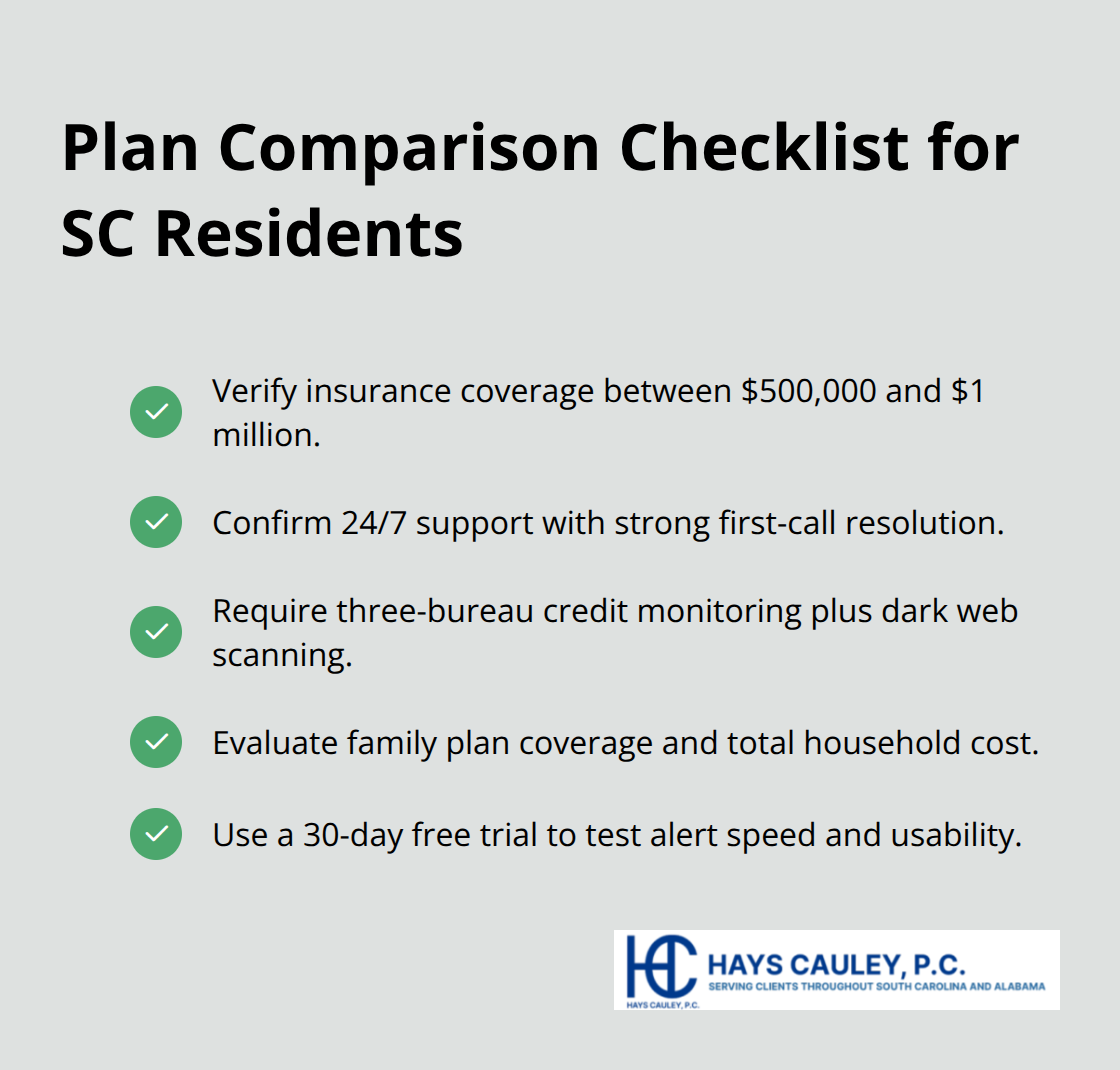
Test services before fully committing by using 30-day free trials that most providers offer, allowing you to verify that alerts actually reach you quickly and that the interface matches how you prefer to monitor accounts. Once you select a service and establish your protection baseline, understanding the specific identity theft scenarios that threaten South Carolina residents helps you stay vigilant about the threats your service monitors.
How Identity Theft Actually Happens in South Carolina
Social Security Number Theft Opens Multiple Fraud Doors
South Carolina residents face three primary identity theft vectors that criminals exploit relentlessly. Social Security number theft ranks as the most dangerous because a stolen SSN opens doors to fraudulent tax returns, credit accounts, and medical services filed in your name. The South Carolina Department of Revenue blocked more than 5,000 fraudulent tax returns in 2024, demonstrating how aggressively criminals file false returns using stolen SSNs. When a thief files a return before you do, the IRS rejects your legitimate return and you’re locked out of claiming your refund until you prove your identity through verification procedures.
Protecting your SSN requires active vigilance. Never carry your Social Security card in your wallet, avoid responses to unsolicited requests for the number, and monitor your tax transcripts through the IRS’s online portal at irs.gov to catch fraudulent filings before they cause damage. Your protection service should flag suspicious tax activity as part of its monitoring capabilities, alerting you to potential fraud before the IRS processes a false return in your name.
Unauthorized Credit Card and Bank Account Activity Spreads Rapidly
Financial identity theft accounted for 68 percent of South Carolina identity theft cases in 2024 according to the South Carolina Department of Consumer Affairs, making it the dominant fraud type targeting residents. Criminals open new accounts using your name and SSN, max out credit limits, and disappear before statements arrive at addresses they’ve changed on file. The average South Carolina victim lost $9,800 from credit fraud in 2024 according to the Federal Trade Commission, but losses escalate dramatically when fraud remains undetected for months.
Monitoring all three credit bureaus simultaneously through your protection service catches new accounts within days rather than waiting for statements. Real-time alerts notify you the moment a criminal applies for credit in your name, giving you hours to freeze accounts before approval. This speed advantage separates effective protection from reactive damage control after fraud has already occurred.
Medical Identity Theft Contaminates Your Health Records
Medical identity theft rose 15 percent in South Carolina in 2024 according to the South Carolina Hospital Association, creating a distinct problem that credit monitoring alone cannot catch. Thieves use your insurance information to receive medical services, treatments, and medications, contaminating your medical records with procedures you never received and creating dangerous inaccuracies in your health history. Your protection service should monitor medical records and insurance claims separately from credit activity because these frauds operate through entirely different systems.
If you suspect medical identity theft, contact your insurance company and medical providers immediately to place fraud alerts on your accounts, then request copies of your medical records to identify what treatments were fraudulently billed under your name. Correcting medical records requires persistence because healthcare systems move slowly, and inaccurate information can affect future treatment decisions. We at Hays Cauley, P.C. can provide legal guidance if you need help disputing fraudulent medical charges or correcting your medical records.
Final Thoughts
Selecting the best identity theft protection service for South Carolina requires you to balance three core factors: monitoring breadth, response speed, and restoration support. Three-bureau credit monitoring combined with dark web scanning catches fraud that single-bureau services miss entirely, while real-time alerts through email and text give you minutes to act before criminals drain accounts or open new lines of credit. Insurance coverage between $500,000 and $1 million protects against financial losses, but only if your chosen service includes dedicated case managers who handle restoration paperwork rather than leaving you to navigate the system alone.
If identity theft occurs despite your precautions, act immediately by filing a police report with local law enforcement, contacting your banks and credit card issuers to freeze accounts, and placing fraud alerts with all three credit bureaus. In South Carolina, file an Identity Theft Affidavit (Form I-381) with the Department of Revenue if tax fraud is involved, and request copies of your credit reports to identify fraudulent accounts. Document everything because you’ll need evidence when disputing charges or correcting your credit reports.
Proactive monitoring prevents most identity theft damage before it happens through regular credit report checks, strong unique passwords with two-factor authentication, and caution about unsolicited requests for personal information. Combining these personal habits with a quality protection service creates layered defense that catches fraud early and limits losses when criminals strike. If credit reporting errors persist or you face complications with creditors, we at Hays Cauley, P.C. can help you assert your rights as a consumer.