


Identity theft happens faster than most people realize. In South Carolina, victims face mounting financial losses and the stress of reclaiming their stolen identities.
We at Hays Cauley, P.C. understand what you’re going through, and this guide provides the identity theft case help you need right now. From immediate action steps to long-term recovery strategies, we’ll walk you through your options.
How Identity Theft Unfolds in South Carolina
Identity theft in South Carolina typically starts when criminals obtain your personal identifying information through data breaches, phishing emails, or stolen mail. Once they have your Social Security number, driver’s license number, or financial account details, they move fast. According to the Identity Theft Resource Center, the average time between when identity theft occurs and when victims discover it is 207 days-meaning criminals have months to damage your credit and drain accounts before you realize what happened. In South Carolina, financial identity fraud and identity fraud became distinct felonies in 2025 under SC Code § 16-13-510, carrying penalties up to 10 years imprisonment.
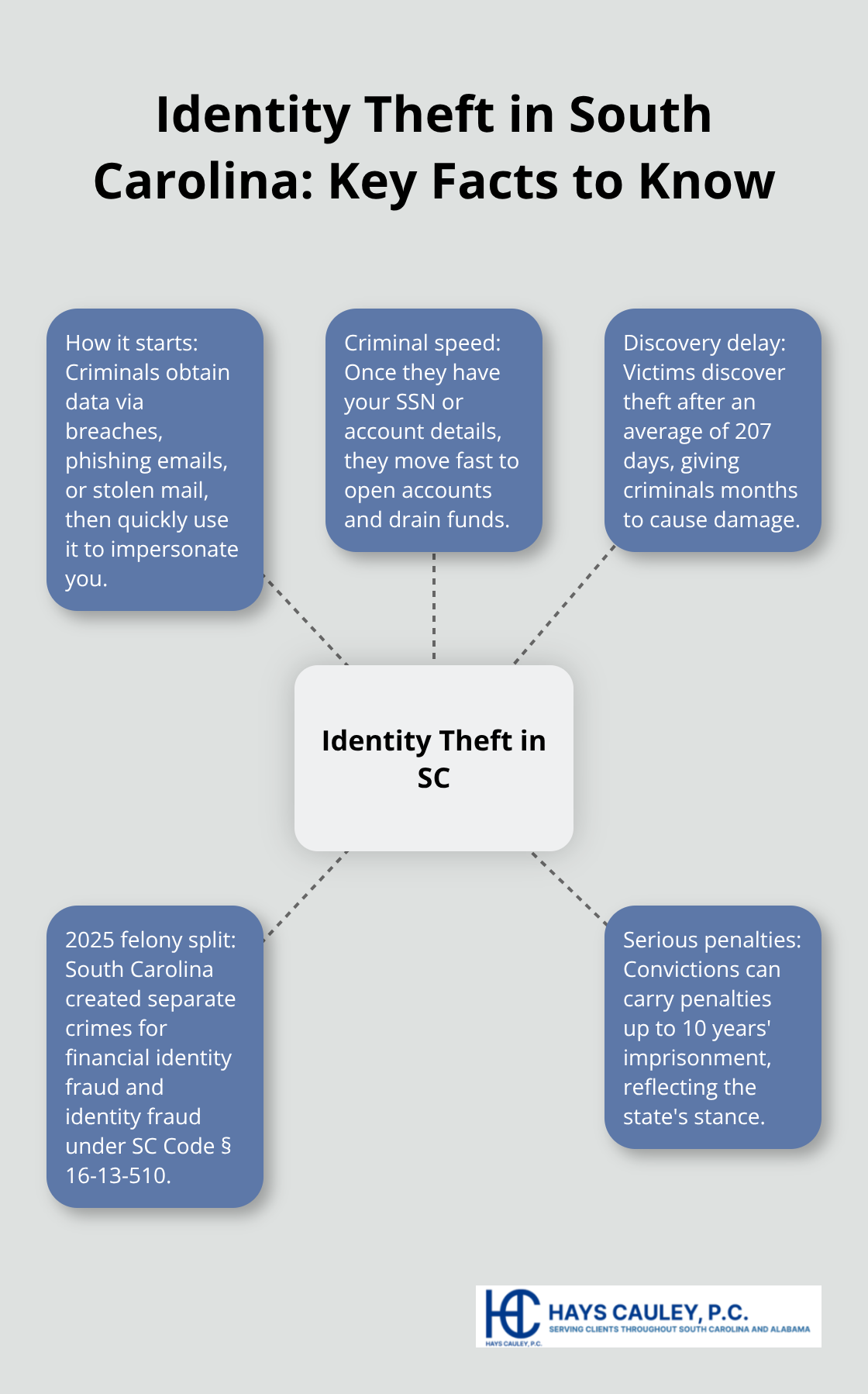
This legal shift reflects how seriously the state treats these crimes.
What Criminals Do With Your Information
Thieves use stolen identifying information to commit credit card fraud, open new bank accounts in your name, file fraudulent tax returns, or obtain employment under your identity. The SC Department of Consumer Affairs reports that data breaches affecting South Carolina residents have been documented since at least 2015, with security breach notices publicly available to track patterns. Financial losses hit hard and fast. Victims of identity theft report average out-of-pocket costs ranging from hundreds to thousands of dollars, plus countless hours spent resolving fraudulent accounts and disputing charges. Beyond money, victims experience significant emotional stress, anxiety about their financial future, and frustration navigating recovery. Some victims report feeling violated and vulnerable for years after the theft occurs.
Why South Carolina Victims Need Immediate Action
The longer you wait to respond, the more damage accumulates. Monitoring your credit regularly through free annual reports at AnnualCreditReport.com helps you spot fraudulent accounts early, potentially saving thousands in losses. South Carolina law allows prosecution of identity theft even if some acts occurred outside the state, giving prosecutors flexibility to pursue cases that cross state lines. Filing an official report with the FTC creates documentation that protects you legally and helps you recover faster. Contacting the SC Department of Consumer Affairs at 803-734-4200 or 800-922-1594 connects you with state-level support and resources tailored to South Carolina victims. Courts can order offenders to repay victims for their losses under SC Code § 17-25-322, which means restitution becomes a real possibility when you take action.
Act Immediately When Identity Theft Strikes, Serving South Carolina, Including Greenville, Columbia and Charleston
Contact Your Financial Institutions First
The first 24 to 48 hours after discovering identity theft determine how much damage you can prevent. Contact your banks and credit card companies immediately to report unauthorized transactions and freeze accounts. Most financial institutions operate fraud departments 24/7, and South Carolina residents can reach major banks through customer service lines listed on statements or online banking portals. Request that fraud alerts be placed on your credit reports with all three bureaus-Equifax, Experian, and TransUnion.
File Official Reports With State and Federal Agencies
File a report with the Federal Trade Commission at IdentityTheft.gov immediately. The FTC creates an official identity theft report that creditors and debt collectors must respect when you dispute charges. South Carolina law enforcement also needs notification, particularly if criminals opened accounts or made purchases in your name. Contact your local police department in the county where you live and request a written police report number, which strengthens your credibility when disputing fraudulent activity.
The SC Department of Consumer Affairs recommends filing an Identity Theft Intake Form with their Identity Theft Unit to document the crime and receive one-on-one assistance tailored to your situation. This form creates an official record that helps you dispute fraudulent accounts and protects you legally. Reach the SC Department of Consumer Affairs at 803-734-4200 or toll-free at 800-922-1594 during business hours Monday through Friday, 8:30 a.m. to 5 p.m.
Protect Your Credit Report Immediately
Place a fraud alert on your credit file by contacting one bureau-they must notify the other two. The fraud alert lasts one year and requires creditors to verify your identity before opening new accounts. If you discover the theft more than 60 days after it occurred, consider placing a credit freeze instead, which costs nothing in South Carolina and blocks access to your credit report entirely.
Document Everything in Writing
Document all communications in writing, including dates, times, names of people you spoke with, and confirmation numbers. This documentation becomes essential if you need legal assistance or file claims later. South Carolina law allows prosecution of identity theft even if some acts occurred outside the state, giving prosecutors flexibility to pursue cases that cross state lines. Courts can order offenders to repay victims for their losses under SC Code § 17-25-322, which means restitution becomes a real possibility when you take action and maintain thorough records.
Your documentation and official reports now form the foundation for recovery. The next phase involves monitoring your credit activity and disputing fraudulent accounts to rebuild your financial security.
Legal Protections and Support Available to South Carolina Identity Theft Victims, Serving South Carolina, Including Greenville, Columbia and Charleston
How South Carolina Law Protects You
South Carolina’s 2025 amendments to SC Code § 16-13-510 created two distinct felonies that work in your favor. Financial identity fraud applies when someone uses your financial resources or accesses information with intent to defraud, while identity fraud covers using your identifying information to obtain employment or avoid law enforcement. These separate statutes allow prosecutors to pursue multiple charges against offenders, increasing the likelihood of conviction and restitution. Courts can order offenders to repay victims for their losses under SC Code § 17-25-322, which transforms identity theft recovery from a purely civil matter into one where criminal penalties include financial accountability. This restitution covers direct losses from fraudulent accounts, unauthorized charges, and costs incurred during recovery.
South Carolina law also allows prosecution even if some acts occurred outside the state, meaning your case can move forward even when criminals operated across state lines. This jurisdictional flexibility strengthens your position because prosecutors are not limited to crimes committed solely within South Carolina borders.
Federal Rights That Protect Your Credit
The federal Fair Credit Reporting Act and Fair Debt Collection Practices Act give you additional rights to dispute fraudulent accounts and demand that creditors stop collection efforts on debt you did not incur. When you file an official identity theft report with the FTC, creditors and debt collectors must respect your disputes and cannot pursue collection without proper verification. These federal protections apply to all South Carolina residents and create enforceable obligations for financial institutions and collection agencies.
State Resources That Guide Your Recovery
The SC Department of Consumer Affairs serves as your primary state resource, offering one-on-one assistance through their Identity Theft Unit to guide you through recovery steps tailored to your specific situation. Call them at 803-734-4200 or 800-922-1594 during business hours Monday through Friday, 8:30 a.m. to 5 p.m. They provide step-by-step checklists for specific scenarios like government ID fraud, tax return fraud, and bankruptcy fraud, eliminating guesswork from your recovery process.
The Victim Connect Resource Center offers crisis support and guidance for those overwhelmed by the recovery process. Local law enforcement in your county also plays a role by documenting the crime, which strengthens your credibility when disputing fraudulent accounts with creditors and financial institutions.
Legal Help for Identity Theft Victims
Hays Cauley, P.C. is a consumer protection law firm dedicated to helping consumers with credit reporting, identity theft, and debt-related issues. An attorney can help you navigate your rights and remedies, ensuring you understand your legal options and pursue available restitution. Legal representation becomes particularly valuable when you face significant losses or when creditors resist your dispute efforts despite your official FTC report.
Moving Forward After Identity Theft
Recovery from identity theft takes time, but consistent action produces results. Start monitoring your credit immediately by checking your free annual credit report at AnnualCreditReport.com at least once per year, or more frequently during the first year after theft. Review each report carefully for accounts you don’t recognize, inquiries you didn’t authorize, and personal information errors. Many victims catch secondary fraud attempts during this monitoring phase, preventing additional damage before criminals can exploit new accounts.
Set up account alerts with your banks and credit card companies to receive notifications of large purchases, new account openings, or unusual activity. Most financial institutions offer free alerts through online banking portals or mobile apps, and these real-time notifications give you the fastest possible warning when criminals attempt further fraud. Protecting yourself from future identity theft means treating your personal information like currency-never share your Social Security number unless absolutely required, and ask why organizations need it before providing it.
If you face significant losses or creditors resist your dispute efforts, contact Hays Cauley, P.C. for identity theft case help. We at Hays Cauley, P.C. are a consumer protection law firm dedicated to helping consumers with credit reporting, identity theft, and debt-related issues, and we can guide you through recovery and protect your rights.