


Identity Theft Punishment in South Carolina What to Expect
Identity theft punishment in South Carolina carries serious consequences that can dramatically impact both perpetrators and victims. The state imposes harsh criminal penalties including substantial prison time and hefty fines.
We at Hays Cauley, P.C. see firsthand how these cases unfold through the legal system. Understanding the full scope of penalties helps victims know what justice looks like.
What Prison Time Do Identity Thieves Face
Maximum Sentences Under South Carolina Law
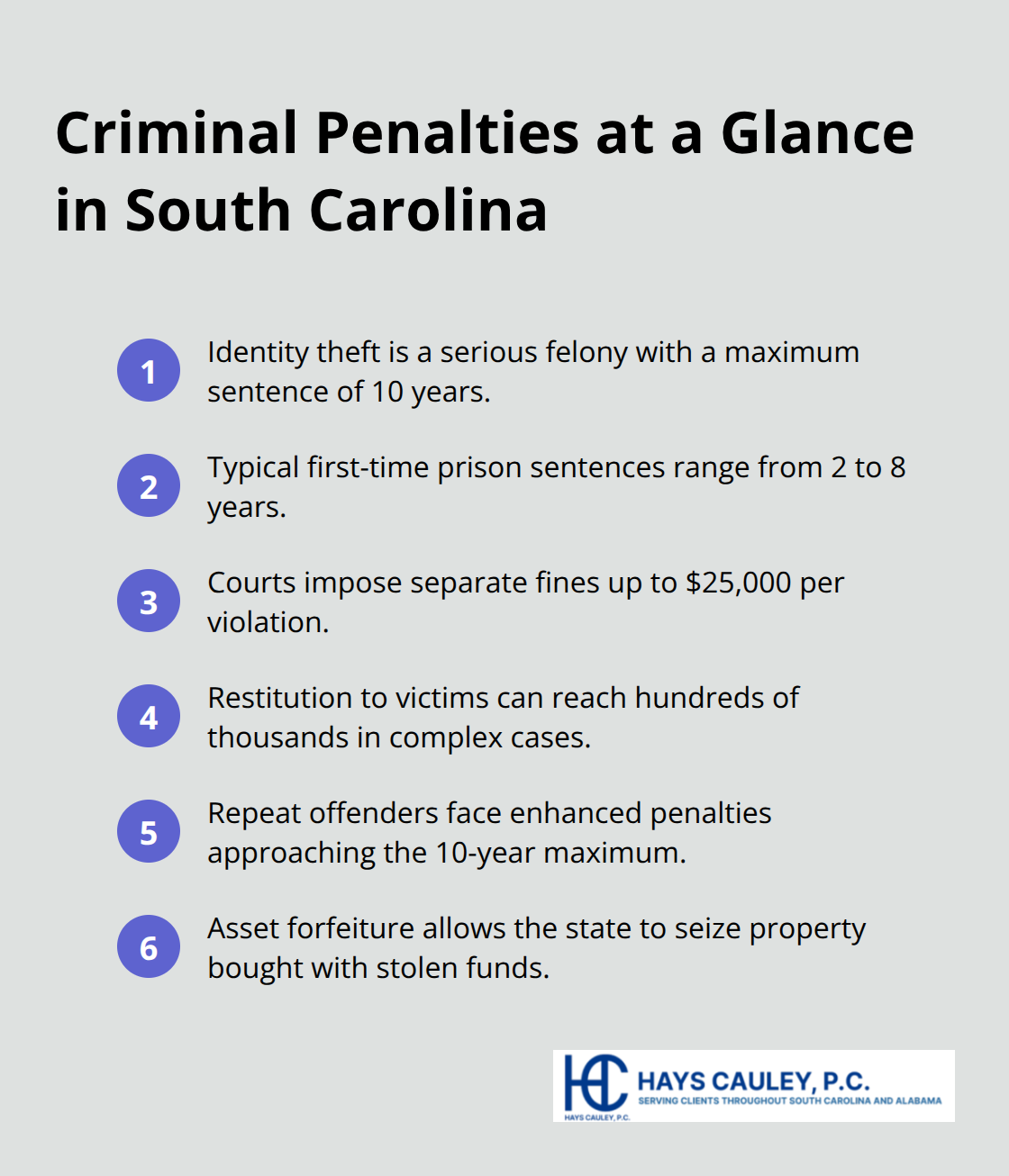
South Carolina treats identity theft as a serious felony offense with harsh consequences that reflect the state’s zero-tolerance approach. Financial identity fraud carries a maximum prison sentence of 10 years, which makes it one of the more severely punished white-collar crimes in the state. The court system consistently hands down substantial sentences, particularly when multiple victims are involved or when the financial losses exceed $10,000.
Prison sentences typically range from 2 to 8 years for first-time offenders, and this depends on the scope of the fraud and the amount stolen. Judges consider factors like the number of victims affected, the sophistication of the scheme, and whether the defendant used their position of trust to commit the crime. Cases that involve elderly victims or those that target vulnerable populations often receive sentences at the higher end of the range.
Financial Penalties That Devastate Offenders
The monetary penalties for identity theft in South Carolina go far beyond simple fines. Courts routinely order full restitution to victims, which can reach hundreds of thousands of dollars in complex cases. The Federal Trade Commission reports that identity theft victims lose an average of $1,000 per incident, but this figure climbs dramatically in cases that involve business identity theft or medical fraud.
Fines that the court imposes are separate from restitution payments and can reach $25,000 per violation. Multiple counts of identity theft result in separate fines for each charge, which creates a financial burden that follows defendants for decades. Asset forfeiture laws allow the state to seize property purchased with stolen funds (vehicles, real estate, and bank accounts).
Enhanced Penalties for Repeat Violations
Second and subsequent identity theft convictions trigger enhanced sentencing guidelines that can double the standard penalties. South Carolina law treats repeat offenders with particular severity, which often results in sentences that approach the 10-year maximum. The state’s three-strikes law can apply in cases where identity theft represents a defendant’s third felony conviction, and this potentially leads to life imprisonment.
Parole eligibility becomes significantly restricted for repeat offenders, with many who serve 85% of their sentence before consideration for early release. The combination of extended prison time, massive restitution orders, and permanent felony records creates consequences that extend far beyond the courtroom and into the civil remedies that victims can pursue against perpetrators.
What Financial Recovery Can Victims Pursue
Restitution Orders That Actually Work
Identity theft victims in South Carolina have the right to full restitution through criminal court proceedings, and these orders carry real teeth. Courts routinely order defendants to pay back every dollar stolen, plus additional costs like bank fees, credit monitoring services, and time lost from work. The average restitution award in South Carolina identity theft cases reaches $15,000 per victim, with complex cases that involve business accounts often exceeding $100,000. Restitution orders become enforceable judgments that follow defendants for years.
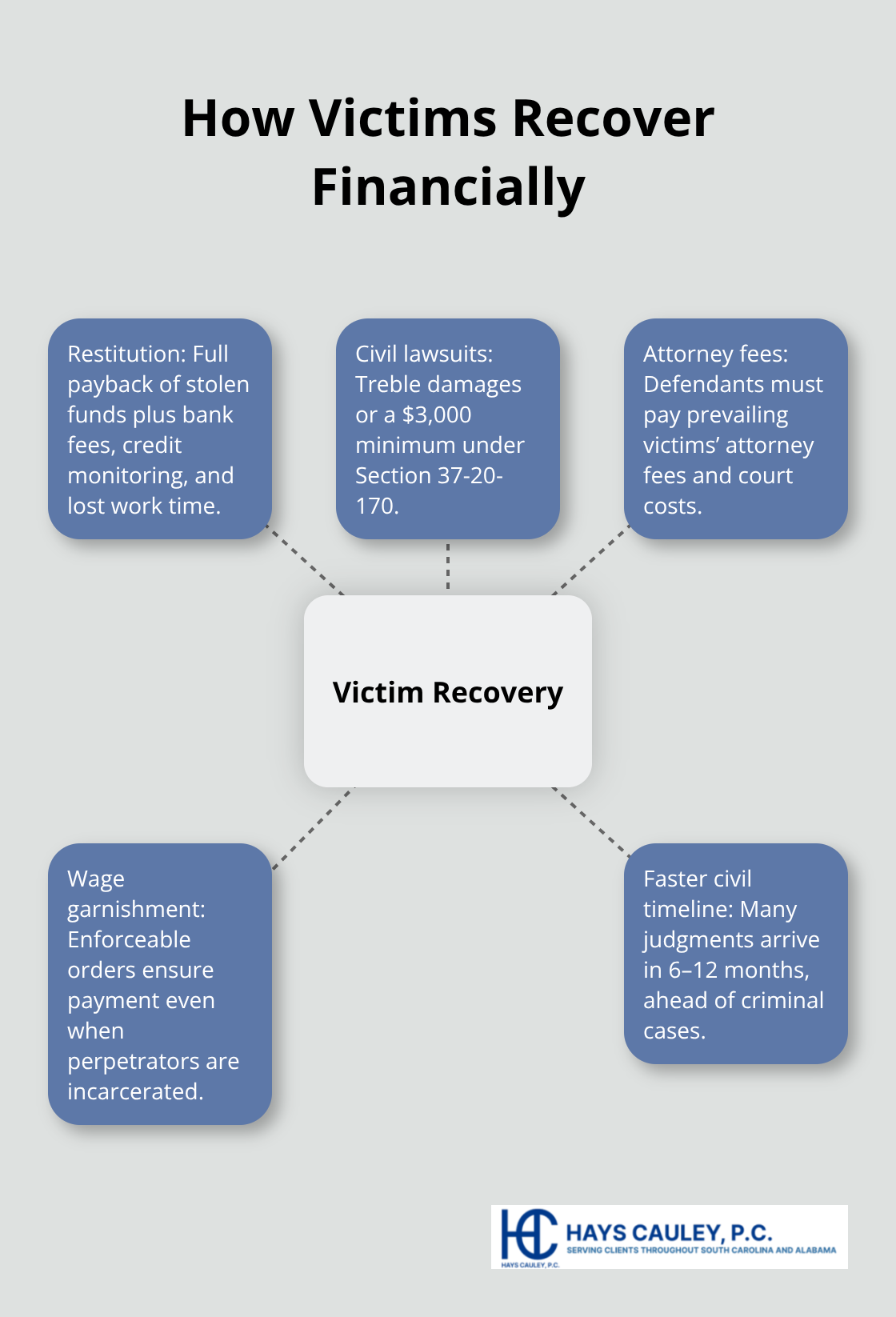
Wage garnishment ensures victims get paid even when perpetrators serve prison time.
Civil Lawsuits Deliver Triple Damages
South Carolina law allows identity theft victims to pursue civil lawsuits that go far beyond simple restitution. Under Section 37-20-170, victims can recover three times their actual damages or $3,000 per incident (whichever amount is greater). This means a victim who lost $2,000 can recover $6,000 in damages, while someone with minimal financial losses still receives the $3,000 statutory minimum. Civil courts move faster than criminal proceedings, and victims can obtain judgments within 6–12 months rather than wait years for criminal trials to conclude.
Attorney Fees That Defendants Must Pay
The most powerful aspect of South Carolina identity theft law is the mandatory attorney fee provision that shifts all legal costs to defendants. Victims who win recover 100% of their attorney fees, court costs, and litigation expenses from perpetrators. This fee-shifting provision makes it financially feasible for victims to hire private attorneys without upfront costs, and it creates additional pressure on defendants to settle cases quickly. Civil judgments that include attorney fees often reach $25,000-$50,000 in total (making identity theft an expensive crime with consequences that last decades).
These civil remedies work alongside criminal prosecution, but law enforcement agencies must first build strong cases through thorough investigation procedures.
How Do Police Build Identity Theft Cases
Law enforcement agencies in South Carolina follow strict evidence protocols that determine the success of identity theft prosecutions. Police must document the paper trail that connects suspects to stolen personal information. This process requires officers to collect bank records, computer hard drives, and transaction logs within 72 hours of the initial report. The State Law Enforcement Division maintains identity theft victim records under Section 37-20-150. Officers must verify victim identities through fingerprints and official documentation before they proceed with investigations.
Digital forensics teams recover deleted files from computers and smartphones, while financial crimes units trace money transfers through multiple accounts. This evidence collection process typically takes 3–6 months for simple cases and up to 18 months for complex schemes that involve multiple victims.
Multi-Agency Task Forces Speed Up Prosecutions
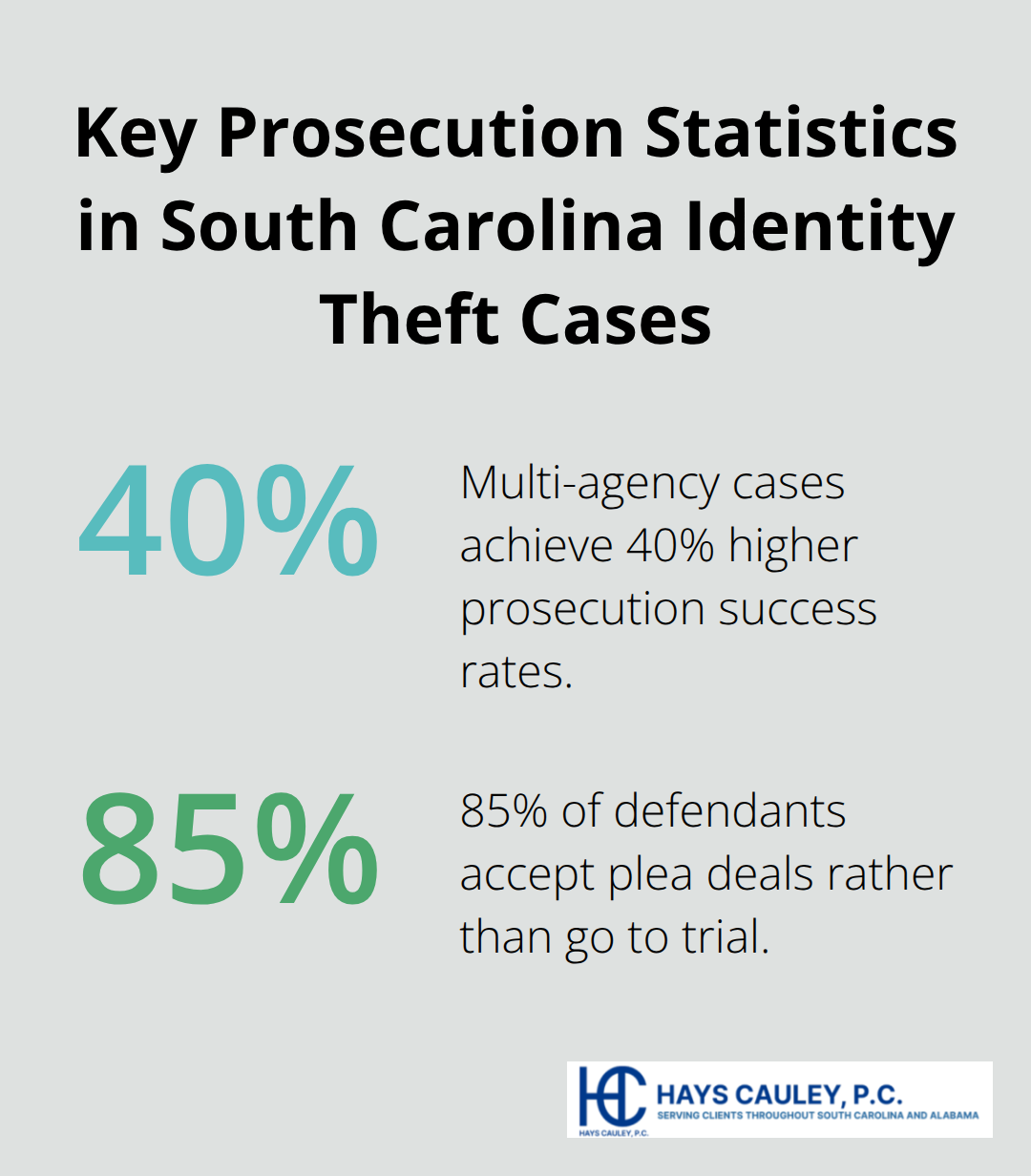
South Carolina identity theft investigations involve coordination between local police, state agencies, and federal authorities that significantly improves conviction rates. The Federal Trade Commission reports that cases with multi-agency involvement result in 40% higher prosecution success rates compared to single-agency investigations.
Local departments handle initial victim interviews and evidence preservation, while state investigators focus on cross-jurisdictional aspects and database searches. Federal agencies like the FBI and Secret Service join cases that involve interstate commerce or damages that exceed $50,000. This cooperation reduces investigation timelines from an average of 24 months to 14 months, and prosecutors can file charges in multiple jurisdictions simultaneously.
Prosecution Timeline Moves Faster Than Expected
Criminal prosecution for identity theft in South Carolina follows an accelerated timeline that prioritizes victim recovery and defendant accountability. Grand jury indictments typically occur within 6–8 months of the initial police report, with arraignments scheduled within 30 days of indictment.
Plea negotiations begin immediately after arraignment, and 85% of defendants accept plea deals rather than risk trial. Cases that proceed to trial face scheduling within 12–16 months of the original charges (which is faster than most felony prosecutions in the state). Sentencing occurs within 60 days of conviction, and restitution orders take effect immediately upon sentencing. Victims should act quickly if they suspect identity theft, placing fraud alerts on their credit reports and filing a police report to strengthen their case.
Final Thoughts
Identity theft punishment in South Carolina demonstrates the state’s commitment to consumer protection through severe criminal penalties and comprehensive civil remedies. Perpetrators face up to 10 years in prison, substantial fines, and mandatory restitution orders that can reach hundreds of thousands of dollars. Victims can recover triple damages through civil lawsuits while defendants pay all attorney fees and court costs.
Time matters when identity theft occurs. Victims who report crimes within 72 hours give law enforcement the best chance to preserve evidence and build strong cases. Multi-agency investigations move faster than expected (with most cases reaching resolution within 14-16 months).
We at Hays Cauley, P.C. understand the devastating impact identity theft has on consumers and their financial futures. Our consumer protection law firm helps victims navigate credit reporting issues, identity theft recovery, and debt-related problems that arise from these crimes. If you need legal assistance recovering from identity theft, contact our team for guidance through the complex process of restoring your financial identity and pursuing the compensation you deserve.