


How to Navigate the Fair Credit Reporting Act Dispute Process in South Carolina
At Hays Cauley, P.C., we understand the importance of maintaining accurate credit reports. The Fair Credit Reporting Act (FCRA) provides South Carolina consumers with powerful tools to dispute errors and protect their financial well-being.
Navigating the Fair Credit Reporting Act dispute process can be complex, but it’s essential for safeguarding your credit score and financial opportunities. This guide will walk you through the steps to effectively challenge inaccuracies and assert your rights under the FCRA in South Carolina.
What Is the Fair Credit Reporting Act in South Carolina?
The Fair Credit Reporting Act (FCRA) is a federal law that regulates the collection, use, and sharing of consumer credit information. In South Carolina, this law protects consumers’ financial well-being and ensures credit report accuracy.
The Purpose of the FCRA
The FCRA promotes fairness, accuracy, and privacy in the credit reporting system. It establishes standards for credit reporting agencies, information furnishers, and credit report users. This law provides South Carolina residents with a framework to dispute inaccuracies and protect against unfair practices.
Key FCRA Provisions for South Carolina Consumers
South Carolina consumers benefit from several key FCRA provisions:
- Free Credit Reports: You can access your credit report for free once every 12 months from each of the three major credit bureaus (Equifax, Experian, and TransUnion). This allows you to check for errors or signs of identity theft regularly.
- Dispute Resolution: Credit reporting agencies must investigate disputes within 30 days. If they find an error, they must correct it promptly. This provision helps maintain an accurate credit profile, which can affect your ability to secure loans, rent apartments, or even land certain jobs in South Carolina.
Your Rights Under the FCRA
As a South Carolina consumer, you have specific rights under the FCRA:

- Dispute Inaccuracies: You can challenge incorrect information on your credit report. The credit bureaus must investigate your claim.
- Add a Statement: If an investigation doesn’t resolve the issue to your satisfaction, you can add a brief statement to your credit report explaining your side of the story.
- Limited Access: The FCRA restricts who can access your credit report. Employers must obtain your written consent before pulling your credit report for employment purposes. This protection helps prevent unfair discrimination based on credit history in the South Carolina job market.
- Adverse Action Notification: If a company takes an “adverse action” against you based on information in your credit report (such as denying you credit or employment), they must inform you and provide you with a copy of the report used in making the decision. This transparency allows you to address any issues and potentially challenge unfair decisions.
Understanding these FCRA rights can make a significant difference in your financial life. Knowing your rights is the first step to navigate the credit reporting system effectively and protect your financial future in South Carolina.
Now that you understand the basics of the FCRA and your rights as a South Carolina consumer, let’s explore the steps you can take to dispute credit report errors and ensure the accuracy of your financial information.
How to Dispute Credit Report Errors in South Carolina
Obtain Your Credit Reports
Start your dispute process by requesting your credit reports from Equifax, Experian, and TransUnion. You have the right to one free report from each bureau annually. Visit annualcreditreport.com to access these reports. Don’t wait for issues to surface; review your reports every four months by rotating through the bureaus.
Identify Inaccuracies
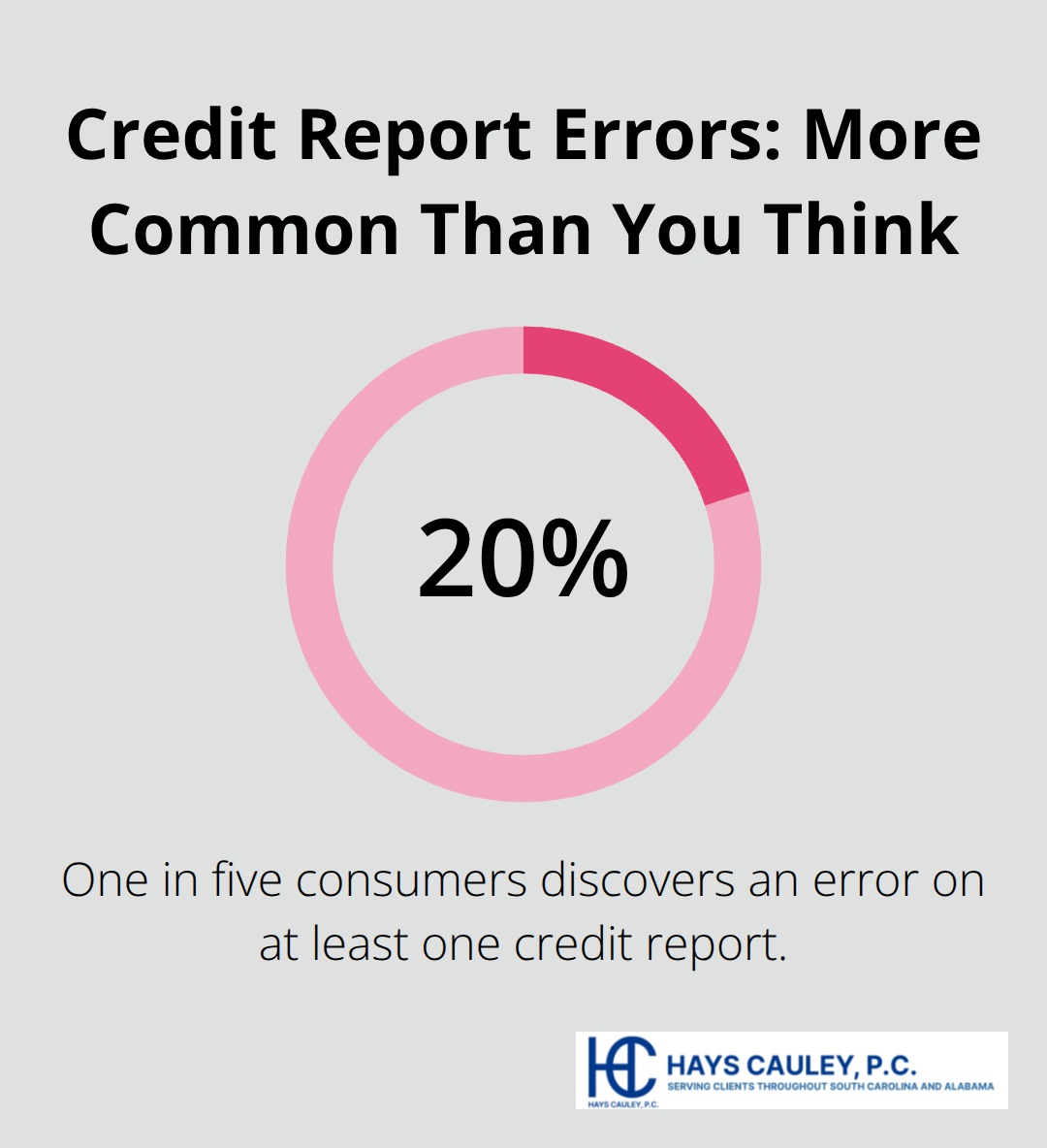
Scrutinize each report for errors. Search for unfamiliar accounts, incorrect personal details, or outdated negative items. Focus on payment histories, account balances, and credit limits. A Federal Trade Commission study revealed that one in five consumers discovers an error on at least one of their credit reports (a statistic that underscores the importance of regular reviews).
Compile Supporting Evidence
Before you submit a dispute, collect relevant documents. These may include bank statements, payment receipts, or correspondence with creditors. The strength of your case depends on the quality of your evidence. Create a separate file for each error, organizing your proof methodically.
Submit Your Dispute
Contact the credit bureaus directly to file your dispute. While online and phone options exist, we recommend sending a written dispute via certified mail with return receipt requested. This method creates a paper trail and activates specific legal protections under the FCRA.
In your letter, clearly identify each error, explain the inaccuracy, and request its removal or correction. Include copies (never originals) of your supporting documents. The Consumer Financial Protection Bureau provides template letters on their website to help you craft an effective dispute.
Monitor and Follow Up
Credit bureaus must investigate your claim within 30 days. During this period, maintain a proactive stance. If you don’t receive a response within the allotted time, send a polite follow-up inquiry. Once the investigation concludes, you’ll receive the results in writing.
If the bureau corrects the error, request an updated copy of your credit report to confirm the changes. In case they don’t make the correction, you have the right to add a brief statement to your file explaining your perspective on the dispute.
Persistence often proves essential in this process. If you find the outcome unsatisfactory, you may need to escalate your dispute. This could involve contacting the furnisher directly or seeking legal assistance. Many South Carolina residents have found success in navigating complex disputes when simple measures proved insufficient.
The journey to maintain an accurate credit report doesn’t end here. The next chapter will explore common challenges you might face during the FCRA dispute process and how to overcome them effectively.
Overcoming FCRA Dispute Hurdles in South Carolina
Unresponsive Credit Bureaus
Credit bureaus sometimes fail to meet the 30-day investigation requirement set by the FCRA. This delay can frustrate South Carolina consumers who seek prompt resolution of their disputes. To address this issue, you should document all communication attempts meticulously. If a bureau remains unresponsive, you can file a complaint with the Consumer Financial Protection Bureau (CFPB). The CFPB received over 175,000 credit reporting complaints in 2020 (a figure that underscores the prevalence of this problem).

Furnisher Disputes
Credit bureaus may verify disputed information with the furnisher (the company that provided the information), who might insist on its accuracy. In such cases, you must dispute directly with the furnisher. Send a detailed letter that explains the error and includes supporting documents. The furnisher’s failure to investigate or correct the error may give you grounds for legal action under the FCRA.
Persistent Errors
Multiple disputes sometimes fail to resolve credit report inaccuracies. A Federal Trade Commission study found that 70% of consumers who filed disputes experienced some modification to their credit report, but many still faced unresolved issues. At this point, you should consider seeking legal assistance. Legal professionals can help you navigate complex FCRA provisions, gather compelling evidence, and (if necessary) file a lawsuit against non-compliant credit bureaus or furnishers.
Navigating Complex FCRA Provisions
The FCRA contains numerous provisions that can prove challenging for the average consumer to interpret and apply. You might struggle to understand your rights or the obligations of credit bureaus and furnishers. This complexity can lead to missed opportunities for dispute resolution. Try to educate yourself about key FCRA provisions or consult with a legal professional who can clarify these aspects for you.
Dealing with Identity Theft
Identity theft can create significant hurdles in the FCRA dispute process. Fraudulent accounts or transactions can be particularly difficult to dispute, as they often require extensive documentation and coordination with law enforcement. You should act quickly if you suspect identity theft, placing fraud alerts on your credit reports and filing a police report. These steps can strengthen your position when disputing fraudulent items with credit bureaus and furnishers.
Final Thoughts
The Fair Credit Reporting Act dispute process in South Carolina demands attention to detail and knowledge of your rights. You must obtain and review your credit reports regularly to catch errors that could harm your credit score. Your credit report affects loan approvals, employment opportunities, and overall financial health.
The FCRA dispute process can challenge even the most diligent consumers. You don’t need to navigate this complex system alone. Consumer protection law firms offer valuable support for South Carolina residents dealing with credit reporting issues, identity theft, and debt-related problems.
We at Hays Cauley, P.C. understand the intricacies of the Fair Credit Reporting Act. Our team (with years of experience in consumer protection law) stands ready to assist you with credit report disputes. You can take control of your financial future by addressing inaccuracies and protecting your rights under the FCRA.