


Identity Theft Charges SC: Why You Need an Experienced Identity Theft Attorney
Identity theft charges in South Carolina carry serious consequences that extend far beyond the courtroom. A conviction can damage your credit, limit job prospects, and follow you for years.
We at Hays Cauley, P.C. understand how overwhelming these charges can feel. Our team helps clients in Greenville, Columbia, and Charleston build strong defenses and protect their futures.
What Identity Theft Means Under South Carolina Law
South Carolina Code § 16-13-510 defines financial identity fraud with surgical precision, and understanding these definitions matters because prosecutors must prove every element to secure a conviction. The statute criminalizes obtaining or recording identifying information without authorization to access another person’s financial resources or to defraud them. Personal identifying information covers social security numbers, driver’s license numbers, checking or savings account numbers, credit or debit card numbers, PINs, electronic IDs, digital signatures, dates of birth, and names or addresses when used with other identifying information to access resources. Financial resources encompass money in accounts, pension or retirement funds, and lines of credit used to obtain goods, services, or money.
Intent Requirements in Identity Theft Cases
Prosecutors must prove you acted with intent to unlawfully appropriate financial resources or to defraud-simply possessing someone’s information without intent to use it typically falls outside the statute’s reach. However, prosecutors often argue intent aggressively, claiming that possession alone suggests criminal purpose. This element of intent forms a critical part of your defense strategy. The prosecution carries the burden of proving what you intended, not what you possessed.
Penalties and Restitution
A conviction is a felony in South Carolina, carrying imprisonment up to ten years, court-imposed fines, or both. The court will also order mandatory restitution to victims under Section 17-25-322, meaning you may owe money to compensate those harmed by the alleged offense. These financial obligations can extend far beyond court fines and create long-term financial strain.
How Identity Theft Charges Differ from Credit Card Fraud
Identity theft and credit card fraud overlap but are distinct offenses. Credit card fraud typically involves unauthorized use of a specific card number to make purchases or obtain cash advances. Identity theft goes further-it involves obtaining or recording personal identifying information to access multiple financial accounts or resources, often affecting a victim’s entire financial profile. A person charged with identity theft may have accessed bank accounts, opened new credit lines, filed fraudulent tax returns, or obtained employment using another’s name.
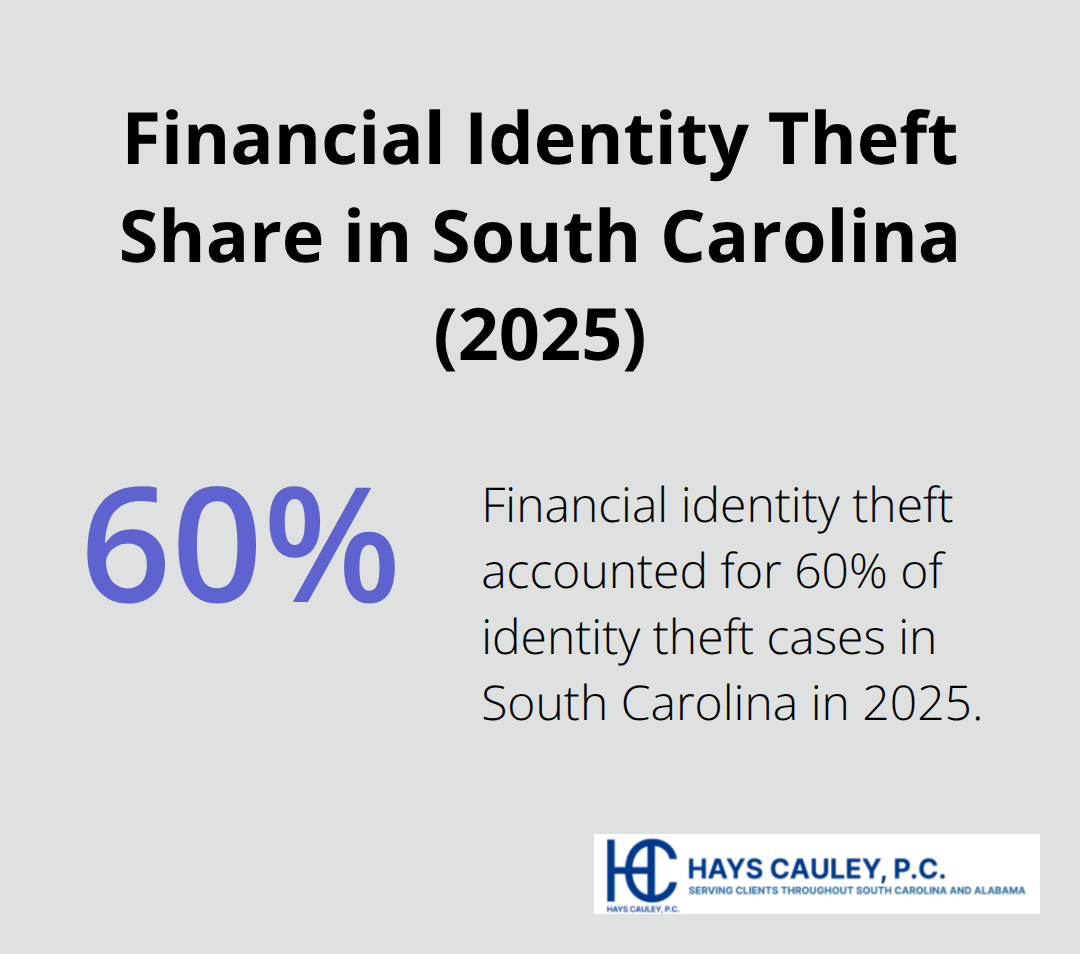
The South Carolina Department of Consumer Affairs reported that South Carolinians lost over 8 million dollars to scams and identity theft in 2025, with financial identity theft accounting for roughly 60 percent of cases. Credit card fraud comprises a portion of these losses but represents a narrower criminal act. Prosecutors pursuing identity theft charges have more leverage because the statute’s broad definition of identifying information and financial resources allows them to stack charges across multiple accounts or schemes.
Why the Distinction Shapes Your Defense
The differences between these offenses directly affect your defense strategy and potential sentencing exposure. Prosecutors may charge you with multiple counts of identity theft based on different accounts or victims, compounding your legal exposure. Understanding how prosecutors interpret the statute’s broad language helps you anticipate their arguments and prepare effective counterarguments. Your defense must address not only what you did but also what prosecutors claim you intended to do.
The complexity of identity theft law-combined with the broad definitions prosecutors exploit-makes legal representation essential as you move forward.
How Identity Theft Charges Damage Your Future
An identity theft conviction creates immediate financial damage that extends far beyond the courtroom sentence. Your credit score drops sharply when accounts opened fraudulently appear on your report, and victims often dispute charges, triggering collection accounts in your name. The South Carolina Department of Consumer Affairs reported that financial identity theft accounted for roughly 60 percent of identity theft cases in 2025, meaning most victims face months or years of credit repair work. If you’re convicted, you’ll owe restitution to victims under Section 17-25-322, adding another financial obligation on top of court fines and legal fees. Even before trial, creditors may have already damaged your credit score based on the fraudulent accounts, making it harder to obtain loans, refinance mortgages, or secure favorable interest rates for years after conviction.
Your Credit Takes a Severe Hit
Fraudulent accounts tank your credit score within weeks of appearing on your report. Lenders view identity theft convictions as red flags, and your credit rating may not recover for seven to ten years even after you pay restitution. Collection agencies pursue accounts opened in your name, and each collection attempt further damages your creditworthiness. You’ll struggle to qualify for mortgages, car loans, or credit cards at reasonable rates. Some lenders will reject your applications outright once they see the conviction. The financial institutions that do approve you will charge significantly higher interest rates, costing you thousands of dollars over the life of any loan. This credit damage persists long after you complete your sentence and pay court-ordered fines.
Employment and Housing Become Significantly Harder
Employers conducting background checks will see your felony conviction, and South Carolina law allows most employers to deny positions based on criminal history. Housing becomes another major obstacle-landlords routinely reject applicants with felony convictions, and those who accept you often charge higher security deposits or require co-signers. If you work in financial services, healthcare, or government, a conviction likely ends your career in that field entirely. Professional licenses in accounting, real estate, and other regulated industries face suspension or revocation. Employers won’t hire you for positions requiring access to customer data or financial information, effectively closing off entire career paths. A conviction forces you into lower-paying jobs with fewer advancement opportunities, compounding the financial strain from restitution payments and court costs.
A Criminal Record Follows You Permanently
South Carolina doesn’t allow expungement of felony convictions for identity theft, meaning the offense stays on your permanent record unless you successfully petition for a factual innocence determination after exoneration. This permanence affects everything from apartment applications to job interviews to professional licensing. Background check companies maintain these records indefinitely, and potential employers, creditors, and landlords will see the conviction decades later. Insurance companies may deny coverage or charge higher premiums. Volunteer opportunities and positions coaching youth sports become unavailable. The long-term financial impact compounds because higher insurance costs, lower earning potential, and difficulty accessing credit create a cycle of financial disadvantage that persists throughout your life.
Why Your Defense Strategy Matters Now
The damage a conviction inflicts on your future makes the defense phase of your case critically important. Prosecutors will pursue maximum penalties, and the broader you allow them to interpret South Carolina Code § 16-13-510, the more counts they’ll file against you. Building a strong defense requires understanding how prosecutors construct their case and where weaknesses exist in their evidence. The decisions you make during the early stages of your case-from initial questioning through discovery-directly affect whether you face one count or multiple counts, and whether you might avoid conviction altogether. Your legal representation during this phase determines whether you protect your future or watch it narrow significantly.
How an Attorney Protects Your Identity Theft Defense
Facing identity theft charges without legal representation puts you at a severe disadvantage. Prosecutors in South Carolina have significant leverage because South Carolina Code § 16-13-510 uses broad language that allows them to interpret what constitutes identifying information and financial resources in ways that maximize charges against you. An attorney who understands how prosecutors exploit these definitions can challenge their interpretation at every stage. The difference between a conviction and acquittal often comes down to whether your defense attorney identifies weaknesses in the prosecution’s evidence before trial. We at Hays Cauley, P.C. help clients throughout Greenville, Columbia, and Charleston recognize these vulnerabilities and build defenses that prosecutors cannot overcome.
Attacking the Intent Element
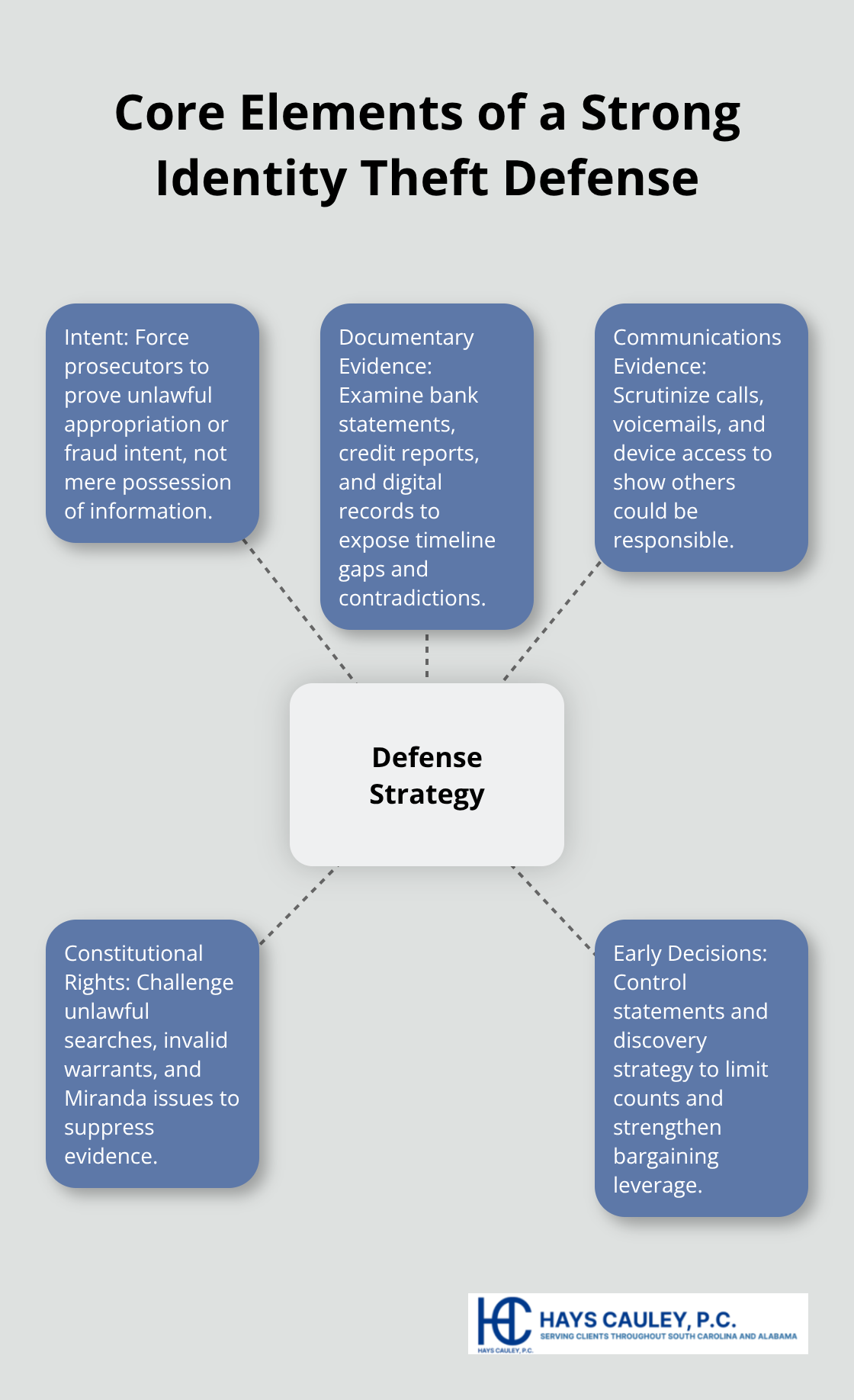
Most defendants don’t realize that prosecutors must prove intent to unlawfully appropriate financial resources or to defraud. Simply possessing someone’s information without intent does not satisfy the statute’s requirements. Your attorney needs to attack the prosecution’s intent evidence aggressively, forcing them to prove what you actually intended rather than what they assume you intended. This distinction often determines whether prosecutors can secure a conviction or must drop charges.
Identifying Gaps in Documentary Evidence
Navigating the documentation phase of identity theft cases requires understanding which records prosecutors will use and where inconsistencies exist. Prosecutors typically obtain bank statements, credit reports, phone records, and digital communications to establish your access to identifying information. An experienced attorney reviews these documents methodically to find gaps in the timeline, contradictions between accounts, or evidence that someone else had access to the information. If a fraudulent account was opened from a computer at a business location, your attorney can subpoena security footage and employee access logs to show other people had the opportunity to commit the fraud.
Challenging Communications Evidence
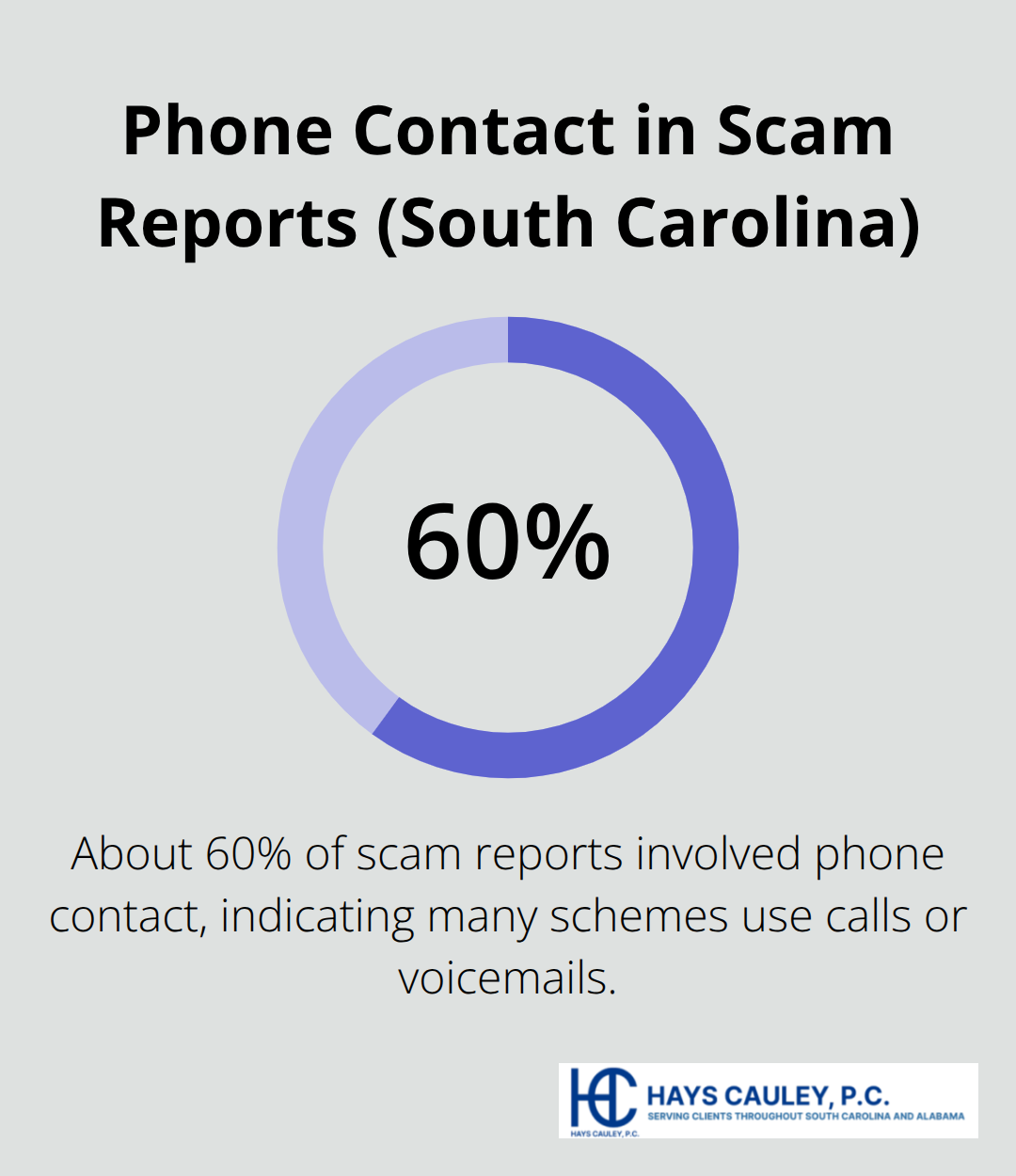
The South Carolina Department of Consumer Affairs reported that about 60 percent of scam reports involved phone contact, meaning many identity theft schemes involve voice calls and voicemail recordings. Your attorney can request these communications and cross-examine witnesses about what was actually said versus what prosecutors claim you intended. Phone records often reveal that multiple people accessed the same accounts or devices, creating reasonable doubt about your sole involvement.
Protecting Constitutional Rights
Protecting your rights throughout the legal process means ensuring that police followed proper procedures during questioning, that search warrants were valid if digital devices were seized, and that all evidence was collected legally. If police questioned you without reading your rights or obtained evidence without proper warrants, your attorney can file motions to suppress that evidence, potentially eliminating the prosecution’s strongest proof. Procedural violations often provide the most effective defense strategy because they remove evidence from trial entirely.
Early Case Decisions Shape Your Outcome
The decisions made in the early stages of your case-from your initial interactions with law enforcement through discovery-determine whether prosecutors can build a case strong enough to convict. An identity theft attorney familiar with South Carolina’s criminal procedures knows which procedural errors prosecutors commonly make and how to exploit those errors to weaken their case. Your response during these early phases directly affects the strength of the prosecution’s position at trial.
Final Thoughts
Identity theft charges in South Carolina demand immediate legal action because the consequences extend far beyond prison time and fines. Your credit, employment prospects, and housing options face severe damage that can last decades. The broad language in South Carolina Code § 16-13-510 gives prosecutors significant power to stack charges and pursue maximum penalties, but that same breadth creates vulnerabilities in their case that skilled legal representation can exploit.
The key to protecting your future lies in understanding that intent matters-prosecutors must prove you intended to defraud or unlawfully appropriate financial resources, not simply that you possessed identifying information. Gaps in documentary evidence, inconsistencies in witness testimony, and procedural violations often provide the strongest defense strategies. Early decisions about how you respond to questioning and which evidence gets challenged can determine whether prosecutors build a winnable case or face reasonable doubt at trial.
We at Hays Cauley, P.C. help clients throughout Greenville, Columbia, and Charleston navigate identity theft charges SC by identifying weaknesses in the prosecution’s evidence and protecting constitutional rights at every stage. Contact Hays Cauley, P.C. for a free consultation to discuss your specific situation, and we can begin building your defense immediately.