

Your credit report directly affects your ability to borrow money, rent an apartment, and sometimes even get hired for a job. Errors on your file can tank your score and cost you thousands in higher interest rates.
We at Hays Cauley, P.C. help South Carolina residents-including those in Greenville, Columbia, and Charleston-get credit reporting accuracy help when their files contain mistakes. This guide walks you through checking your report, spotting errors, and disputing inaccurate information.
What’s Actually on Your Credit Report
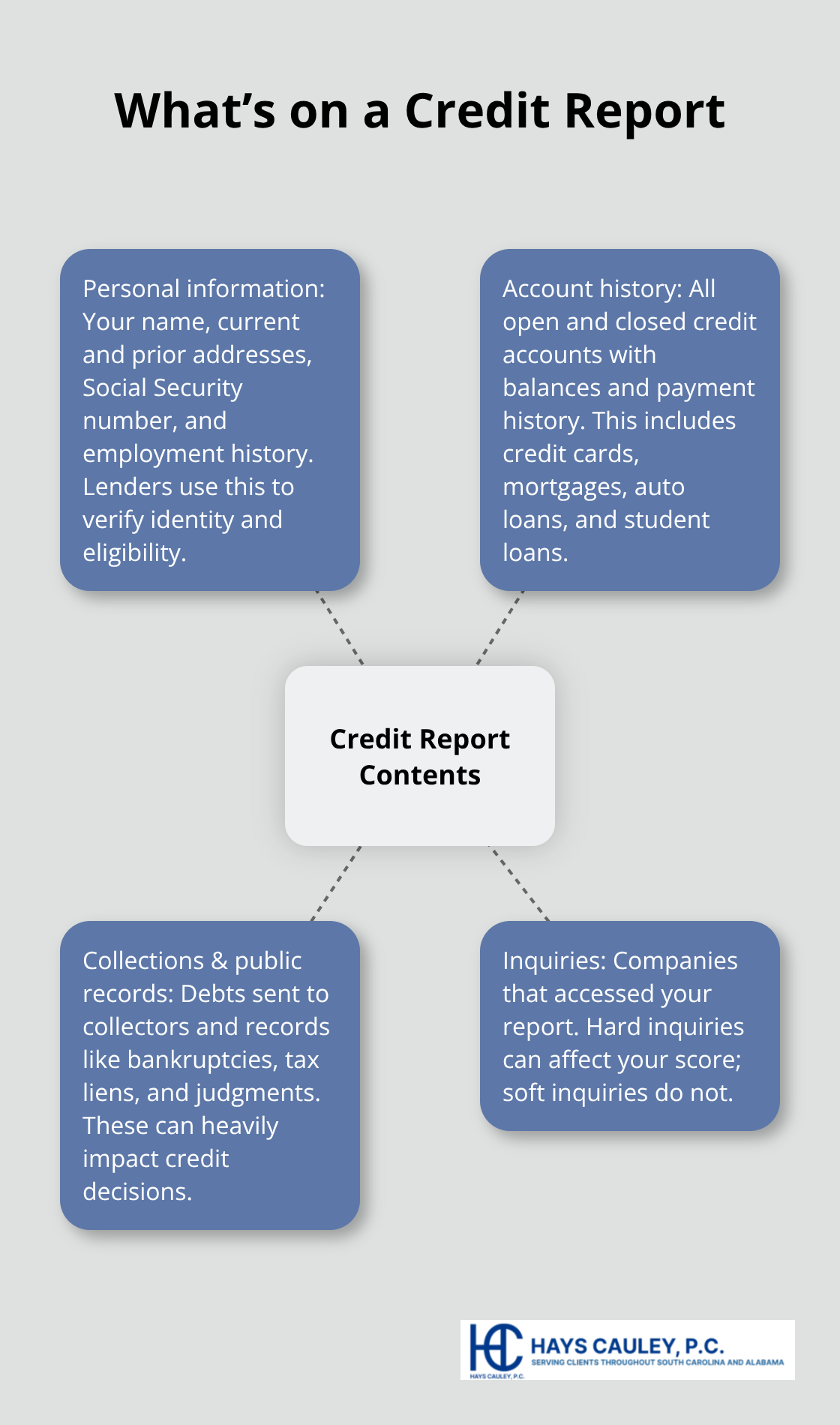
Credit reports contain four main categories of information that lenders, landlords, and employers review. Personal information lists your name, address, Social Security number, and employment history. Account history shows every credit account you have or had, including credit cards, mortgages, auto loans, and student loans, along with payment history and balances. Collections and public records include accounts sent to debt collectors, bankruptcies, tax liens, and court judgments. Inquiries list companies that accessed your report, split between hard inquiries that affect your credit score and soft inquiries that don’t. The Consumer Financial Protection Bureau reported over 800,000 credit and consumer reporting complaints in under two years, averaging more than 1,000 complaints daily.
Many of these complaints stem from inaccurate information that blocks access to credit, housing, and employment opportunities.
Common mistakes that destroy your file
Errors appear more frequently than most people realize. Wrong account information tops the list-accounts listed under your name that you never opened or payment dates recorded incorrectly. Late payments show on reports even when you paid on time, or the payment appears years after it actually happened. Duplicate accounts appear multiple times, inflating your debt load artificially. Identity theft creates accounts you never authorized. Personal information errors like misspelled names, incorrect addresses, or outdated employment history confuse lenders and cause loan denials. The CFPB found that consumers often paid bills they didn’t owe in attempts to fix problems, which actually harmed their credit scores further. Inaccurate information can stay on your report for seven years, while bankruptcy information remains for ten years, making early detection critical.
How errors tank your financial life
A single error on your credit report can cost thousands in higher interest rates or eliminate loan approval entirely. Your credit score determines whether you qualify for mortgages, auto loans, and credit cards, and at what rates. Landlords use credit reports to screen tenants, so errors can prevent housing approvals. Employers in certain industries check credit reports during hiring decisions. Insurance companies use credit information to set premiums. One late payment entry can drop your score significantly, and incorrect accounts multiply the damage. The Fair Credit Reporting Act governs what information appears on reports and who can access them, but errors persist because furnishers and credit bureaus sometimes fail to investigate disputes properly.
Why you need to act now
The longer incorrect information stays on your file, the more damage it causes to your financial health and opportunities. Spotting errors early gives you time to dispute them before they affect major financial decisions. The next section walks you through obtaining your free credit report and identifying what doesn’t belong on your file.
How to Get and Review Your Credit Report
Access Your Free Annual Credit Report
Start with AnnualCreditReport.com, the only official source for free annual credit reports from Equifax, Experian, and TransUnion. You receive one free report from each bureau per year, and the process takes about five minutes online. Equifax currently offers six free reports annually through 2026 by visiting their site or calling 1-866-349-5191, which gives you more frequent monitoring opportunities than the standard annual pull.
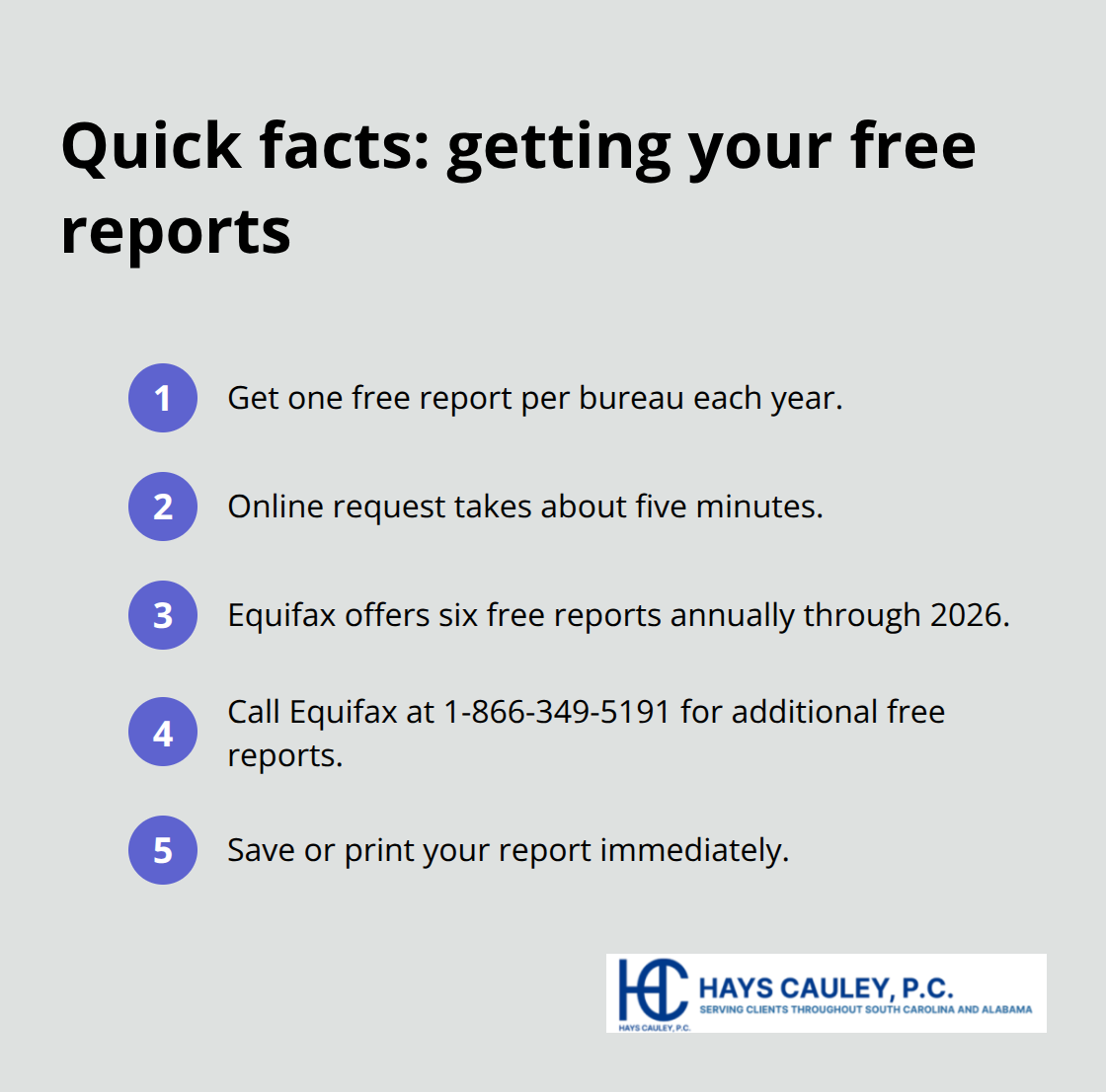
When you access your report, print or save it immediately and review it section by section.
Verify Your Personal Information
Check your personal information first-verify that your name, address, and Social Security number match your records exactly. Misspelled names, incorrect addresses, or outdated employment history confuse lenders and trigger loan denials. These errors seem minor but they create real obstacles when you apply for credit or housing.
Examine Your Account History
Every credit card, mortgage, auto loan, and student loan should appear with accurate payment dates and balances. Look for accounts you never opened, which signal identity theft, and verify that closed accounts show a zero balance. Check the date opened and closed for each account; if a payment appears years after you actually made it, that’s a clear error. Accounts listed under your name that you never authorized represent one of the most damaging mistakes on credit files.
Review Collections, Public Records, and Inquiries
Collections and public records sections should be empty unless you actually had accounts sent to debt collectors or bankruptcies. Inquiries at the bottom list companies accessing your report-soft inquiries don’t affect your score, but hard inquiries do, so flag any you don’t recognize. This section reveals which lenders and creditors have pulled your file and when they did so.
Document Errors and Gather Supporting Evidence
Document every error you find by circling it on a printed copy of your report and taking screenshots of online errors. Create a spreadsheet listing each mistake, what the correct information should be, and which account it affects. Gather supporting documents before disputing: payment confirmations for late payments you made on time, proof you closed an account showing zero balance, or identification documents if personal information is wrong. The Fair Credit Reporting Act requires disputes to be free, and credit bureaus have 30 days to investigate after you file. You can dispute online through each bureau’s website, by phone, or through certified mail with return receipt-certified mail creates a paper trail if the bureau claims they never received your dispute. Send copies of your supporting documents with your dispute, never originals. If you find evidence of identity theft (accounts you absolutely never authorized), report it immediately at IdentityTheft.gov to get a personalized recovery plan. The sooner you act, the sooner these errors disappear from your file and stop damaging your financial opportunities. Once you’ve documented your errors and gathered your evidence, you’re ready to file your dispute with the credit bureaus and creditors.
How to File Your Dispute and Get Results: Serving South Carolina, including Greenville, Columbia and Charleston
File Your Dispute with Each Credit Bureau
Start your dispute with each credit bureau that reports the error. You have three options: submit online through their website, call them directly, or send certified mail with return receipt. Equifax accepts disputes at 866-349-5191, Experian at 888-397-3742, and TransUnion at 800-916-8800. Certified mail with return receipt provides your strongest protection because it creates documentation that the bureau received your dispute on a specific date-this matters if they later claim they never got it.
When you file, include your name and address, describe each inaccuracy clearly, explain why the information is wrong, and attach copies of your supporting documents alongside a copy of your report with the errors circled. Never send originals. The credit bureau has exactly 30 days to investigate your dispute and must forward your complaint and evidence to the company that reported the information.
What Happens During the Investigation
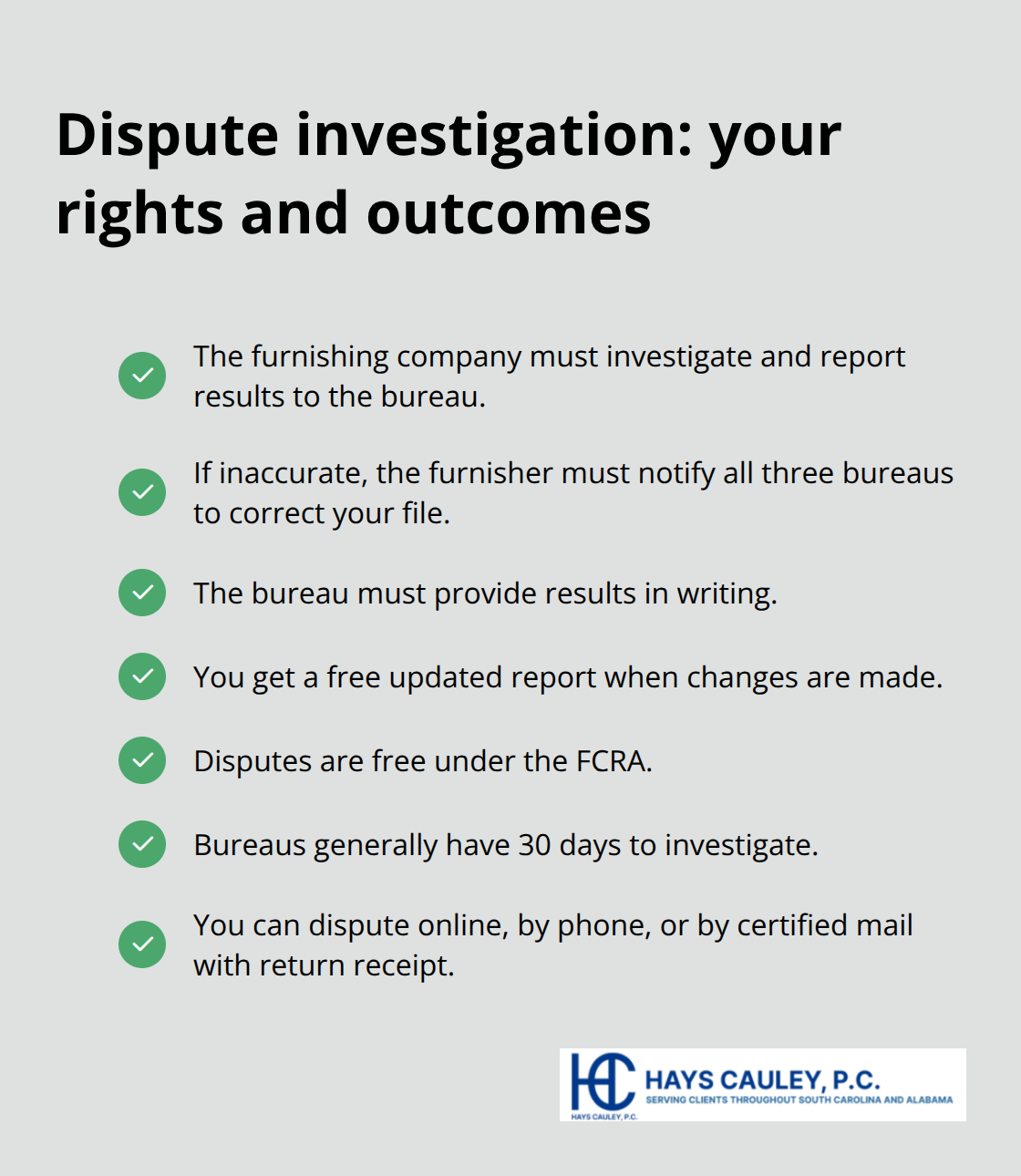
The reporting company must also investigate and report results back to the bureau. If the investigation finds the information inaccurate, the reporting company must notify all three nationwide bureaus so they can correct your file immediately. The bureau must provide results in writing, and if something changes, you receive a free copy of your updated credit report in addition to your annual free report.
Contact the Reporting Company Directly
Don’t stop at the credit bureau. Contact the company that reported the error directly and dispute with them as well. Send the same documentation you sent to the bureau: your name, address, each inaccuracy with explanation, supporting documents, and a copy of your report with errors marked. The reporting company must investigate and notify the credit bureau if it confirms the information is inaccurate. If they continue reporting disputed information without investigating, that itself violates the Fair Credit Reporting Act.
Monitor Your Reports and Follow Up
After filing your disputes, monitor your reports regularly to confirm corrections appear and that dispute notices show on your file where applicable. If the bureau cannot verify the information after investigation, they must inform you of the outcome. If your dispute is ignored or inadequately addressed after 30 days, file a complaint with the Consumer Financial Protection Bureau online or by phone at no cost. The CFPB uses consumer complaints to guide enforcement actions against bureaus that mishandle disputes.
Many consumers report that finger-pointing between furnishers and bureaus leaves them stuck with incorrect data, so persistence and proper documentation speed resolution significantly. Check your credit reports at least once a year going forward, and consider pulling from Equifax monthly through 2026 using their six free annual reports to catch any new errors quickly.
Final Thoughts
Correcting errors on your credit report directly determines your financial future, and inaccurate information costs you thousands in higher interest rates, blocks housing approvals, and damages employment opportunities. The seven-year window that negative information stays on your file makes early action critical-every month you delay allows wrong data to continue harming your credit score and limiting your options. After you’ve successfully disputed errors and watched corrections appear on your reports, continue monitoring your credit reports at least annually, or use Equifax’s six free reports through 2026 to check more frequently.
New errors can appear at any time, and catching them early prevents the same damage cycle from repeating. Set a calendar reminder to pull your reports regularly so mistakes don’t accumulate unnoticed, and once your file is accurate, focus on maintaining it by paying bills on time, keeping credit card balances low, and avoiding unnecessary accounts that trigger hard inquiries. Your corrected credit report becomes the foundation for better loan terms, lower insurance rates, and stronger financial stability.
If credit bureaus or reporting companies resist your efforts or disputes aren’t resolved within the 30-day window, you need support navigating the process. We at Hays Cauley, P.C. provide credit reporting accuracy help to South Carolina residents, including those in Greenville, Columbia, and Charleston, and we understand how to hold bureaus and furnishers accountable when they ignore your rights. Contact us to discuss your situation and learn how we can help restore your financial standing.