

South Carolina consumers have strong legal protections under state law that go beyond federal regulations. The Consumer Bill of Rights provides specific safeguards against unfair business practices and debt collection harassment.
We at Hays Cauley, P.C. see many cases where consumers don’t know their rights under these laws. Understanding these protections can help you fight back against violations and recover damages.
What Rights Does South Carolina’s Consumer Bill Protect?
Your Core Consumer Rights Under State Law
South Carolina’s Consumer Protection Code under Title 37 grants you six fundamental rights that businesses must respect. The right to safety protects you from dangerous products and services. The right to be informed means companies cannot mislead you with false advertising or hide important terms.
You have the right to choose between products without artificial barriers. The right to be heard gives you power to file complaints and demand responses from businesses. Your right to privacy prevents companies from misuse of your personal information without consent.
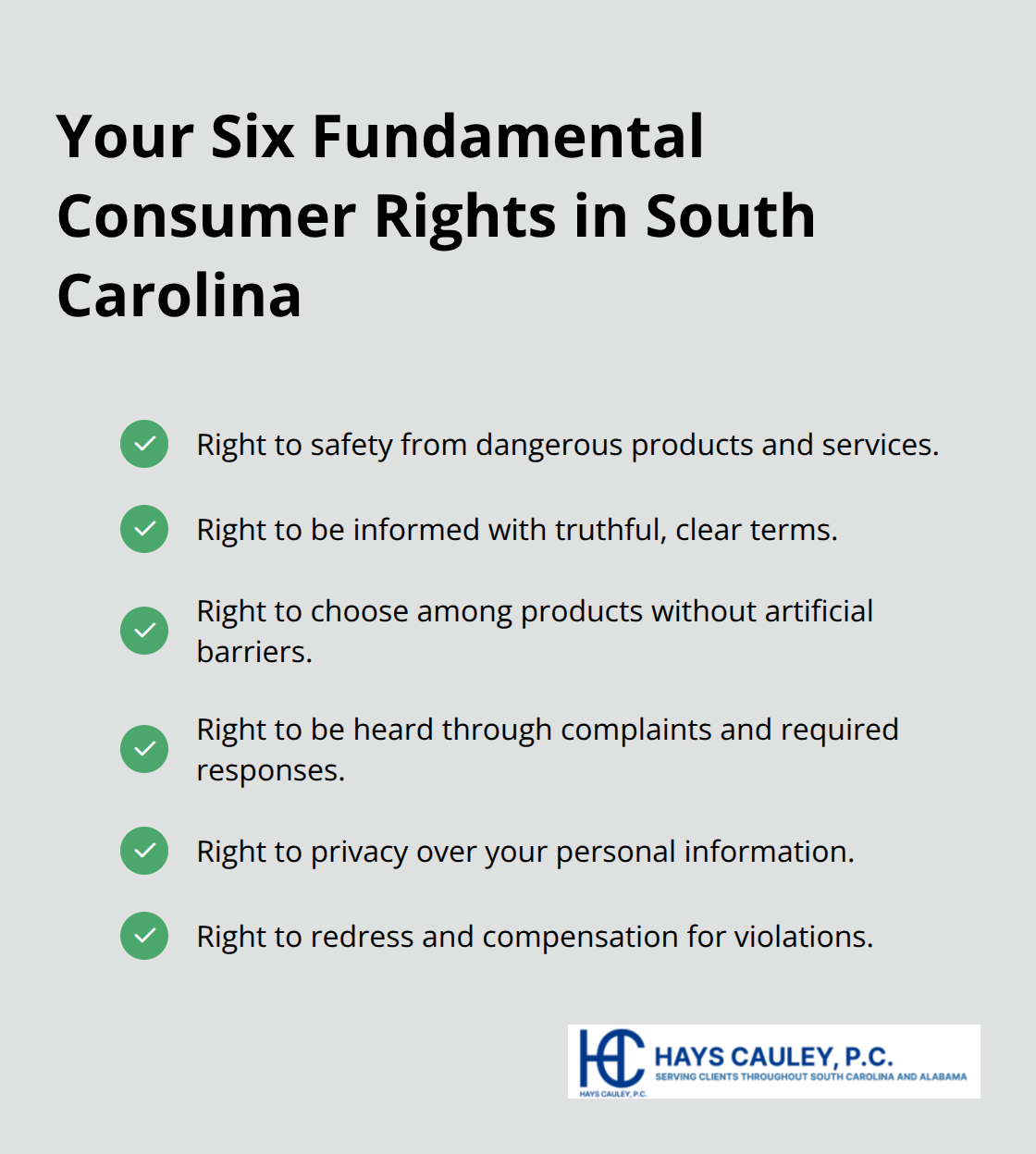
The right to redress allows you to seek compensation when businesses violate your rights. The South Carolina Department of Consumer Affairs reports a 12% increase in consumer complaints in 2024, which shows these rights face constant threats.
Credit Report Protection Standards
South Carolina law provides tougher protections than federal rules for credit reports. You can freeze your credit reports for free under the Consumer Identity Theft Protection Act. The state requires businesses to notify you within 48 hours of data breaches that affect your personal information (faster than federal requirements).
Credit reports must remain accurate, and you have the right to dispute errors immediately. Companies must investigate disputes within 30 days and remove false information. These protections give you more control over your credit information than many other states provide.
Debt Collection Safeguards
The state’s Unconscionable Debt Collection Practices Act creates stronger rules than federal law. Collectors cannot contact you at work if you tell them to stop, unlike federal law which has more exceptions. South Carolina requires debt collectors to validate debts within 30 days of your written request.
Collectors must stop all collection activity until they provide proof of the debt. They cannot harass you with excessive phone calls or threaten legal action they cannot take. These protections mean you have more tools to fight back against harassment than consumers in many other states.
Understanding these rights becomes even more important when you recognize the common violations that occur across South Carolina.
Which Consumer Violations Occur Most in South Carolina
Debt Collection Harassment Tactics
South Carolina consumers face aggressive debt collection practices that violate both state and federal law. The South Carolina Department of Consumer Affairs documented over 3,200 debt collection complaints in 2024, with harassment calls that exceed federal limits as the top violation. Collectors frequently call consumers at work despite written requests to stop, which violates state law that provides stronger workplace protection than federal regulations.
Debt collectors also threaten wage garnishment for debts they cannot legally collect through garnishment. Medical debt collectors particularly abuse this tactic, even though most medical debts cannot be garnished in South Carolina. False threats of arrest warrants represent another common violation, with collectors who claim they can have consumers jailed for unpaid debts.
Credit Report and Identity Theft Problems
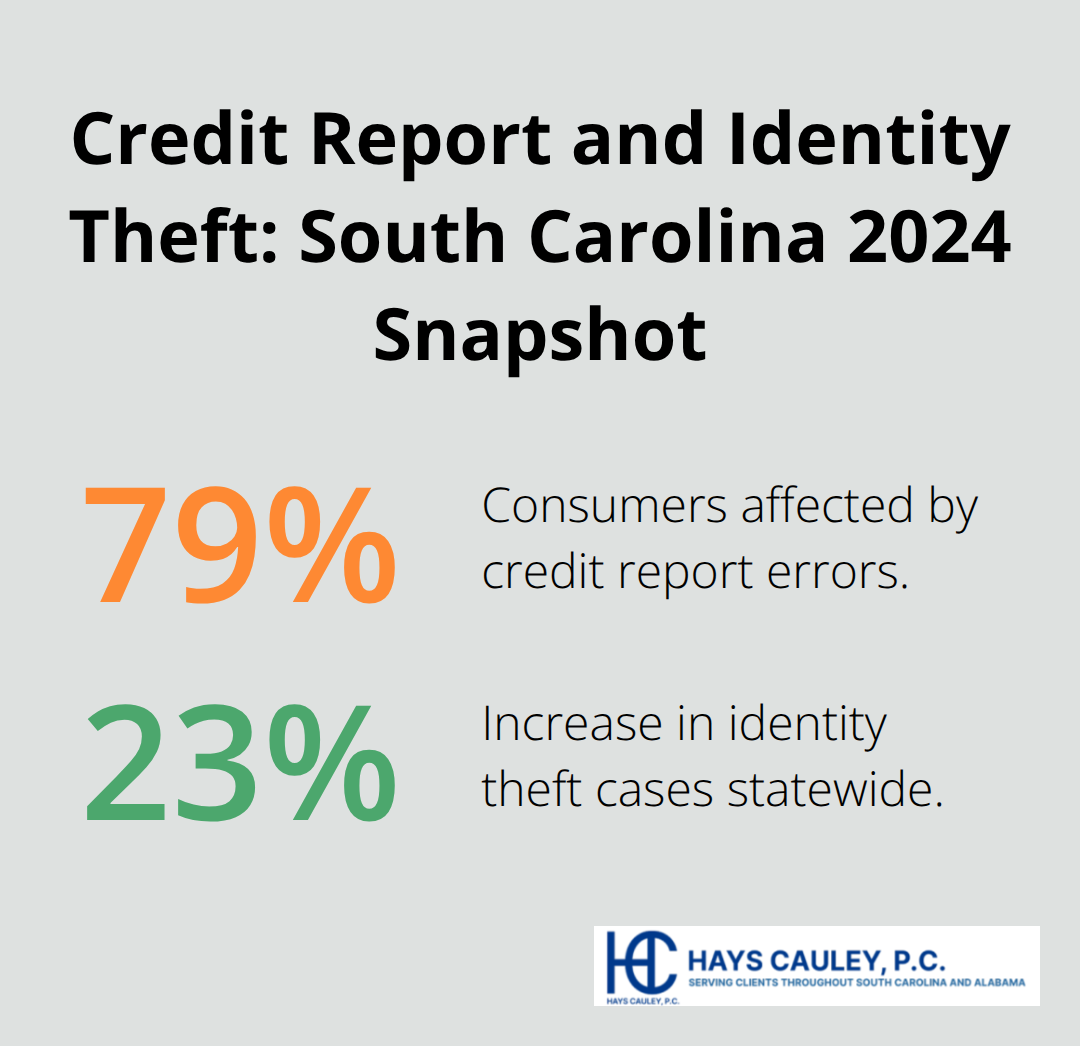
Credit report errors affect 79% of South Carolina consumers according to Federal Trade Commission data, but state law provides faster resolution than federal requirements. Identity theft cases jumped 23% in South Carolina during 2024, with synthetic identity theft as the fastest-growing problem. Criminals create fake identities that use real Social Security numbers combined with false names and addresses.
Credit bureaus often fail to correct errors, which may be in violation of the FCRA. Data breach notifications frequently arrive weeks late, which violates South Carolina’s 48-hour notification requirement. These delays cost consumers thousands in fraudulent charges and credit damage.
Sales Fraud and Advertising Deception
Auto dealers commit the highest rate of deceptive practices, with bait-and-switch financing that affects 34% of car buyers statewide. Dealers advertise low monthly payments but switch customers to higher rates during contract signing (a practice that violates truth-in-advertising laws). Home improvement contractors use door-to-door sales tactics that violate South Carolina’s three-day cooling-off period, which pressures homeowners into immediate contracts.
Gym memberships and timeshare sales represent major violation categories, with companies that hide cancellation fees and automatic renewal clauses. These businesses count on consumers who don’t read contracts thoroughly, and they bury important terms in fine print that violates state disclosure requirements (making it nearly impossible for consumers to understand their obligations).
When these violations occur, South Carolina law provides specific legal remedies that can help you recover damages and stop the harmful practices.
How Can You Take Legal Action Against Consumer Violations
File Complaints with Government Agencies
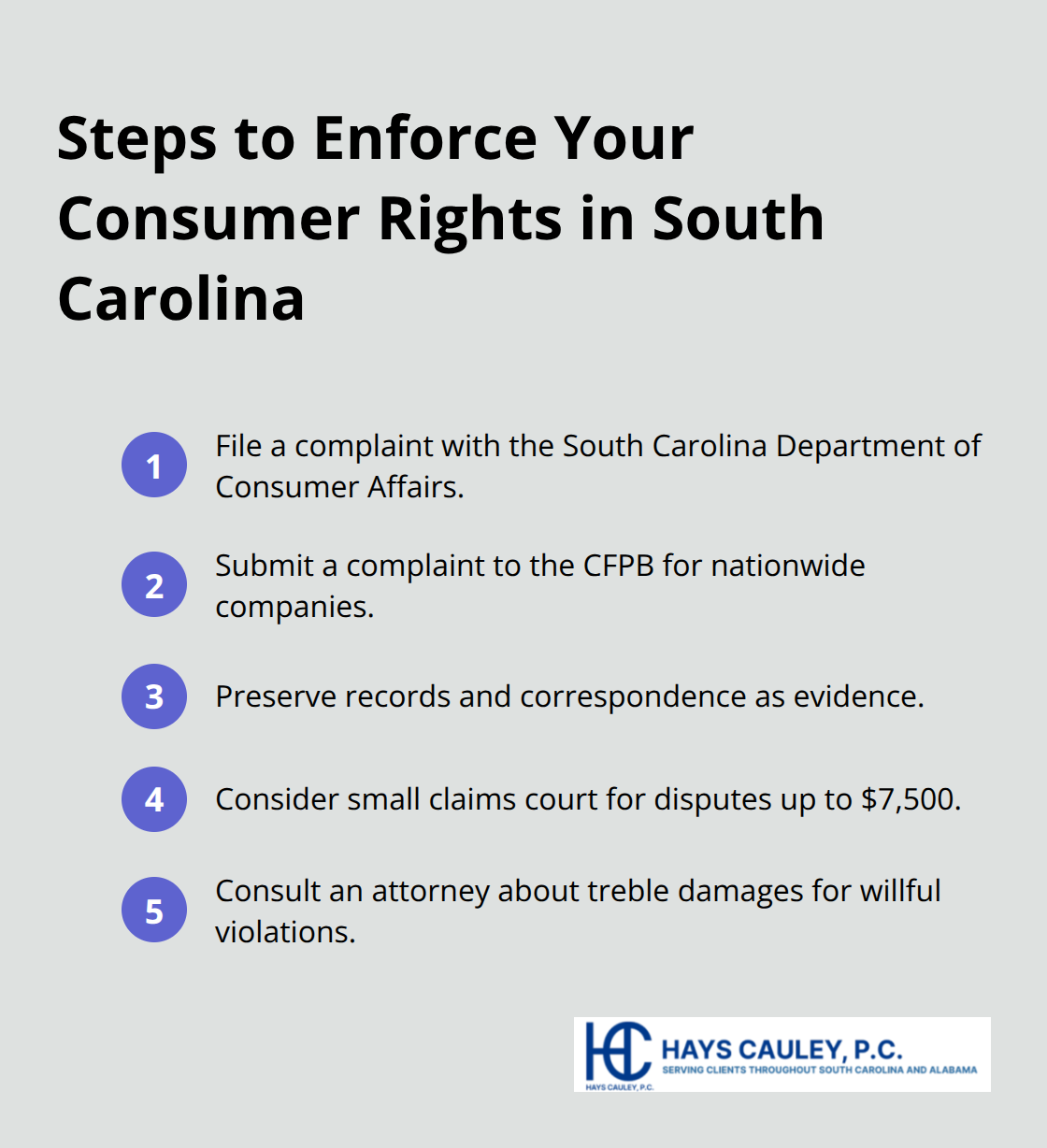
The South Carolina Department of Consumer Affairs provides the fastest path to resolution for consumer violations. You can file complaints online at their website or call their toll-free number for immediate assistance. The agency investigates over 15,000 complaints annually and achieves resolution in 73% of cases within 90 days. State agencies have enforcement powers that individual consumers lack, including the ability to impose fines and require business license suspensions.
Federal agencies like the Consumer Financial Protection Bureau handle nationwide companies that violate consumer rights. The CFPB processed 542,000 complaints in 2024 and returned $3.2 billion to harmed consumers. File with both state and federal agencies to create pressure on violators from multiple directions and increase your chances of results.
Take Businesses to Court Under State Law
South Carolina’s Consumer Protection Code allows you to sue businesses that violate your rights and recover actual damages plus attorney fees. The law permits courts to award up to three times your actual damages for willful violations, which makes lawsuits financially worthwhile even for smaller claims. Small claims court handles cases up to $7,500 and provides a faster, less expensive option for many consumer disputes.
Class action lawsuits work well against large companies that harm multiple consumers with the same illegal practices. These cases can result in significant settlements that compensate all affected consumers. The statute of limitations for consumer protection claims is typically three years from when you discovered the violation (though some cases have longer deadlines depending on the specific law that was broken).
Recover Compensation Under Consumer Protection Laws
South Carolina law provides multiple types of compensation for consumer rights violations. You can recover out-of-pocket losses, including fees you paid to fix credit report errors or costs from identity theft. Courts award compensation for emotional distress in cases that involve harassment or privacy violations, with typical awards that range from $1,000 to $15,000 depending on severity.
Punitive damages punish businesses for particularly egregious behavior and can reach substantial amounts. Attorney fees get covered by defendants who lose in most consumer protection cases (which means you don’t pay legal costs if you win). Some violations trigger automatic statutory damages of $1,000 per violation, regardless of your actual financial losses.
Final Thoughts
South Carolina’s Consumer Bill of Rights creates powerful protections that exceed federal law standards. You possess the right to safety, accurate information, fair choices, privacy protection, and compensation when businesses violate these standards. The state’s Consumer Protection Code establishes stronger debt collection rules and faster credit report dispute resolution than most other states provide.
Action against violations protects both your finances and your legal rights. The South Carolina Department of Consumer Affairs resolves 73% of complaints within 90 days, and state law allows you to recover actual damages plus attorney fees from violators. Courts can award up to three times your damages for willful violations (which makes legal action financially worthwhile).
Contact a consumer protection attorney when businesses refuse to resolve violations or when you face complex issues like identity theft or credit report errors. We at Hays Cauley, P.C. help consumers fight violations throughout South Carolina. Don’t let businesses violate your rights without consequences.