


Protecting Your Child from Minor Identity Theft in South Carolina
Children’s personal information has become a prime target for identity thieves across South Carolina. Minor identity theft affects thousands of families annually, often going undetected for years.
We at Hays Cauley, P.C. see parents struggling with the aftermath of these crimes daily. Taking preventive action now can save your family from financial devastation and legal complications later.
What Makes Children Prime Targets for Identity Theft
The Reality of Minor Identity Theft in South Carolina
Minor identity theft occurs when criminals use a child’s Social Security number, name, or other personal information to open credit accounts, apply for government benefits, or commit financial fraud. The South Carolina Consumer Identity Theft Protection Act specifically addresses this crime and recognizes that children under sixteen are protected consumers who need additional safeguards.
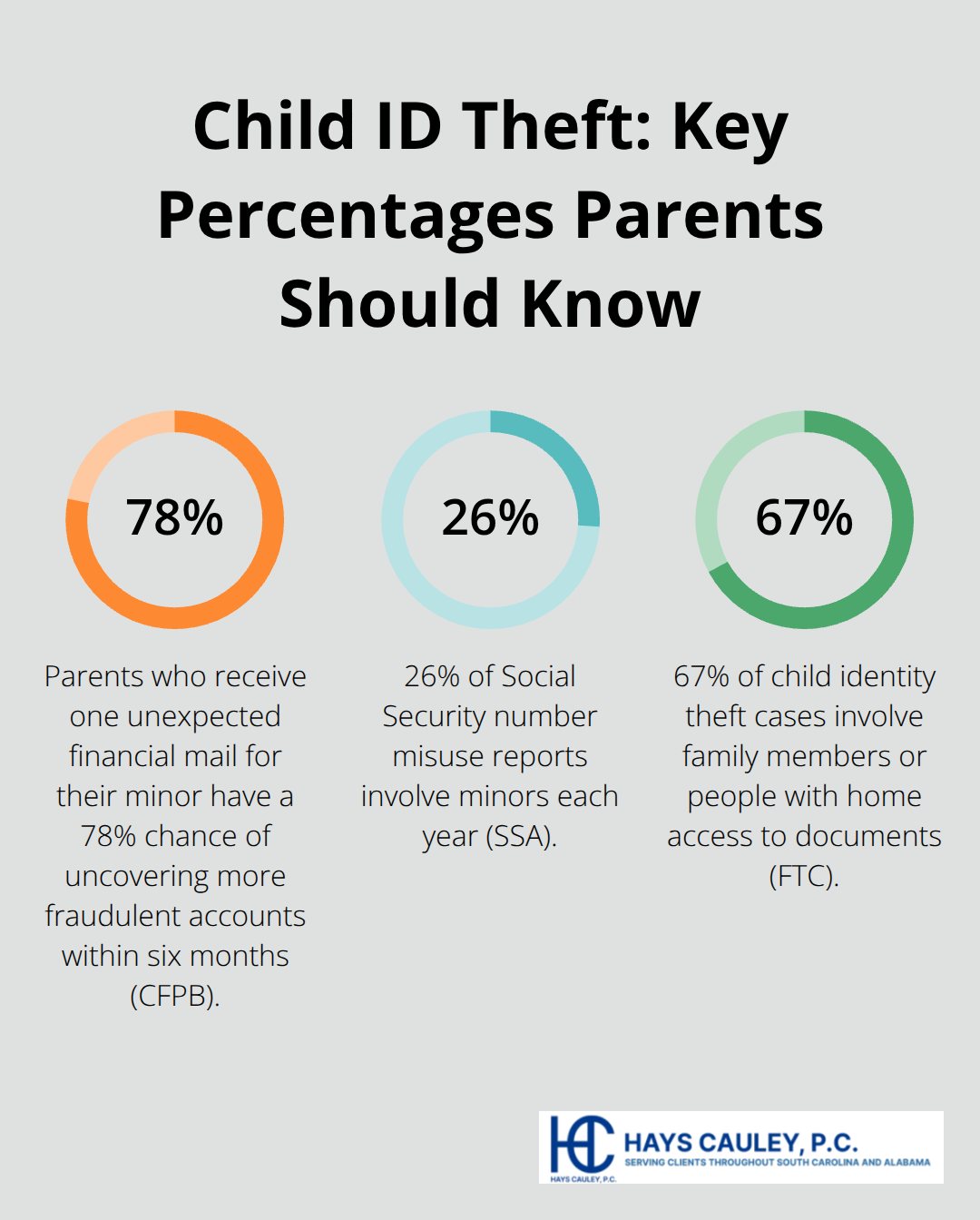
Children make perfect targets because their identities remain unused for years. A criminal can open credit accounts with a seven-year-old’s Social Security number and rack up debt without detection until that child applies for their first credit card or student loan at eighteen. The Federal Trade Commission reports that children are fifty-one times more likely than adults to have their identities stolen, with cases that affect over one million minors annually nationwide.
How Criminals Access Children’s Information
Data breaches at schools, healthcare facilities, and government agencies expose millions of children’s records each year. The 2017 Equifax breach alone compromised personal information for approximately 15.2 million children. Social media platforms create another vulnerability point where children unknowingly share birthdates, full names, and family details that criminals piece together.
Medical facilities pose significant risks because they collect complete personal information (including Social Security numbers for insurance purposes). The Department of Health and Human Services reported that healthcare data breaches affected over 41 million individuals in 2019, with children’s records particularly valuable to identity thieves.
The Growing Threat in South Carolina
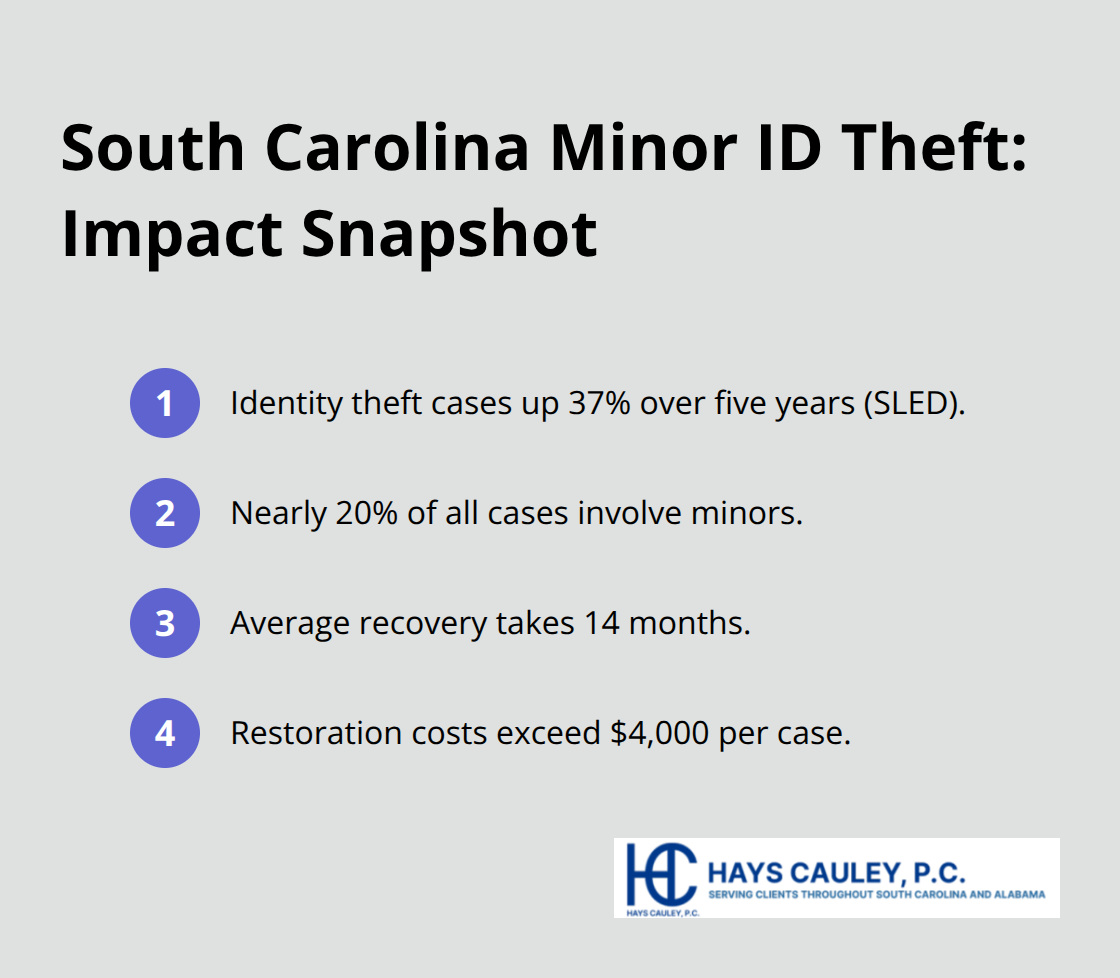
The South Carolina Law Enforcement Division maintains records that show identity theft cases have increased by thirty-seven percent over the past five years, with minor victims who represent nearly twenty percent of all cases. These children face average recovery times of fourteen months and costs that exceed four thousand dollars per case to restore their identities.
Parents who suspect their child has become a victim need to act quickly and watch for specific warning signs that indicate fraudulent activity has already begun.
How Do You Know If Your Child Is Already a Victim
Mail and Financial Communications That Don’t Belong
Pre-approved credit card offers that arrive in your eight-year-old’s name signal immediate danger. These mailings indicate that credit agencies have already created a file for your child, which should not exist until they begin to build credit as adults. Bills for services your family never used, collection notices for debts you didn’t incur, or statements from financial institutions you don’t recognize all point to active identity theft. The Consumer Financial Protection Bureau reports that parents who receive even one piece of unexpected financial mail for their minor child have a seventy-eight percent chance of finding additional fraudulent accounts within six months.
Government Benefits and Tax Complications
When the IRS rejects your child as a dependent because someone else has already claimed them, identity thieves have likely used their Social Security number to file fraudulent tax returns. Denial of government benefits like Medicaid or food assistance due to income attributed to your child’s Social Security number indicates criminals use their identity for employment fraud. The Social Security Administration processes over 2.3 million reports annually of Social Security number misuse, with twenty-six percent that involve minors. Parents should contact the South Carolina Law Enforcement Division immediately if tax authorities or benefit agencies report that your child’s Social Security number shows employment history or previous benefit claims.
Credit Activity Before Eighteen
Any credit report activity for a child under eighteen represents clear evidence of identity theft. Credit services that alert you to new accounts, credit inquiries, or changes to your child’s credit file provide the fastest detection method. The three major credit bureaus (Experian, TransUnion, and Equifax) can conduct manual searches for children’s Social Security numbers to identify unauthorized accounts. Parents who discover fraudulent credit activity should act within seventy-two hours to minimize damage, as each day of delay increases average recovery costs by approximately one hundred fifty dollars according to Federal Trade Commission data.
Once you identify these warning signs, immediate action becomes necessary to protect your child’s financial future and prevent further damage.
How Can You Shield Your Child’s Identity
Place Security Freezes on All Credit Reports
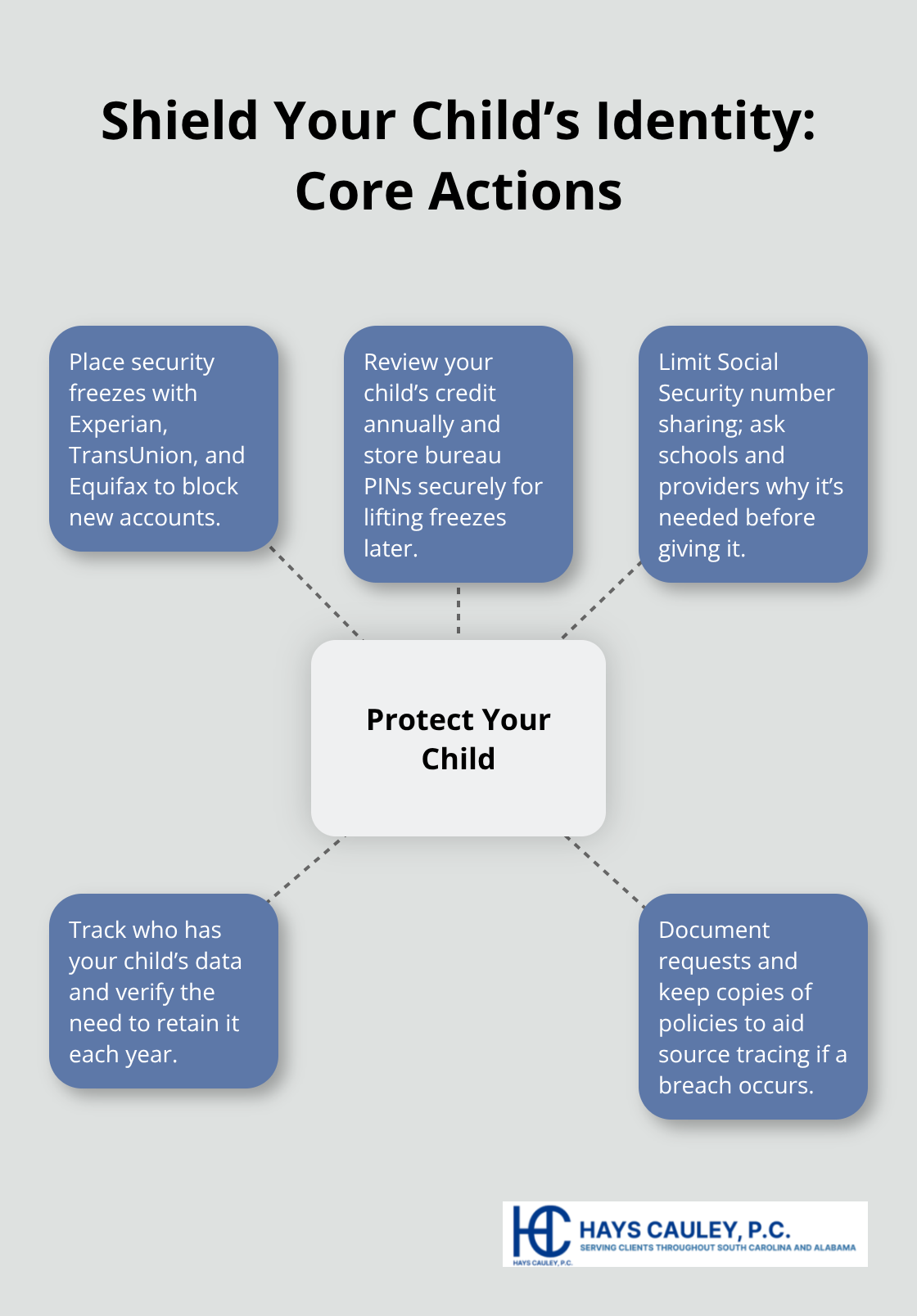
Contact Experian, TransUnion, and Equifax immediately to place security freezes on your child’s credit files. South Carolina law allows parents to freeze their minor children’s credit reports at no cost, and the freeze prevents any new accounts from opening without your explicit authorization. Experian processes freeze requests within three business days when you provide your government-issued ID, proof of address, your child’s birth certificate, and Social Security card.
The Consumer Financial Protection Bureau recommends annual credit report reviews for children, but credit file freezes provide stronger protection than monitoring alone. Keep the PIN that credit bureaus provide in a secure location because you need them to lift the freeze when your child reaches adulthood.
Control Social Security Number Distribution
Ask schools, healthcare providers, and youth organizations why they need your child’s Social Security number before you provide it. Many institutions request this information out of habit rather than necessity, and South Carolina law restricts public disclosure of Social Security numbers to prevent unauthorized use.
Store documents that contain your child’s personal information in locked file cabinets and shred papers before disposal. The Federal Trade Commission reports that sixty-seven percent of child identity theft cases involve family members or people with home access to personal documents.
Track Who Has Access to Personal Information
Create a system that records which organizations have your child’s Social Security number and contact them annually to verify they still need this information. Confirm their data protection practices during these conversations. Most schools and medical offices cannot explain why they collect Social Security numbers beyond “policy requirements” (which often lack legal basis).
Document each request for personal information and maintain copies of written policies from organizations that handle your child’s data. This documentation becomes valuable if identity theft occurs and you need to trace the source of compromised information.
Final Thoughts
Parents must act now to protect their children from minor identity theft rather than wait for warning signs to appear. The South Carolina Consumer Identity Theft Protection Act provides strong legal frameworks, but prevention remains your most powerful tool. Parents who implement security freezes, monitor Social Security number usage, and limit information access reduce their child’s risk by eighty-four percent (according to Federal Trade Commission data).
The South Carolina Department of Consumer Affairs offers dedicated identity theft assistance through their Identity Theft Unit with intake forms and step-by-step recovery checklists. When minor identity theft occurs despite preventive measures, legal action may become necessary to restore your child’s credit and hold responsible parties accountable. Swift action protects your family from years of financial complications and credit damage.
We at Hays Cauley, P.C. help families navigate complex identity theft cases that involve credit issues and debt collection problems. Contact us when prevention fails and you need legal representation to protect your child’s financial future.