


Identity theft attorney nearby: Finding Local Legal Help You Can Trust
Identity theft can wreck your finances in ways that take years to repair. Your credit score plummets, fraudulent accounts appear in your name, and lenders suddenly deny you for legitimate loans.
When this happens, you need an identity theft attorney nearby who understands South Carolina law and can fight back on your behalf. We at Hays Cauley, P.C. help victims recover their financial lives by holding creditors and data breaches accountable.
How Identity Theft Damages Your Financial Life
Identity theft doesn’t just hurt your credit score-it creates a financial catastrophe that can take years to untangle. When a thief opens accounts in your name, your credit score can drop 100 to 200 points within weeks, according to data from the Federal Trade Commission. This dramatic decline happens because credit bureaus record the fraudulent accounts and missed payments on your report, treating them as if you created the debt. Lenders see your damaged score and deny you for mortgages, car loans, and credit cards you legitimately need. The damage compounds because you may not discover the fraud immediately. The FTC reports that identity theft victims spend an average of 16 hours resolving the first fraudulent account alone-and most victims have multiple accounts opened without their knowledge.
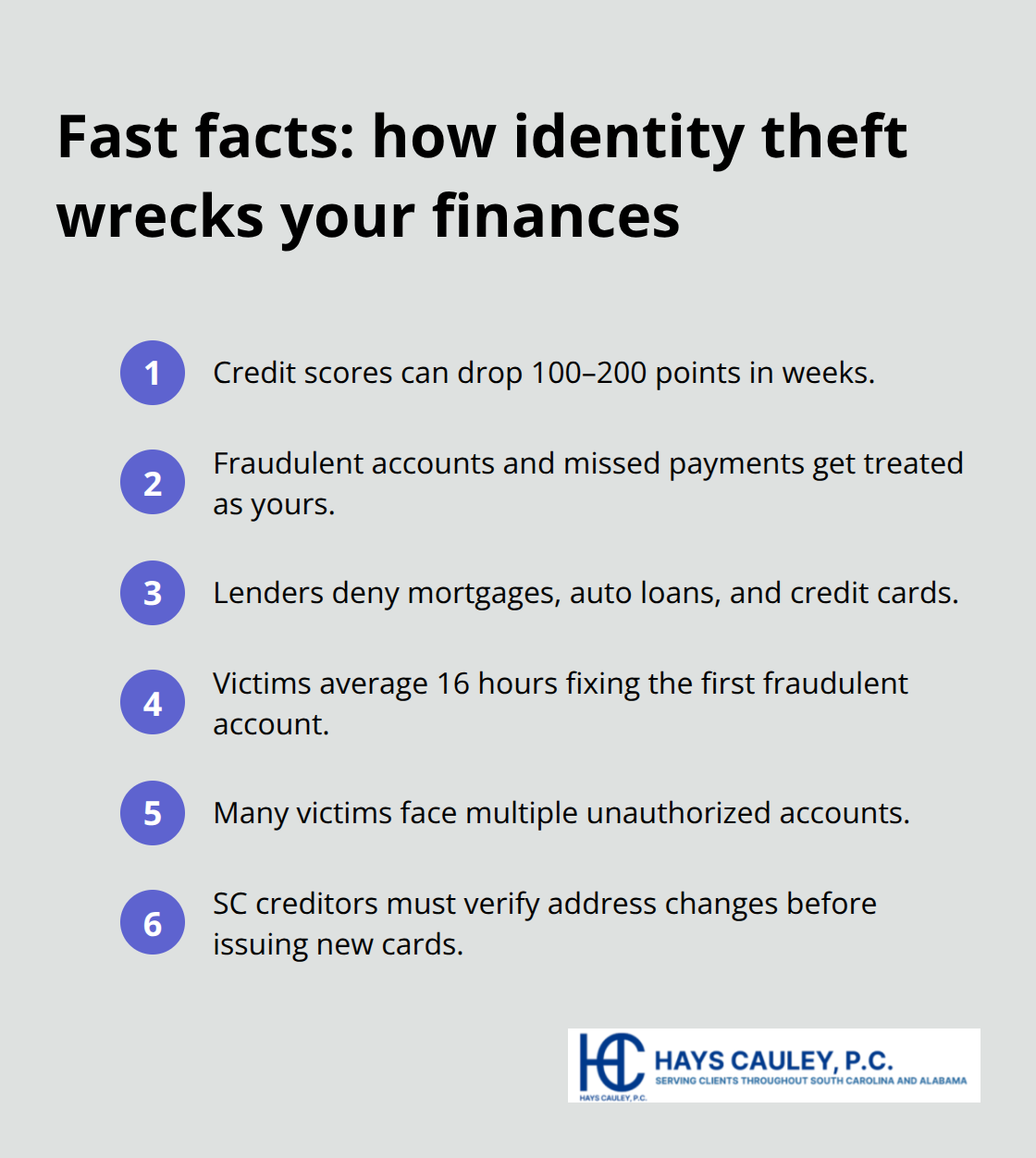
In South Carolina, creditors must verify address changes before issuing new cards, which helps prevent some fraud, but this protection only works if you catch the theft quickly enough to dispute it.
The Real Cost Beyond Your Credit Report
The financial losses from identity theft extend far beyond a damaged credit score. Victims report unauthorized charges ranging from hundreds to thousands of dollars, and some face fraudulent loans in their names that they must legally dispute. Under South Carolina law, if information on your credit report is inaccurate due to identity theft, the reporting agency must reinvestigate at no charge within 30 days. However, if the inaccuracy damages your creditworthiness and isn’t corrected after a court judgment, damages can increase by up to $1,000 per day until removal. This means the longer fraudulent items stay on your report, the more expensive recovery becomes. Employment applications increasingly include credit checks, so identity theft can cost you job opportunities. Some employers view poor credit as a risk factor, particularly for positions involving financial responsibility. Additionally, utility companies, landlords, and insurance companies pull credit reports during application processes-identity theft can block you from housing, electricity, and reasonable insurance rates.
Why Self-Help Often Fails
Resolving identity theft without legal help often fails because creditors and credit bureaus lack strong incentives to fix the problem quickly. South Carolina law gives you powerful tools: you can place a free security freeze on your credit file within five business days, and the consumer reporting agency must provide a unique PIN within ten business days. However, lifting a freeze for a specific requester takes up to 15 minutes for temporary access, while permanent removal takes three business days. Many victims struggle with this process alone because creditors dispute their claims, collection agencies refuse to acknowledge the fraud, and credit bureaus drag out reinvestigations beyond the required 30 days. Creditors and data breaches often count on victims to give up rather than fight back.
How Legal Action Changes the Outcome
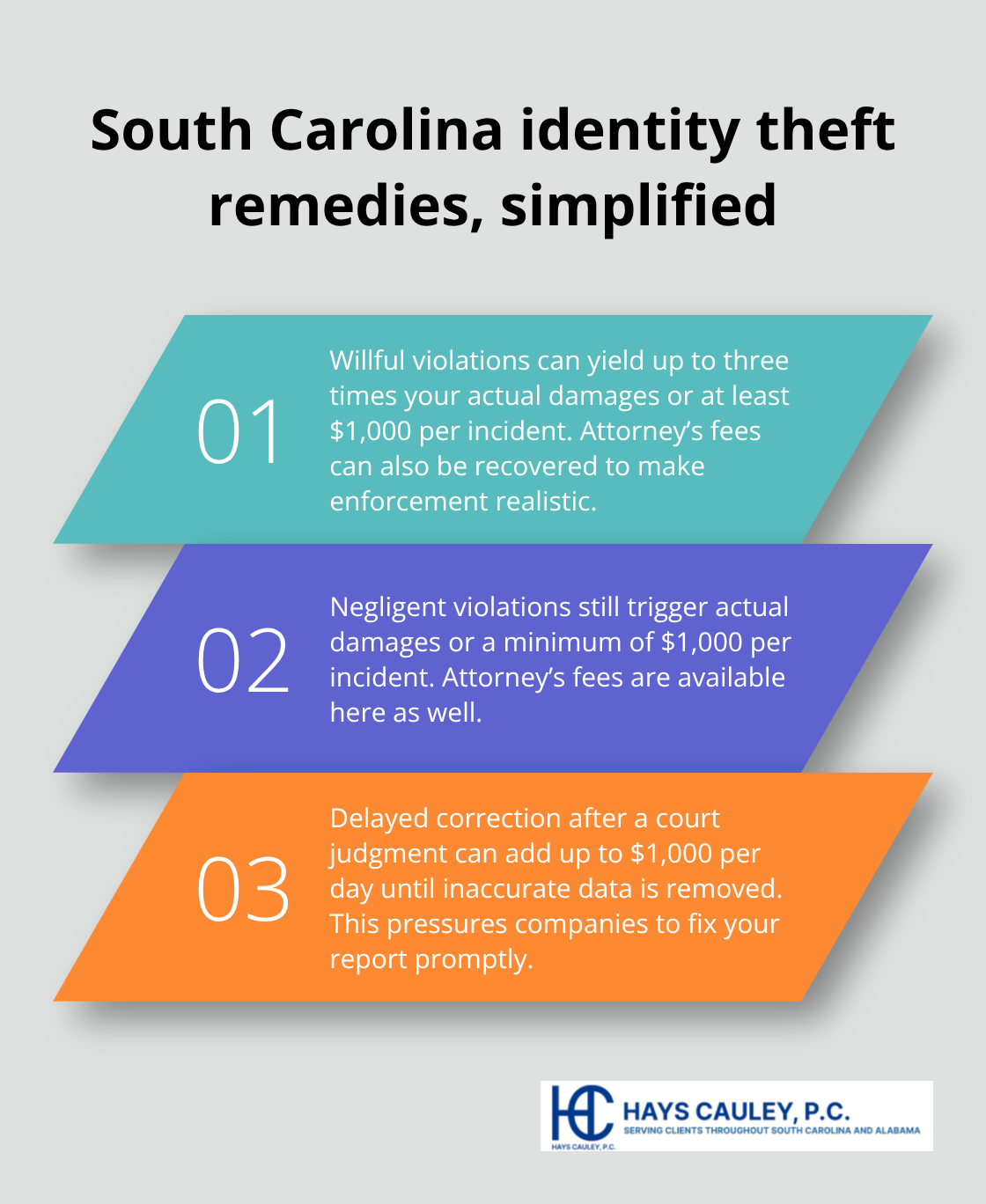
An identity theft attorney can force creditors to verify that debts are actually yours, demand that credit bureaus correct inaccurate information, and pursue damages when companies violate South Carolina’s identity theft protections. South Carolina law authorizes willful violations to yield damages up to three times the actual damages or at least $1,000 per incident, plus attorney’s fees. Negligent violations incur actual damages or at least $1,000 per incident, plus attorney’s fees. These remedies exist specifically to hold companies accountable-but you must take action to claim them.
A local attorney who understands South Carolina’s identity theft laws can navigate the complex recovery process that most victims cannot handle alone. The path forward requires more than placing a freeze or disputing one account; it requires strategic legal pressure on the institutions that caused or failed to prevent your financial harm.
Act Fast: Your First Steps After Identity Theft
Speed matters when identity theft strikes. The Federal Trade Commission found that victims who report fraud within 24 hours minimize unauthorized charges and recover faster than those who wait weeks. Your immediate actions create a paper trail that protects you legally and stops criminals from causing additional damage.
File Your FTC Report and Contact Your Banks
Start at IdentityTheft.gov and file a report with the Federal Trade Commission, which generates an official Identity Theft Report you can send to creditors and credit bureaus. This report carries legal weight in South Carolina because creditors must acknowledge it when you dispute fraudulent accounts. Contact your bank and credit card companies directly using the number on your statements-never numbers from suspicious emails or letters. Tell them which accounts show unauthorized activity and ask them to freeze those accounts immediately. Most banks can freeze accounts within minutes, preventing further charges.
Place Fraud Alerts and Security Freezes
Contact all three credit bureaus-Equifax, Experian, and TransUnion-to place fraud alerts. You only need to call one bureau, which must notify the others. A fraud alert lasts one year and requires creditors to verify your identity before opening new accounts. This step costs nothing and takes about 15 minutes per phone call.
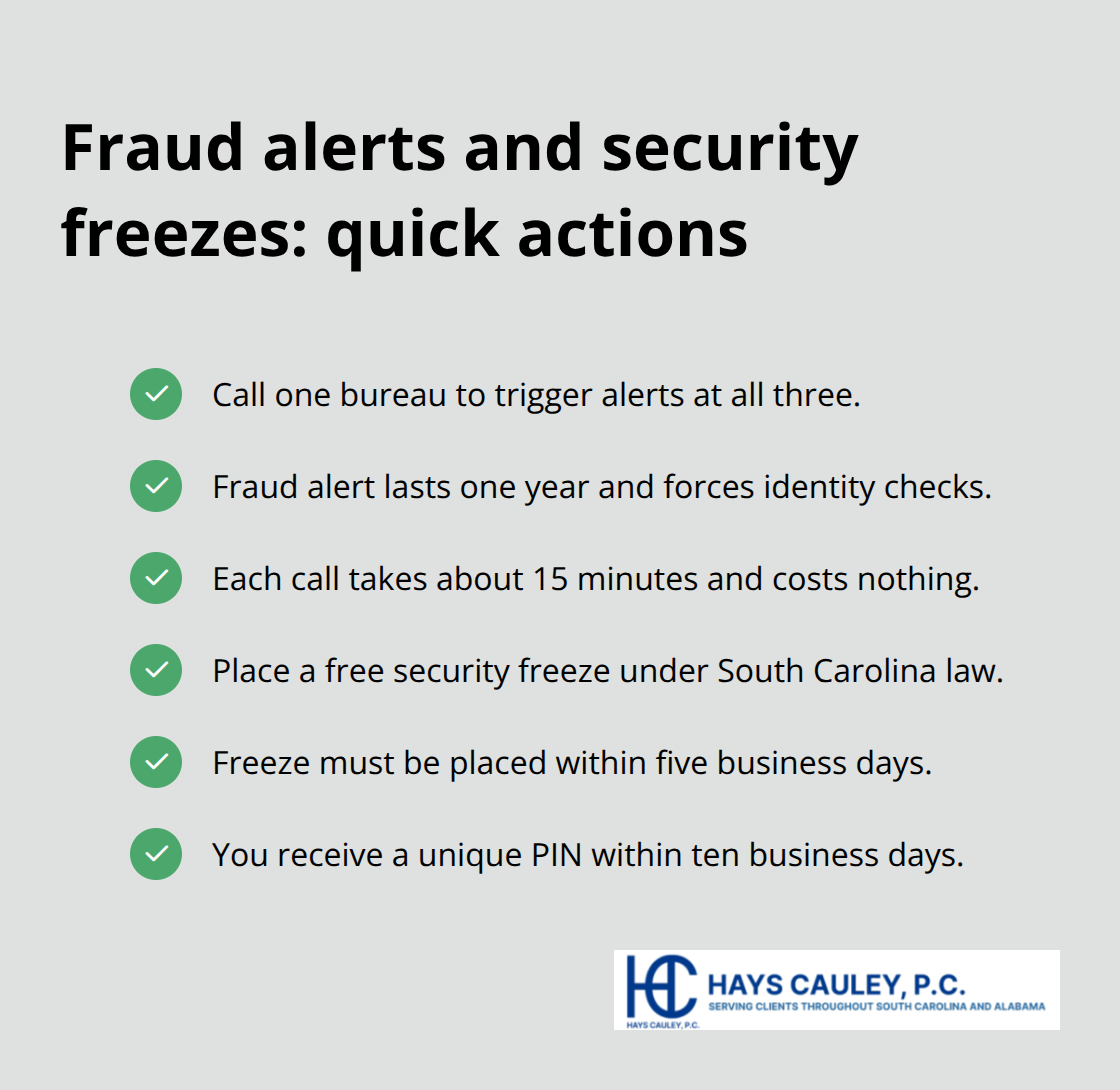
If you’ve discovered accounts you didn’t open, place a security freeze on your credit file under South Carolina law. A security freeze prevents credit bureaus from releasing your report without your explicit authorization, and placing one costs nothing. The consumer reporting agency must place it within five business days and provide you a unique PIN within ten business days.
Document Everything and Seek Personalized Guidance
Document everything from day one because this record becomes essential if you need legal action later. Keep copies of all correspondence with banks, credit bureaus, and the FTC. Write down dates, times, names of representatives you spoke with, and what they said. Take screenshots of fraudulent accounts and unauthorized charges. Gather copies of your credit reports from annualcreditreport.com, the only free site authorized by federal law, and mark every fraudulent item. South Carolina’s Identity Theft Unit at IDTheftHelp@scconsumer.gov provides personalized assistance and can guide you through reporting steps specific to your situation. Contact them at 800-922-1594 or 803-734-4200 to request one-on-one support. The Unit offers step-by-step checklists for common fraud types (bankruptcy fraud, tax fraud, medical identity theft, and debts not in your name). These resources help you understand what happened and what to report.
When Self-Help Stops Working
Some victims discover that creditors and collection agencies ignore their disputes or demand payment anyway. This situation signals that legal help becomes necessary. Creditors often count on victims to give up rather than fight back, but South Carolina law gives you powerful remedies when companies violate your rights. An identity theft attorney can force creditors to verify that debts are actually yours, demand that credit bureaus correct inaccurate information, and pursue damages when companies fail to follow the law. The next step involves understanding your legal rights and how an attorney can hold creditors and data breaches accountable for the harm they’ve caused.
Why a Local Identity Theft Attorney Matters: Serving South Carolina, including Greenville, Columbia and Charleston
When creditors ignore your disputes and collection agencies demand payment for debts you didn’t create, you’ve reached the point where South Carolina law requires professional legal intervention. A local identity theft attorney understands the specific protections under South Carolina Code Title 37, Chapter 20, which gives you powerful remedies that most victims never access without representation. The law authorizes damages up to three times your actual losses or at least $1,000 per incident for willful violations, plus attorney’s fees. Negligent violations yield actual damages or at least $1,000 per incident, plus attorney’s fees. These remedies exist to punish companies that fail to protect your information or ignore your disputes, but claiming them requires strategic legal action.
How Attorneys Force Creditors to Comply
An attorney familiar with South Carolina identity theft law can force creditors to verify that debts are actually yours, demand that credit bureaus correct inaccurate information within the required 30-day window, and pursue damages when companies violate the law. Without legal pressure, creditors and bureaus often drag out the process, knowing most victims lack the knowledge to fight back effectively. South Carolina’s Identity Theft Unit provides free personalized guidance, but they cannot represent you in disputes or pursue damages on your behalf. A consumer protection law firm focused specifically on identity theft understands how to coordinate with law enforcement, navigate the Fair Credit Reporting Act and other federal protections, and build a case that forces accountability.
Calculating Damages for Delayed Corrections
The recovery process involves more than correcting one account on your credit report. If inaccurate information damages your creditworthiness and isn’t removed after a court judgment, South Carolina law allows damages to increase by up to $1,000 per day until the inaccuracy disappears. This provision exists because delayed correction causes ongoing financial harm through denied loans, higher interest rates, and lost employment opportunities. An attorney can demand that credit bureaus meet the 30-day reinvestigation deadline, file civil actions to stop future violations, and recover damages for every day the fraudulent information remains on your report.
Investigating Data Breaches and Company Liability
If a data breach exposed your information, your attorney can investigate whether the company failed to follow reasonable security standards and pursue claims for negligence or breach of duty. Companies that lose or expose personal identifying information must dispose of records properly by shredding or erasing data, and violations of these requirements create additional liability. A local attorney can review the circumstances of how your information was stolen and determine whether the company or creditor bears responsibility for failing to prevent the breach or acting on fraudulent accounts. This investigation often reveals that companies violated multiple laws, creating multiple damage claims that compound your recovery.
The Strategic Advantage of Legal Representation
The difference between self-help and legal representation is the difference between hoping creditors will cooperate and forcing them to comply with the law through documented legal action and the threat of substantial damages. An attorney transforms your dispute from a complaint that companies can ignore into a legal case that demands their attention and resources. Companies calculate whether fighting you in court costs more than settling your claim, and when damages can reach $1,000 per day, most choose to correct the inaccuracy and negotiate a settlement rather than face ongoing liability.
Final Thoughts
Identity theft recovery demands immediate action, but it also requires sustained legal pressure to force creditors and credit bureaus to correct the damage they allowed to happen. Placing a security freeze and filing an FTC report are essential first steps, yet most victims discover that these actions alone fail to remove fraudulent accounts or stop collection agencies from pursuing debts you never created. The gap between self-help and actual recovery widens when companies ignore your disputes and drag out reinvestigations beyond the required 30-day window.
South Carolina law gives you powerful remedies to close that gap, but claiming them requires an identity theft attorney nearby who understands how to navigate the Fair Credit Reporting Act, coordinate with law enforcement, and build cases that force accountability. When damages can reach $1,000 per day for delayed corrections, companies choose to settle rather than face ongoing liability. The difference between hoping creditors will cooperate and forcing them to comply with the law determines whether your recovery takes months or years.
Contact Hays Cauley, P.C. today to discuss your situation and learn how legal representation accelerates your path to financial restoration.