


Common Examples of Identity Theft in South Carolina
Identity theft affects thousands of South Carolina residents each year, with criminals targeting personal information through increasingly sophisticated methods. The examples of identity theft we see range from credit card fraud to medical identity theft.
At Hays Cauley, P.C., we help victims navigate the legal complexities of identity theft cases. Understanding how these crimes occur can help you protect yourself and recognize warning signs early.
What Are the Most Common Types of Identity Theft?
Financial Identity Theft Dominates South Carolina Cases
Credit card fraud represents 27% of all identity theft cases in South Carolina, which makes it the second most prevalent form after overall identity theft reports. Bank fraud accounts for 16% of cases, with criminals who access accounts through stolen debit cards, online banking credentials, and forged checks.

The FBI Internet Crime Complaint Center reports that South Carolinians lost $146 million to internet crimes in 2024, with business email compromises alone that caused $40.8 million in losses. Financial thieves target seniors most aggressively, with residents over 60 who suffered $58.5 million in losses during 2024.
These criminals open new credit accounts, drain existing bank accounts, and apply for loans with stolen social security numbers and driver’s license information. They focus on high-value targets and often strike multiple accounts simultaneously to maximize their profits before detection occurs.
Medical Identity Theft Exploits Healthcare Systems
Medical identity theft occurs when criminals use your health insurance information to receive medical treatment, prescription drugs, or file false insurance claims. This type of fraud often remains undetected for months because victims don’t regularly monitor their medical records like they do financial statements.
Healthcare fraudsters target insurance cards, Medicare numbers, and medical records to access expensive treatments and medications. They sell prescription drugs on black markets or receive costly procedures under stolen identities (leaving victims with massive medical bills and incorrect health records).
Tax Fraud Peaks During Filing Season
Tax identity theft spikes during filing seasons, with criminals who use stolen social security numbers to file fraudulent returns and claim refunds before legitimate taxpayers file. The South Carolina Department of Revenue processes thousands of duplicate returns annually, which indicates the scope of this problem.
Identity thieves obtain personal information through major data breaches like the LoanDepot incident in January 2024, which exposed 284,791 South Carolina residents’ financial and personal data. The Nationstar Mortgage breach affected 228,259 individuals in October 2023, providing criminals with extensive databases of personal information.
These data breaches create opportunities for criminals to expand their operations beyond simple financial theft, leading to more sophisticated schemes that target multiple aspects of victims’ lives.
How Do Identity Thieves Target South Carolina Residents
Data Breaches Provide Criminal Goldmines
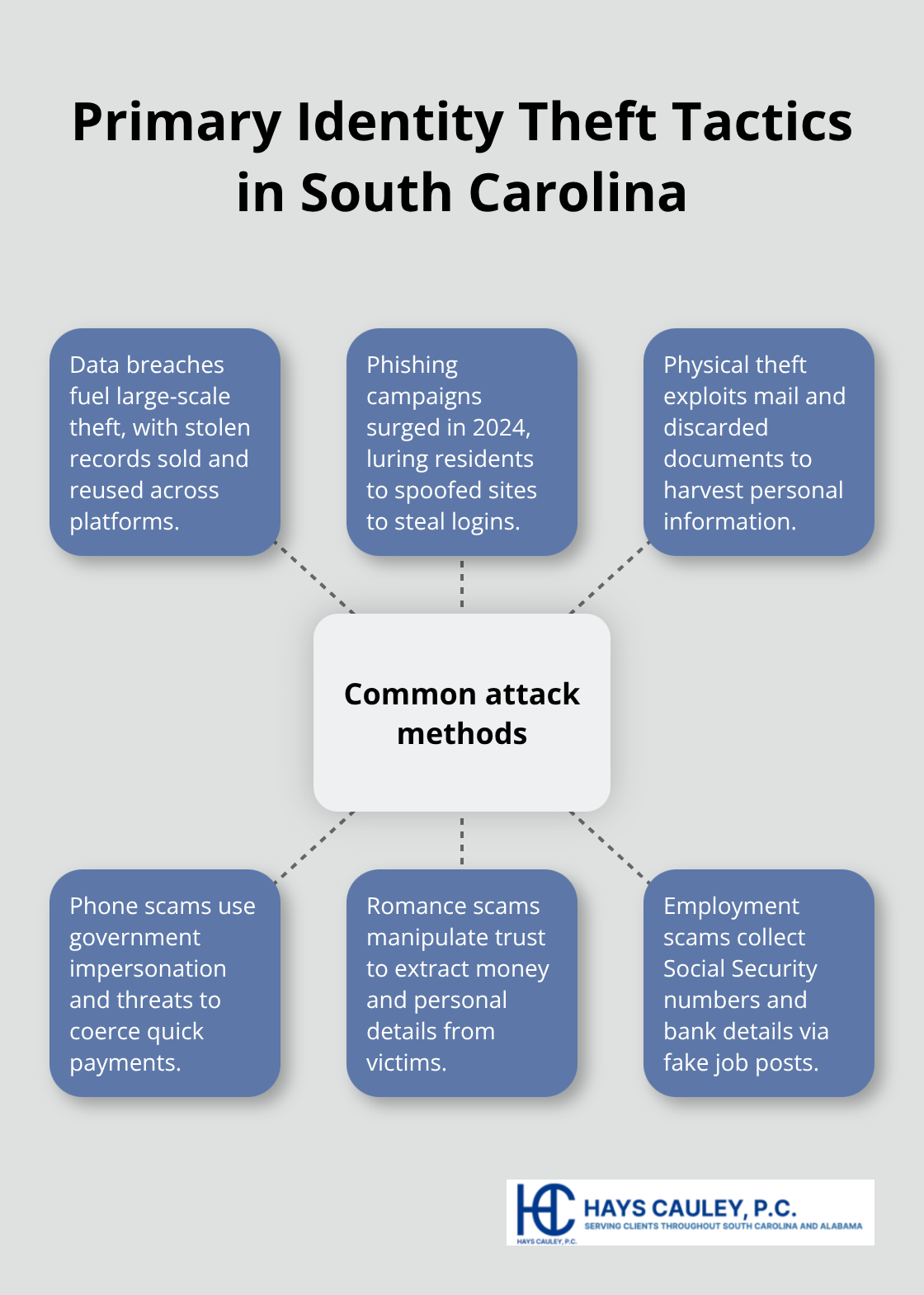
Major data breaches create massive opportunities for identity thieves to access thousands of records simultaneously. The LoanDepot breach in January 2024 exposed personal and financial information of 284,791 South Carolina residents, while the Nationstar Mortgage incident affected 228,259 individuals in October 2023. Criminals purchase stolen data from these breaches on dark web marketplaces for as little as $5 per record, then use automated tools to test credit card numbers and login credentials across multiple websites.
Phishing emails increased dramatically in South Carolina during 2024, with reports that rose from zero in 2023 to 1,259 documented cases. These scams target residents with fake emails from banks, government agencies, and popular retailers that direct victims to fraudulent websites designed to steal login credentials and personal information.
Physical Theft Methods Target Vulnerable Points
Mail theft remains a primary method for obtaining personal information, with criminals who target mailboxes during tax season, bank statement periods, and when new credit cards arrive. They steal pre-approved credit offers, bank statements, and tax documents that contain social security numbers and financial account details. Dumpster diving operations focus on medical offices, banks, and residential areas where criminals search for discarded documents that contain personal information.
Phone Scams Exploit Trust and Fear
Government impersonation scams nearly doubled in South Carolina from 2023 to 2024, with criminals who pose as IRS agents, Social Security Administration officials, and law enforcement officers. These scammers demand immediate payment through gift cards or wire transfers and threaten arrest or legal action if victims refuse to comply. Romance scams caused $15.1 million in losses during 2024, with 178 out of 353 victims being seniors over 60 (targeted through dating websites and social media platforms).
Employment scams more than doubled in frequency, with criminals who post fake job listings to collect social security numbers, bank account information, and copies of driver’s licenses during the application process. These operations often target job seekers who are desperate for employment and less likely to verify the legitimacy of potential employers.
These various theft methods create specific warning signs that victims can learn to recognize before significant damage occurs.
How Do You Know If Identity Theft Has Happened to You
Financial Account Changes Signal Immediate Threats
Unauthorized charges appear on credit cards and bank statements as the first visible sign of financial identity theft. Check your accounts daily through mobile banking apps rather than wait for monthly statements, since criminals strike fast and drain accounts within hours of access. Small test charges of $1 to $5 often precede larger fraudulent transactions, as thieves verify that stolen card numbers work before they make expensive purchases.
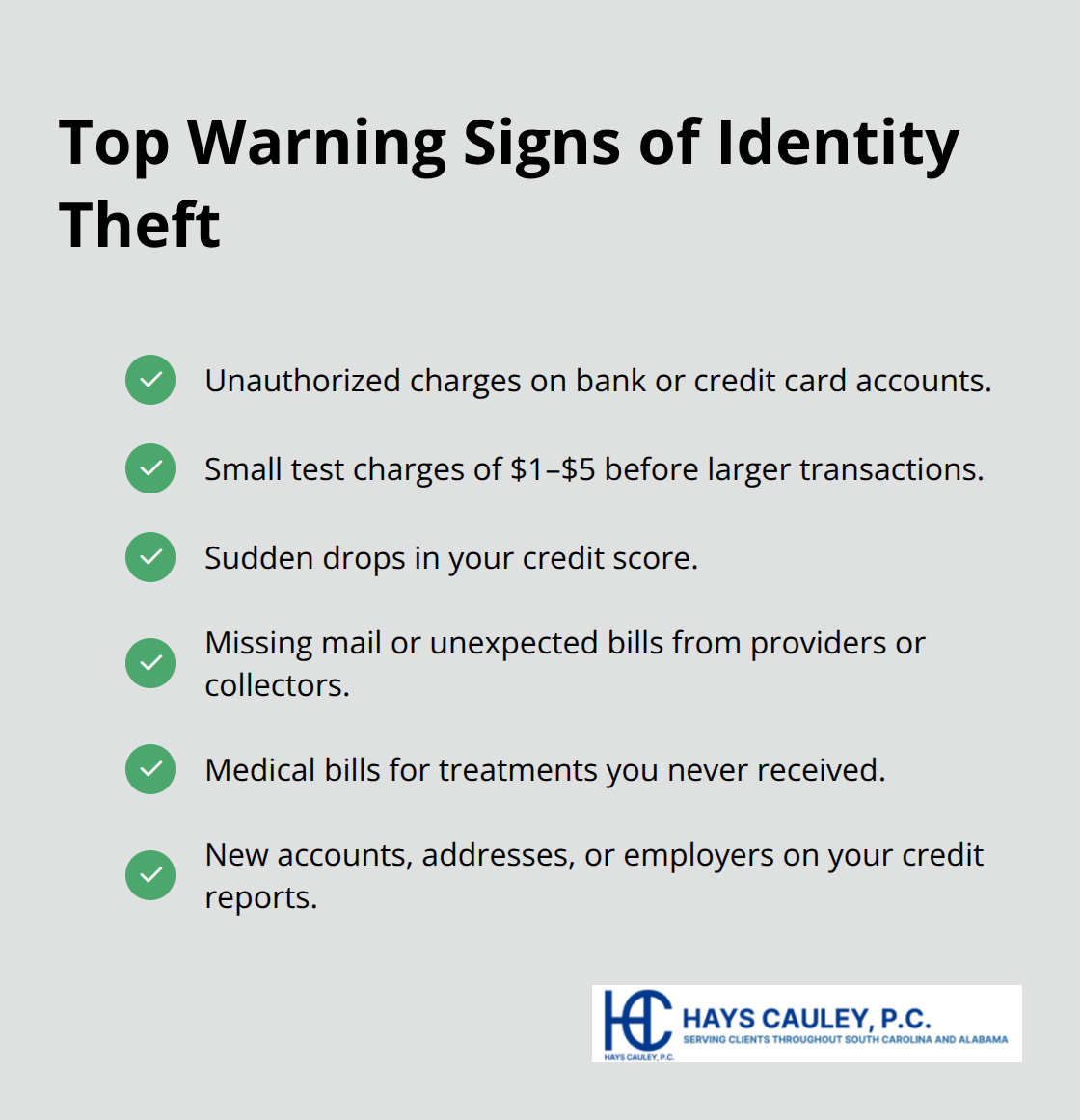
Credit scores drop suddenly when identity thieves open new accounts or max out credit lines. Monitor your credit through the three major bureaus monthly, since South Carolina residents experienced a 34.4% increase in fraud losses in 2023. Watch for new loans, credit cards, or mortgages that appear without your knowledge, as these indicate criminals have successfully used your social security number and personal information to establish credit.
Mail Disruption and Bills Reveal Theft
Thieves submit change of address forms to redirect your correspondence to locations they control. Tax documents, bank statements, and credit card bills disappear during peak theft periods, while unexpected bills from medical providers or collection agencies arrive for services you never received. Identity thieves target mailboxes during tax season and when new credit cards typically arrive (which makes mail checks essential during these vulnerable periods).
Medical Bills Expose Healthcare Fraud
Bills for medical treatments you never received indicate medical identity theft, which often remains undetected longer than financial fraud. Check explanation of benefits statements from your health insurance company quarterly, since criminals use stolen insurance information to receive expensive treatments and prescription drugs that appear on your medical records. Medical identity theft affects your credit score when unpaid fraudulent bills go to collections agencies.
Credit Report Discrepancies Show Identity Misuse
New accounts, addresses, or employment information that you didn’t authorize appear on credit reports when thieves establish credit in your name. South Carolina residents filed 51,603 fraud reports in recent data (equating to 1,003 reports per 100,000 citizens). Review credit reports from all three bureaus quarterly to catch unauthorized changes early, since identity thieves often test multiple credit applications simultaneously to maximize their success before detection occurs.
Final Thoughts
Identity theft victims in South Carolina must act fast to limit financial damage and protect their credit. Contact banks immediately to freeze accounts, file police reports, and place fraud alerts with credit bureaus. The state processed 51,603 fraud reports recently (equating to 1,003 reports per 100,000 residents), which shows how widespread these crimes have become.
Prevention works better than recovery when you face examples of identity theft. Check bank statements daily through mobile apps and review credit reports quarterly from all three bureaus. Shred personal documents before disposal and avoid sharing sensitive information through unsecured channels.
South Carolina law provides legal remedies for identity theft victims through Section 17-25-322, which allows courts to order restitution from convicted criminals. The South Carolina Department of Consumer Affairs offers recovery resources through their Identity Theft Unit. We at Hays Cauley, P.C. help consumers fight credit reporting errors and identity theft issues throughout the recovery process.