

Identity theft happens fast, but recovery doesn’t have to be overwhelming. We at Hays Cauley, P.C. created this guide to connect you with the identity theft victim resources you need right now.
From contacting your banks to understanding your legal rights, we’ll walk you through each step. You’ll also learn about free credit monitoring, dispute processes, and support organizations ready to help.
Act Now: The First Hours After Identity Theft
The moment you discover identity theft, speed matters more than perfection. Your first call should go to the fraud department of any bank or credit card company where fraudulent activity occurred. Most major banks operate 24/7 fraud lines, and the Federal Trade Commission reports that quick action prevents additional unauthorized accounts from opening in your name. Tell them exactly what happened, ask them to freeze or close compromised accounts, and request written confirmation of your report. Document the date, time, and name of the person you spoke with-you’ll reference this information repeatedly in the coming days.
Contact the Credit Bureaus Immediately
Next, place a fraud alert with at least one of the three major credit bureaus: Equifax, Experian, or TransUnion. Federal law requires that bureau to notify the other two, so you only need to contact one. A fraud alert tells creditors to verify your identity before opening new accounts, which typically blocks criminals from using your stolen information. The alert lasts one year and costs nothing. If you want stronger protection, consider a credit freeze, which prevents credit bureaus from releasing your report to potential creditors entirely.
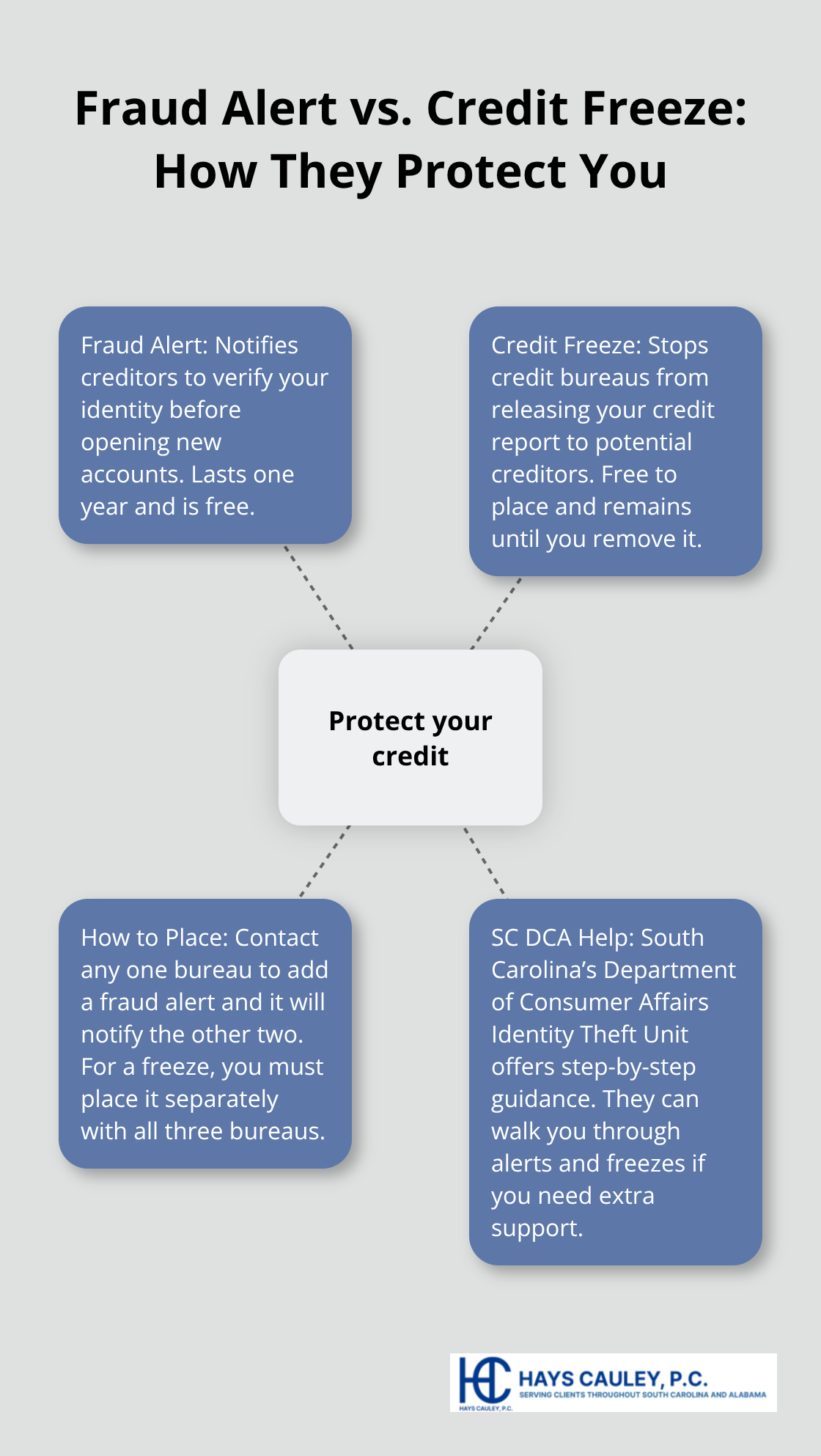
You can place a freeze with all three bureaus at no cost, and it remains active until you remove it. The South Carolina Department of Consumer Affairs Identity Theft Unit offers specific guidance on these steps and can walk you through the process if you need additional support.
File Your Federal Report
The Federal Trade Commission maintains IdentityTheft.gov, where you can file a report and receive a personalized recovery plan. This report creates an official record of your identity theft and gives you a document to show creditors and financial institutions. The recovery plan outlines exactly which accounts to contact, in what order, and what to say. Many creditors and debt collectors will only remove fraudulent charges if you provide this FTC report number. Filing takes about 30 minutes and costs nothing. Getting this report filed within the first few days positions you to dispute fraudulent charges more effectively and prevents additional damage from spreading across multiple financial accounts.
Your next priority involves understanding what rights you actually have as an identity theft victim-and how to exercise them.
What Rights Do You Have as an Identity Theft Victim
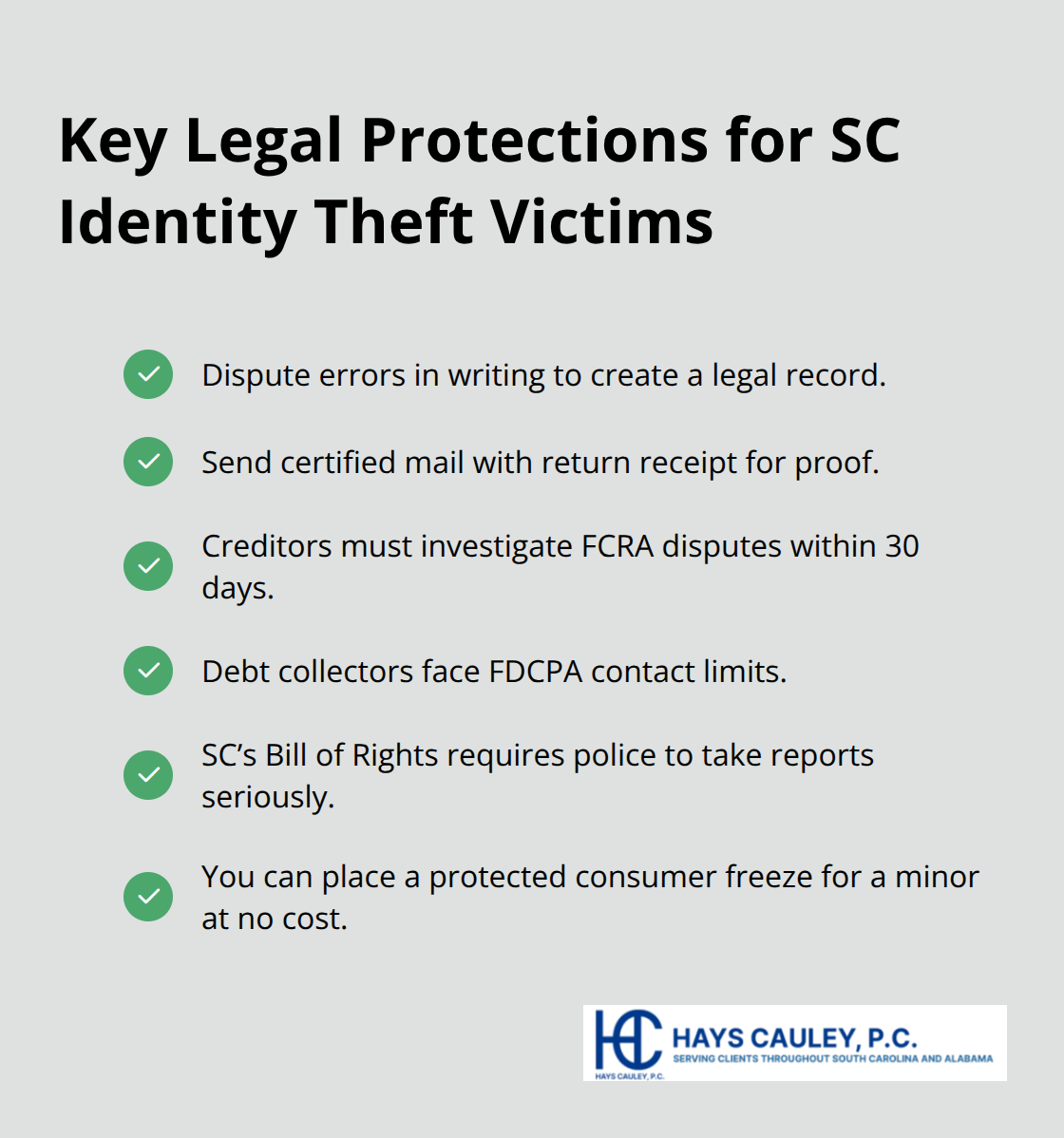
Identity theft victims in South Carolina have concrete legal protections that most people don’t know about. The Fair Credit Reporting Act gives you the right to dispute any fraudulent accounts or charges appearing on your credit report, and creditors must investigate your dispute within 30 days according to the Federal Trade Commission. This means if a criminal opened a credit card in your name, you can force the credit card company to prove the account is legitimate or remove it entirely. The key is putting your dispute in writing and keeping copies of everything you send.
Written Disputes Create Legal Protection
Written disputes create a paper trail that protects you legally far better than phone calls ever will. Send disputes via certified mail with return receipt so you have proof of delivery. The Fair Debt Collection Practices Act also protects you from abusive debt collectors trying to collect fraudulent debts in your name-they cannot contact you repeatedly, call before 8 a.m. or after 9 p.m., or contact your employer about the debt. South Carolina state law provides additional protections under the Identity Theft Victim’s Bill of Rights, which requires law enforcement to take your report seriously and allows you to place a protected consumer freeze on behalf of a minor at no cost.
Access Your Free Credit Reports
Access to free credit monitoring stands as one of your strongest tools. The Federal Trade Commission requires you to receive a free credit report from AnnualCreditReport.com whenever you experience identity theft. Pull reports from all three bureaus (Equifax, Experian, TransUnion) and examine them line by line for accounts you don’t recognize, inquiries from companies you never contacted, or addresses you never lived at. Many victims find unauthorized accounts weeks or months after the initial theft because they failed to check their reports thoroughly.
Monitor Your Reports Consistently
The Identity Theft Resource Center recommends checking your credit reports at least annually, but after identity theft you should monitor them every few months for the first year. If you need additional monitoring beyond the free annual report, some credit bureaus offer free monitoring periods following a breach affecting their customers. Document every fraudulent account you find with the account number, opening date, and current balance, then dispute each one separately with the credit bureau.
Understanding your legal rights and remedies protects you during recovery, but you’ll also need to know which organizations and services can help you move forward faster.
Who Can Help You Recover from Identity Theft
Recovery from identity theft requires more than disputing fraudulent accounts on your own. The Identity Theft Resource Center reports that victims who work with support organizations recover faster and experience fewer recurring issues than those who attempt recovery alone. Multiple resources exist to help you move forward, and knowing which ones fit your situation accelerates your path to financial stability.
Government Resources Provide Free Guidance
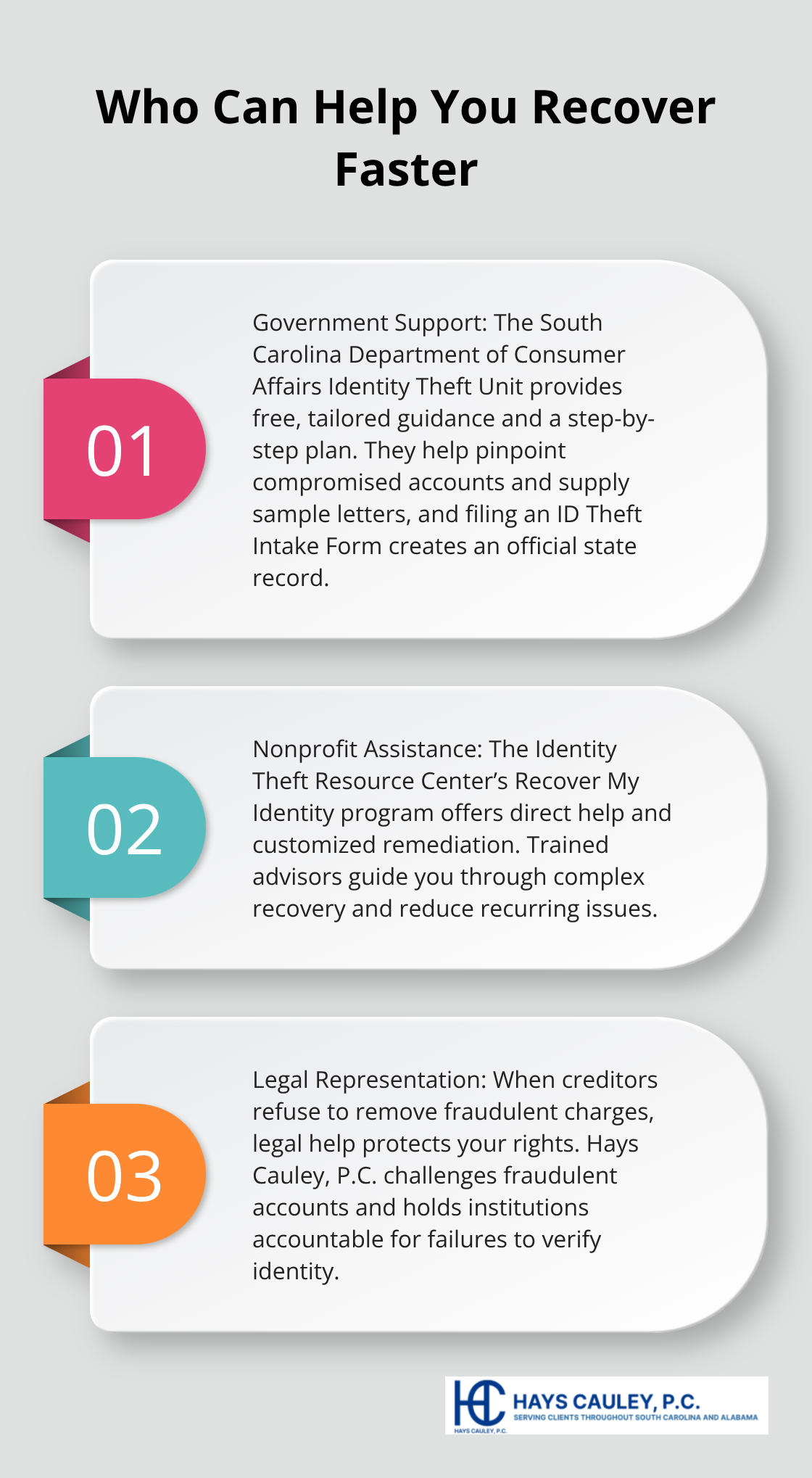
The South Carolina Department of Consumer Affairs Identity Theft Unit provides free, tailored recovery guidance and helps you create a step-by-step action plan specific to your situation. Contact them at IDTheftHelp@scconsumer.gov, by phone at 800-922-1594, or visit their office at 293 Greystone Boulevard, Suite 400, in Columbia. They’ll help you determine which accounts were compromised, prioritize which ones to address first, and provide sample letters to send to creditors and credit bureaus. This service costs nothing and removes the guesswork from recovery. If your identity theft involves criminal activity or you suspect someone opened accounts in your name, file an ID Theft Intake Form with the Unit to create an official state record and trigger their victim support services.
Nonprofit Organizations Offer Intensive Support
The Identity Theft Resource Center’s Recover My Identity program offers direct assistance and customized remediation plans when you need more intensive support. This organization connects you with professionals who understand the emotional and financial toll of identity theft and can guide you through complex recovery situations.
The FTC’s IdentityTheft.gov website also connects you with state-specific resources and nonprofit organizations in South Carolina that provide free victim support, credit counseling, and assistance with rebuilding your financial life after identity theft.
Legal Help for Creditor Disputes
When creditors refuse to remove fraudulent charges or continue collecting on accounts you’ve disputed, legal representation becomes necessary to protect your rights. We at Hays Cauley, P.C. help consumers navigate disputes with creditors and challenge fraudulent accounts on credit reports. If a financial institution fails to verify identity before opening accounts in your name, holding them accountable often requires legal action to recover damages and prevent future harm.
Final Thoughts
Identity theft recovery takes time, but you don’t have to navigate it alone. The immediate actions you take in the first hours-contacting your banks, placing fraud alerts, and filing your FTC report-create the foundation for everything that follows. These steps cost nothing and prevent criminals from opening additional accounts in your name while you work toward full recovery.
Your rights as an identity theft victim are stronger than most people realize. Written disputes force creditors to prove fraudulent accounts are legitimate, and federal law requires them to investigate within 30 days. Free credit reports from AnnualCreditReport.com let you monitor your financial accounts for unauthorized activity, and the South Carolina Department of Consumer Affairs Identity Theft Unit provides free guidance tailored to your specific situation.
When creditors refuse to remove fraudulent charges or debt collectors continue pursuing accounts you’ve disputed, legal representation protects your rights and holds financial institutions accountable. We at Hays Cauley, P.C. help consumers challenge fraudulent accounts and navigate disputes with creditors who fail to verify identity before opening accounts. If you need assistance with identity theft victim resources or holding creditors responsible for their failures, contact us at Hays Cauley, P.C. to discuss your situation-we serve South Carolina, including Greenville, Columbia and Charleston.