

Identity theft can happen to anyone, and the aftermath feels overwhelming. We at Hays Cauley, P.C. understand the stress you’re facing right now.
This guide provides identity theft support in SC with concrete steps to recover your financial health and protect yourself moving forward. You’ll learn what to do immediately, how to rebuild your credit, and what legal protections exist for you.
What to Do in the First 48 Hours
The first two days after discovering identity theft are your most critical window. The Federal Trade Commission states that acting within 24 to 48 hours significantly reduces ongoing fraud. This isn’t an exaggeration-every hour matters because fraudsters move fast, and your speed directly impacts how much damage they can inflict.
Contact Your Bank and Credit Card Issuers
Call your bank and credit card issuers immediately. Tell them you’ve been a victim of identity theft and request that they freeze or close any affected accounts. Your liability caps at $50 per card under federal law if you report within 60 days, but most banks waive this entirely if you act quickly. Document the name of each person you speak with, the time of your call, and any confirmation numbers they provide.
File Your Identity Theft Report with the FTC
File an official Identity Theft Report with the Federal Trade Commission at IdentityTheft.gov. This creates a legal record, gives you a report number, and generates a personalized recovery plan tailored to your situation. That report number becomes your most important document-you’ll reference it when disputing fraudulent accounts with creditors and credit bureaus. Keep this number in a safe, accessible location.
Place a Fraud Alert and Freeze Your Credit
Place a fraud alert with at least one of the three major credit bureaus: Equifax, Experian, or TransUnion. A standard fraud alert lasts one year, though you can request an extended alert lasting seven years if you provide written confirmation. The alert tells lenders to verify your identity before opening new accounts in your name.
Within one business day, freeze your credit with all three bureaus. A credit freeze is stronger than an alert-it blocks lenders from accessing your credit file entirely unless you temporarily lift it with a PIN. South Carolina law gives you the right to these freezes at no cost.
Organize Your Recovery Documents
Create a dedicated recovery folder (digital or physical) containing your FTC report number, fraud-alert confirmations, freeze PINs, and all correspondence with banks and bureaus. This organization prevents you from repeating work and helps if you need legal assistance later. With these immediate steps completed, you’re ready to examine your credit reports and identify exactly what fraudsters opened in your name.
Reclaiming Your Credit After Identity Theft
Your credit reports are the battlefield where identity theft does its damage, and you need to see exactly what fraudsters created in your name. Request your free annual credit reports from AnnualCreditReport.com, the federally authorized site, and review them line-by-line within the first week of discovering the theft. Look for unfamiliar accounts or inquiries you didn’t authorize, incorrect balances, and addresses you don’t recognize. The Federal Trade Commission reports that victims who catch fraudulent accounts within the first 30 days experience significantly faster resolution than those who wait months.
Build Your Master List of Fraudulent Accounts
As you review your reports, create a master list with the account number, creditor name, fraudulent balance, and account opening date for each fraudulent entry. This list becomes your roadmap for disputes and documentation. Having this information organized saves you time when you contact creditors and credit bureaus, and it protects you if you need legal assistance later.
File Written Disputes with Credit Bureaus
Within 30 days of receiving your reports, file written disputes with each credit bureau for every fraudulent account. Use certified mail with return receipt requested and include your FTC report number with every submission-this creates an official record that protects you legally. The Fair Credit Reporting Act requires bureaus to investigate within 30 days and remove inaccurate items or notify creditors who received that information in the prior six months.
Contact Creditors Directly
Dispute directly with the creditors’ fraud departments simultaneously, sending the same certified letters. Creditors often respond faster than credit bureaus and have stronger incentives to remove fraudulent accounts. Track every submission in a recovery log with dates, reference numbers, and response timelines. Expect 30 to 90 days for updates per disputed account.
Monitor for Additional Fraud
During this waiting period, monitor your credit reports weekly for the first three months, then monthly for the next year, because fraudsters sometimes open additional accounts after the initial theft. If a bureau or creditor ignores your disputes, you have legal remedies under South Carolina’s Identity Theft Protection Act, which allows victims to recover actual damages or up to $1,000 per incident, plus attorney fees for willful violations. When creditors refuse to remove fraudulent accounts despite your efforts, we at Hays Cauley, P.C. can help you hold them accountable. Serving South Carolina, including Greenville, Columbia and Charleston, we handle these cases and understand the frustration of dealing with unresponsive creditors. Your next step involves understanding the legal protections that support your recovery and what authorities can do to help you.
Legal Protections Apply to Identity Theft Victims in South Carolina
South Carolina’s Identity Theft Protection Act Gives You Real Remedies
South Carolina law provides concrete protections that go beyond federal safeguards, and understanding these rights transforms your recovery from a passive waiting game into an active legal position. Under South Carolina’s Identity Theft Protection Act, you can recover actual damages or up to $1,000 per incident, plus attorney fees if a creditor or credit bureau willfully violates your rights. This matters because many victims struggle to get creditors to remove fraudulent accounts despite providing documentation and dispute letters. If a judgment requires a creditor to correct your records and they fail to do so within 10 days, damages can accrue up to $1,000 per day until removal.
Federal Law Protects Your Right to Accurate Credit Reports
The Fair Credit Reporting Act at the federal level adds another layer of protection: credit bureaus must investigate your disputes within 30 days and remove inaccurate items or face legal liability. When creditors ignore your certified letters or bureaus fail to respond appropriately, you have grounds to pursue damages. Many creditors count on victims giving up rather than pursuing legal action, which is why having a consumer protection law firm in your corner changes the outcome significantly. We at Hays Cauley, P.C. handle these cases regularly and understand how to hold creditors accountable when they resist your recovery efforts.
Clear Your Record If Identity Theft Led to Criminal Charges
If your identity was used to commit a crime, South Carolina allows you to petition for an expedited judicial determination of factual innocence, which can clear your record and potentially expunge the wrongful conviction entirely. This process protects your reputation and removes barriers to employment, housing, and other opportunities that criminal records create.
Access Free Resources and Support Services
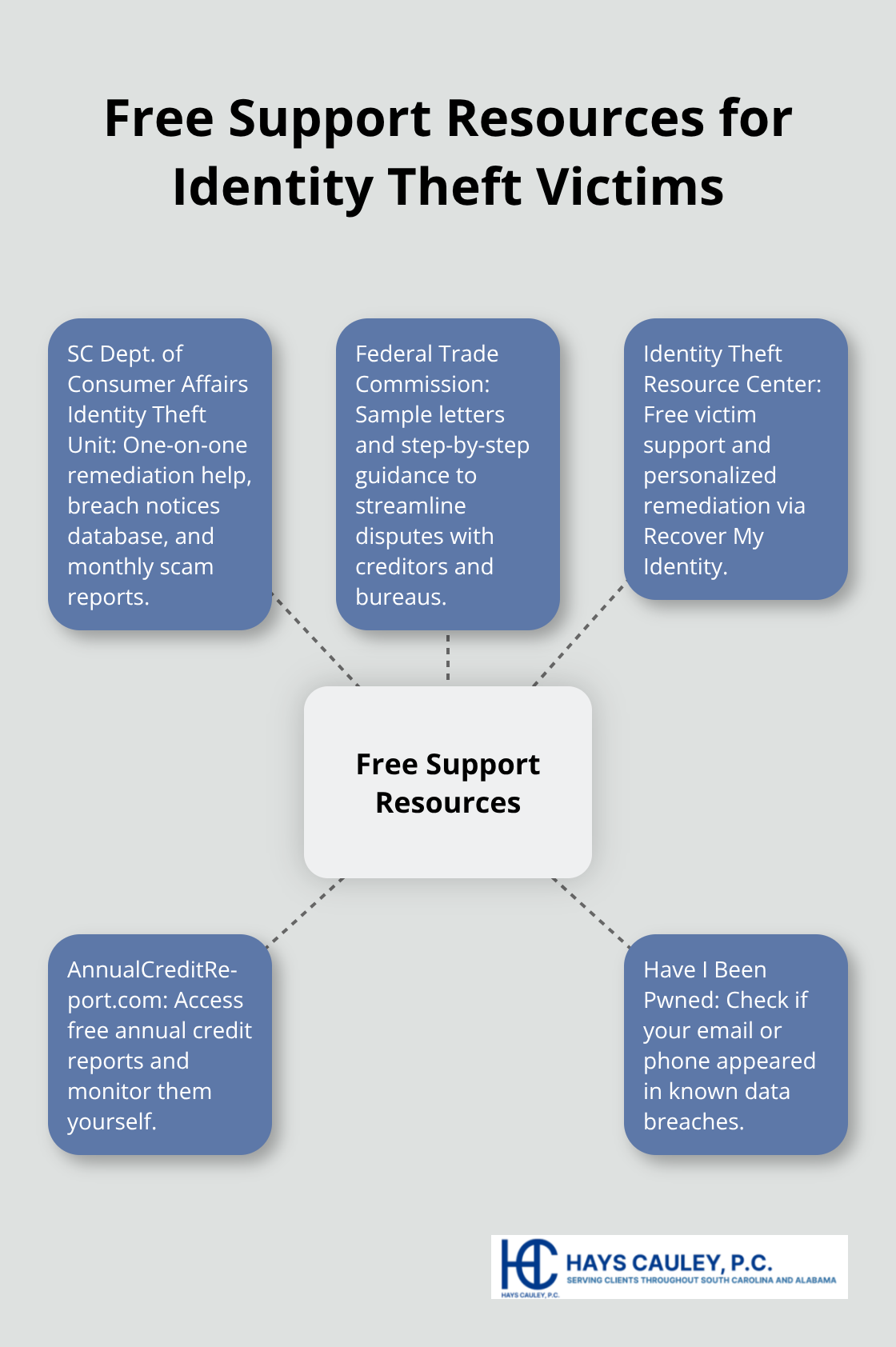
The South Carolina Department of Consumer Affairs Identity Theft Unit offers one-on-one remediation help and maintains a searchable breach notices database since 2015, plus publishes monthly scam reports to help you understand current threats. The Federal Trade Commission provides sample letters you can use to communicate with creditors and bureaus, which streamlines your documentation and creates stronger legal records. The Identity Theft Resource Center, a nonprofit founded in 1999, offers free victim support and personalized remediation plans through their Recover My Identity service. Free credit monitoring services exist through multiple channels: you can access free annual credit reports from AnnualCreditReport.com and monitor them yourself, or use Have I Been Pwned to check if your email or phone appeared in data breaches.
Document Everything to Strengthen Your Legal Position
Acting quickly and documenting everything positions you to use these legal protections effectively if creditors or bureaus resist your recovery efforts. Your FTC report number, certified mail receipts, and correspondence logs create the paper trail that proves you took action and that creditors or bureaus failed to respond appropriately.
Final Thoughts
Identity theft recovery takes time, and most victims see visible progress within six to twelve months, though full recovery typically spans six months to two years. This timeline sets realistic expectations so you stay committed to the process rather than abandoning your efforts prematurely. The victims who recover fastest act within the first 48 hours and maintain consistent follow-up on disputes and credit monitoring throughout their recovery.
Multiple organizations provide identity theft support SC at no cost, including the South Carolina Department of Consumer Affairs Identity Theft Unit, which offers one-on-one remediation help, and the Identity Theft Resource Center, which provides personalized recovery plans through their Recover My Identity service. The Federal Trade Commission supplies sample letters and step-by-step guidance tailored to your specific situation, removing the guesswork from your recovery process. These resources exist because identity theft affects thousands of South Carolina residents annually, and organizations have built tools specifically to help victims like you recover.
If creditors or credit bureaus ignore your disputes despite your documented efforts, you have legal remedies available under South Carolina and federal law. We at Hays Cauley, P.C. help consumers hold creditors accountable when they resist recovery, and we can guide you through the legal options that strengthen your position. Contact Hays Cauley, P.C. today to discuss your identity theft case and take control of your financial recovery.