

Criminals are building fake identities from scratch to commit fraud on a massive scale. Understanding the synthetic identity theft definition is the first step toward protecting yourself from this growing threat.
At Hays Cauley, P.C., we’ve seen how this crime can devastate your credit and finances for years. This guide walks you through what synthetic identity theft is, how it damages your credit, and what you can do about it.
How Synthetic Identity Theft Actually Works
The Basic Structure of a Synthetic Identity
Synthetic identity theft starts with a stolen Social Security number paired with completely fabricated information. A criminal takes your real SSN and combines it with a fake name, invented date of birth, and a false address to create an entirely new person on paper. This isn’t someone stealing your identity to impersonate you-it’s someone creating a brand new identity that has no real victim initially, which is precisely what makes it so dangerous and hard to catch.
The Scale of the Problem
According to TransUnion, end-of-2024 lender exposure to synthetic identities across credit cards, auto loans, personal loans, and retail cards totaled 3.3 billion dollars, up 3 percent from the previous year. Over 80 percent of all new account fraud now stems from synthetic identity theft, making it the fastest growing form of identity fraud in the country. Auto loans show the largest synthetic-identity exposure among all credit products.
How Fraudsters Build Credibility
Fraudsters build these fake identities methodically over months or even years, making small purchases and paying bills on time to establish a credible credit history. Once the synthetic profile looks legitimate to lenders, the criminal opens multiple accounts-credit cards, personal loans, auto loans-and then disappears with the money in what’s called a bust-out. The real danger is that because there’s no actual person being impersonated, the fraud remains undetected far longer than traditional identity theft.
Why Detection Fails
Unlike traditional identity theft where you notice fraudulent charges on your own accounts, synthetic identity theft creates an entirely separate credit file that you may never know exists until negative marks appear on your report or a lender contacts you about accounts you never opened. The Social Security Administration randomized SSN issuance in 2011, which removed the sequential validity checks that lenders previously relied on, making it significantly harder to spot a fake SSN during the application process. This shift in how SSNs are issued means lenders now face a much steeper challenge in identifying fraudulent applications at the point of entry.
How Synthetic Identity Theft Damages Your Credit – Serving South Carolina, including Greenville, Columbia and Charleston
The Split Credit File Problem
Synthetic identity theft creates a separate credit file that attaches unfamiliar accounts, missed payments, and defaults directly to your credit report. When a fraudster builds a synthetic identity using your stolen Social Security number, they poison your credit profile with negative marks that are incredibly difficult to untangle. You might discover this damage when a lender contacts you about accounts you never opened, or when you check your credit score and find it has plummeted without explanation.
How Fraud Damages Your Score
The accounts tied to the synthetic identity show delinquencies and charge-offs under your SSN, dragging down your score even though you had nothing to do with the fraud. TransUnion data shows that once these fraudulent accounts default, lenders record the losses as general bad debts, which means the fraud’s origins stay hidden and the negative marks linger on your report far longer than they should. Your credit report becomes a jumbled mess of legitimate accounts mixed with fraudulent ones, making it nearly impossible for you to qualify for new loans, credit cards, or favorable interest rates.
The Long-Term Financial Impact
Lenders seeing multiple defaults and charge-offs on your report will either deny you credit entirely or charge you significantly higher interest rates, costing you thousands of dollars over time. A single synthetic identity account can remain active for months or even years, accumulating debt and damage that compounds your financial burden. The longer the fraud persists, the deeper the hole you must climb out of when you finally discover it.
Spotting the Warning Signs
You won’t see unauthorized charges on your existing accounts like you would with traditional identity theft. Instead, watch for credit inquiries from companies you never contacted, unexpected credit card statements or loan documents arriving at your address, or sudden drops in your credit score with no obvious cause. Pull your free credit reports from AnnualCreditReport.com at least once annually and review them carefully for accounts you don’t recognize, addresses you’ve never lived at, or employment history you never had.
Taking Immediate Action
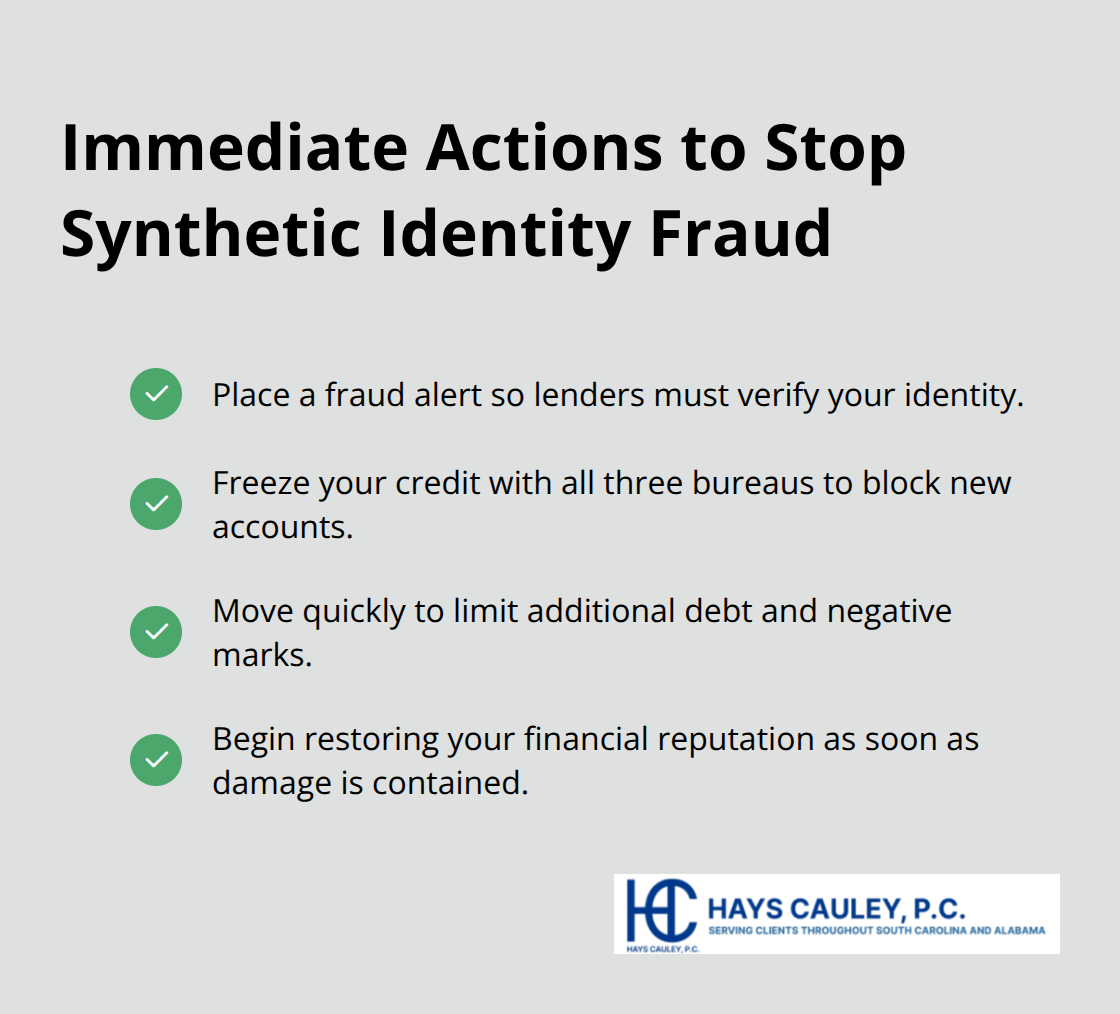
If you spot unfamiliar activity tied to your SSN, place a fraud alert with the credit bureaus immediately-this forces lenders to verify your identity before opening new accounts. A credit freeze is even stronger protection, blocking new accounts from being opened in your name entirely. Every month the synthetic identity remains active, the fraudster accumulates more debt and more negative marks attach to your credit file, making recovery exponentially harder. The faster you act, the sooner you can stop the damage and begin the process of reclaiming your financial reputation.
How to Stop Synthetic Identity Theft Before It Destroys Your Credit
Monitor Your Credit Reports Three Times Per Year
Start monitoring your credit reports immediately and stop waiting for problems to find you. Pull your free reports from AnnualCreditReport.com three times per year instead of once, spacing them roughly four months apart so you catch fraudulent activity faster. This staggered approach gives you continuous visibility throughout the year rather than a single annual snapshot. When you review each report, look specifically for accounts with addresses you’ve never lived at, employers you never worked for, and credit inquiries from lenders you never contacted.
TransUnion data shows that synthetic identities often remain active for months or years before detection, which means the difference between catching fraud in month two versus month six translates directly into thousands of dollars in additional damage. Don’t just glance at the numbers-read the account details carefully and cross-reference them against your actual financial history. If something feels off, it probably is. Fraudsters count on people skimming their reports without actually reading them.
Use Fraud Alerts as Your First Line of Defense
Place a fraud alert with all three credit bureaus immediately if you spot anything suspicious, but understand that a fraud alert is only a temporary speed bump. The alert forces lenders to verify your identity before approving new credit, but it lasts only one year and requires renewal. You can place a fraud alert for free through Equifax, Experian, and TransUnion by contacting any one of the three bureaus.
A credit freeze is far stronger than a fraud alert-it blocks new accounts from being opened in your name entirely, which stops synthetic identity fraud in its tracks. You can place a credit freeze for free through all three bureaus, and unlike fraud alerts, freezes remain in place until you remove them. This protection gives you complete control over who can access your credit file.
Report the Fraud and Demand Account Removal
If you’re already a victim, report the fraud immediately at IdentityTheft.gov to create an official record, then contact the credit bureaus and any lenders who issued fraudulent accounts. Demand that they remove the fake accounts and correct your credit report. This process takes time and persistence, but removing fraudulent accounts is non-negotiable for your financial recovery.
Send written disputes to each credit bureau listing the fraudulent accounts and provide copies of your IdentityTheft.gov report as evidence. The bureaus must investigate your dispute within 30 days and remove accounts they cannot verify as legitimate. If lenders refuse to remove accounts or the bureaus fail to act, a consumer protection law firm can help you hold them accountable and force compliance with federal credit reporting laws.
Final Thoughts
Synthetic identity theft definition matters because understanding this crime protects your financial future. A criminal takes a real Social Security number and pairs it with fabricated information to create an entirely new person on paper, then methodically builds credit under that fake identity before vanishing with thousands in fraudulent debt. The damage lands squarely on your credit report, tangling legitimate accounts with fraudulent ones and destroying your financial reputation for years.
The steps you take now determine how much damage you’ll face later. Pull your credit reports three times per year from AnnualCreditReport.com and read them carefully for accounts you don’t recognize. Place a credit freeze with all three bureaus to block new accounts from being opened in your name, and report any fraudulent activity immediately at IdentityTheft.gov while sending written disputes to each credit bureau demanding removal of fake accounts.
Sometimes the damage runs too deep for you to handle alone. If lenders refuse to remove fraudulent accounts, if credit bureaus ignore your disputes, or if the fraud has already destroyed your credit score, we at Hays Cauley, P.C. can help you fight back with the federal laws that protect you. Contact us today to discuss your situation and learn what legal options are available to you.