


Identity theft criminal charges carry serious consequences that can reshape your life. A conviction can result in prison time, substantial fines, and a permanent criminal record that affects employment and housing opportunities.
At Hays Cauley, P.C., we help clients navigate these charges by building strong defense strategies and understanding their legal options. The right approach from the start makes a significant difference in the outcome of your case.
What Charges Do You Actually Face?
Federal Identity Theft Statutes
Identity theft criminal charges fall into distinct categories depending on how someone obtained and used your personal information. Federal prosecutors typically pursue charges under 18 U.S.C. § 1028, which criminalizes knowingly transferring, possessing, or using someone else’s means of identification with intent to commit unlawful activity. This statute carries a maximum sentence of 15 years imprisonment, plus fines and criminal forfeiture of property.
However, if prosecutors charge you under 18 U.S.C. § 1028A-known as aggravated identity theft-the penalties become substantially harsher. Aggravated identity theft occurs when identity theft happens during and in relation to another felony, and it carries a mandatory minimum sentence. According to the U.S. Sentencing Commission, sentences under § 1028A averaged 51 months in FY2016, more than twice the 22-month average for identity theft offenses without a mandatory minimum.
Related Federal Offenses
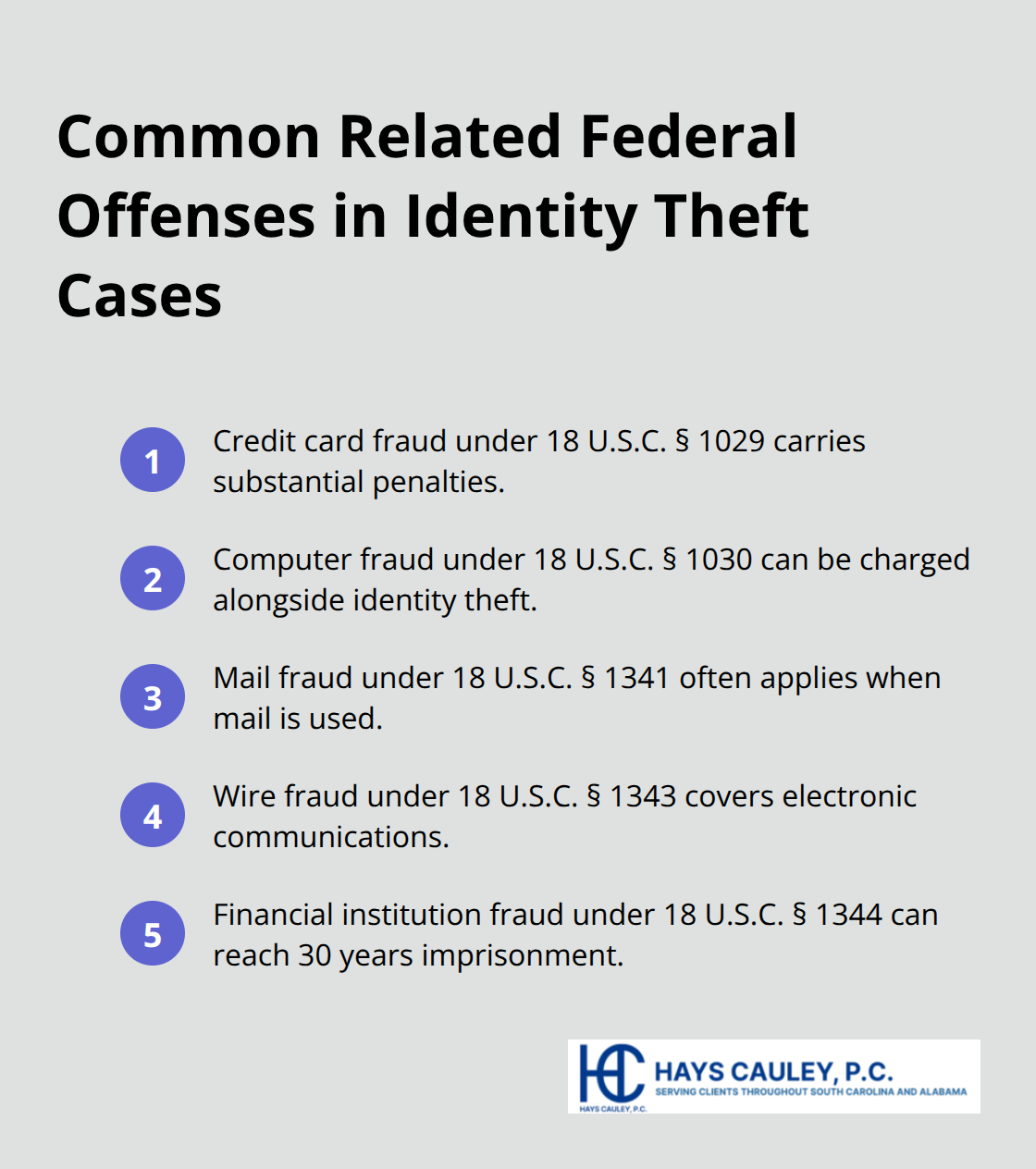
Related federal offenses compound the problem significantly. Credit card fraud under 18 U.S.C. § 1029, computer fraud under § 1030, mail fraud under § 1341, wire fraud under § 1343, and financial institution fraud under § 1344 are all felonies with substantial penalties that can reach 30 years imprisonment in some cases. Federal prosecutors work with investigative agencies like the FBI, U.S. Secret Service, and U.S. Postal Inspection Service to build these cases.
State-Level Identity Theft Laws
State laws vary significantly but typically cover similar conduct with different penalty structures. Many states prosecute identity theft as a felony when someone uses another person’s personal identifying information-including names, dates of birth, Social Security numbers, driver’s license numbers, bank account numbers, debit or credit card numbers, and PINs-for a wrongful purpose. Identity theft can be prosecuted as a felony even if no money was actually stolen; severity depends on how the information was obtained and used. If the information was sold to others or used to defraud the government, charges escalate to felony level with harsher penalties.
Sentencing Data and Multiple Charges
The data from FY2016 shows that 53.4% of identity theft offenders were convicted under the aggravated identity theft statute. When multiple § 1028A counts were involved, sentences averaged 74 months even with concurrent sentencing. Common scenarios triggering these charges include applying for bank loans using someone else’s identity, activating credit cards obtained through intercepted mail, making unauthorized withdrawals from accounts, or opening false accounts with someone’s information. Many cases involve overlapping charges, meaning prosecutors could pursue simultaneous prosecution for identity theft, credit card fraud, wire fraud, or mail fraud stemming from the same conduct.
Understanding which specific charges prosecutors bring against you requires immediate legal attention, as the distinction between standard identity theft and aggravated identity theft fundamentally changes your defense strategy and potential outcomes.
Building Your Defense Strategy
The moment you face identity theft charges, your instinct might be to explain yourself to investigators. Stop. This impulse will damage your case. Exercise your right to remain silent and avoid speaking with law enforcement without legal representation present. Anything you say can and will be used against you, even statements intended to clarify misunderstandings. Instead, focus on gathering concrete evidence that demonstrates either your innocence or weakens the prosecution’s position.
Collect Documentation That Supports Your Position
If you possess someone else’s sensitive information, collect documentation proving that person lived at your address and failed to update their address when relocating. Obtain bank statements, lease agreements, utility bills, and correspondence showing the timeline of residence. If the charge stems from a shared device or account, preserve emails, text messages, and account access logs that establish shared use.
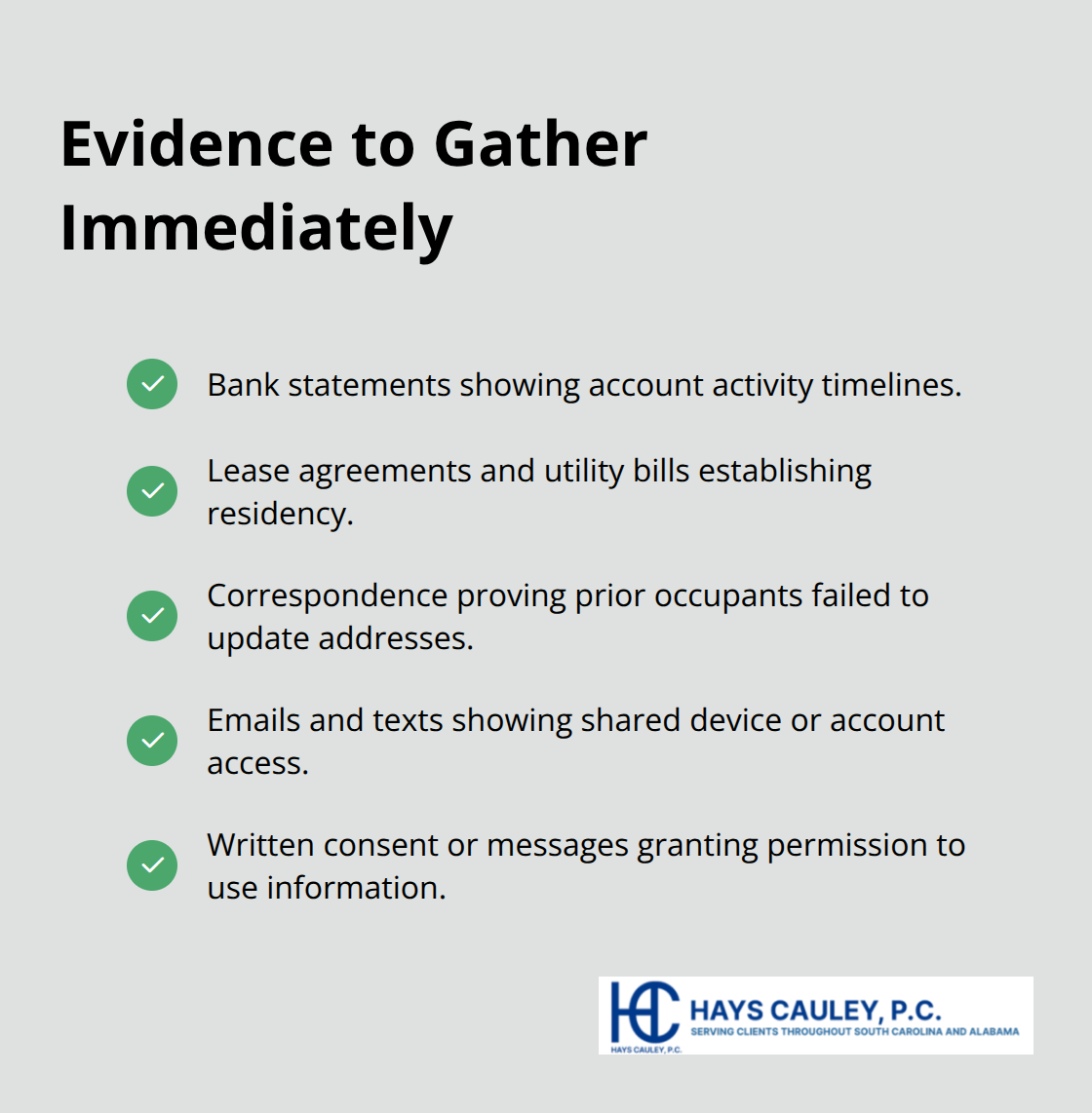
If you believed you had permission to use the information, gather written communications, emails, or messages where the person granted consent. The prosecution must prove guilt beyond a reasonable doubt, and these documents create reasonable doubt about your intent.
Identify Prosecutorial Overreach and Overlapping Charges
Federal data from FY2016 shows that 88.7% of aggravated identity theft offenders were convicted of additional felonies, often because prosecutors stacked overlapping charges. Your attorney can identify whether charges like credit card fraud, wire fraud, or mail fraud truly apply to your conduct or represent prosecutorial overreach. Many cases involve factual disputes about whether you knowingly used someone’s identification or merely possessed it without intent to defraud. The distinction between standard identity theft under 18 U.S.C. § 1028 and aggravated identity theft under § 1028A fundamentally affects your strategy. Aggravated charges carry mandatory minimums, but standard charges allow judges discretion. Your attorney should challenge whether prosecutors can actually prove the predicate felony required for aggravated charges. In FY2016, sentences under § 1028A averaged 51 months compared to 22 months for non-aggravated offenses-that 29-month difference justifies aggressive defense of the aggravation element alone.
Leverage Legitimate Defense Theories
Mistaken identity is a legitimate defense; you may be able to show you are the victim, not the offender. Procedural defenses matter too: if law enforcement violated your constitutional rights through improper searches or Miranda violations, your attorney can move to exclude that evidence, potentially collapsing the prosecution’s case entirely. Consent to use another person’s identifying information can defeat identity theft charges. Mistake defenses allow you to show that you received the information in error or reasonably believed you had permission to use it. These defenses require careful documentation and strategic presentation to the court.
The strength of your defense depends entirely on how quickly you act and what evidence you preserve. Your next step determines whether you control the narrative or react to the prosecution’s version of events.
What Prison Time and Penalties Actually Look Like
Federal Sentencing Data and Prison Terms
Identity theft convictions carry prison sentences that far exceed most other crimes. Federal data from FY2016 shows that sentences under the aggravated identity theft statute averaged 51 months, compared to just 22 months for standard identity theft offenses without mandatory minimums. That 29-month gap reflects how prosecutors use stacking charges to extend prison time. When defendants faced multiple aggravated identity theft counts, sentences climbed to 74 months on average, even with concurrent sentencing.
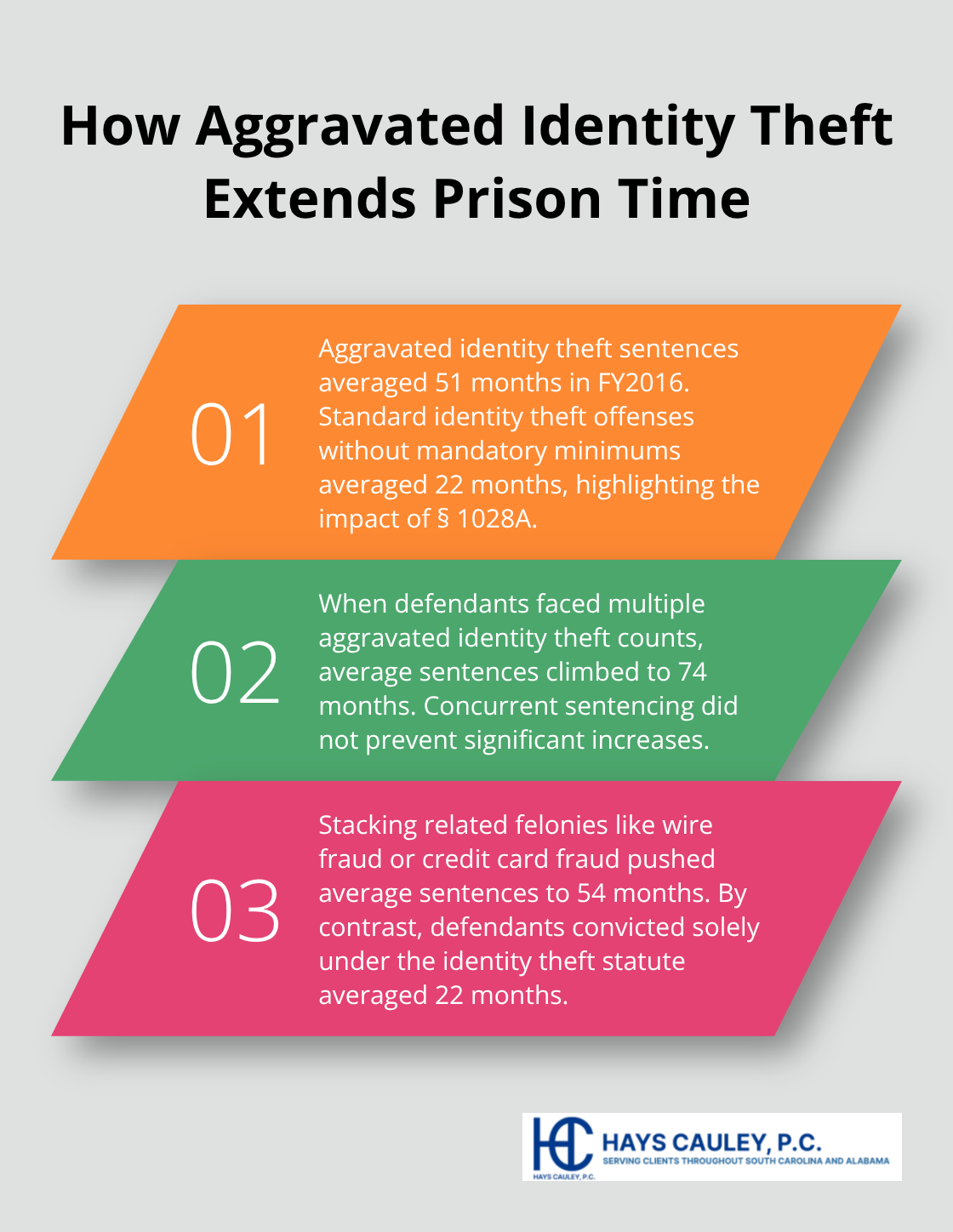
If prosecutors also secured convictions on related felonies like wire fraud or credit card fraud, the average sentence jumped to 54 months versus 22 months for those convicted solely under the identity theft statute.
The U.S. Sentencing Commission data reveals that 88.7% of aggravated identity theft offenders were convicted of at least one additional felony, meaning most people facing these charges encounter overlapping prosecutions that compound their sentences dramatically. In FY2016, 89.2% of aggravated identity theft offenders were convicted on a single count, while 10.8% faced multiple counts. Those with multiple counts averaged 74 months, driven largely by consecutive sentences imposed for additional felonies.
Financial Penalties and Restitution Orders
Fines for identity theft convictions reach tens of thousands of dollars, and restitution orders force you to repay victims for fraudulent charges, often exceeding the actual theft amount. Courts impose these financial penalties alongside prison sentences, creating dual financial and custodial consequences. Restitution can extend for years after release, with monthly payment obligations that strain your ability to rebuild your life.
Employment and Professional Consequences
A conviction creates permanent barriers to employment since background checks flag federal felonies indefinitely, eliminating access to positions requiring security clearances, financial responsibility, or public trust. Professional licenses vanish instantly; teachers, nurses, accountants, and lawyers lose their credentials. Government employment becomes impossible, and many private employers automatically reject applicants with federal convictions. These employment barriers persist long after release because federal conviction records never disappear from public databases.
Housing and Housing Instability
Housing becomes nearly impossible to secure as landlords routinely reject applicants with felony convictions, forcing you into substandard accommodations or homelessness. Rental applications ask about criminal history, and most landlords conduct background checks that reveal federal convictions. Public housing programs also deny access to those with felony records. This housing instability compounds other collateral consequences and makes successful reentry substantially more difficult.
Final Thoughts
When you face identity theft criminal charges, the window for effective action closes quickly. The first 48 hours determine whether you control your defense or react to prosecutorial decisions already made. Contact a criminal defense attorney immediately, before speaking with investigators, and before attempting to explain yourself to law enforcement.
The consequences outlined in this article are not theoretical. Federal sentencing data shows that aggravated identity theft convictions average 51 months in prison, with many defendants serving substantially longer sentences when prosecutors stack related charges. Employment becomes nearly impossible after conviction, housing applications get rejected automatically, and professional licenses disappear permanently.
Your defense strategy must start immediately with evidence preservation and identifying weaknesses in the prosecution’s case. At Hays Cauley, P.C., we help clients facing identity theft criminal charges by building strong defenses grounded in the facts of your case and challenging prosecutorial overreach from the moment charges are filed. Contact us to discuss your situation with someone who understands the stakes.