


Identity theft legal help: Finding Expertise You Can Trust
Identity theft happens faster than most people realize. Criminals can open accounts, rack up debt, and damage your credit in days-sometimes without you knowing until the damage is done.
We at Hays Cauley, P.C. help victims navigate the legal process and fight back. This guide walks you through what identity theft is, the steps to take if it happens to you, and how identity theft legal help can recover your damages and hold companies accountable.
How Criminals Steal Your Information and What You Need to Know
The Methods Thieves Use
Criminals don’t need to break into your home to steal your identity. They work through channels most people underestimate: phishing emails that look legitimate, phone calls pretending to be from your bank, and physical mail offering pre-approved credit. The South Carolina Department of Consumer Affairs recorded 667 identity theft reports in 2025, with victims losing $2,788,307 that year alone. Your Social Security number is the crown jewel for thieves because it opens doors to credit accounts, loans, and government benefits. If your SSN appears on a health plan card or other identification, request a different identifier immediately to limit exposure.
Criminals also harvest personal data from social media profiles where people casually share birthdays, children’s names, and home addresses. Your passwords matter more than you think, especially if you reuse them across accounts. Phishing attacks come through phone, email, and mail, and thieves count on you to verify account numbers or passwords without initiating the contact yourself. Never provide sensitive information unless you initiated the conversation.
How You’ll Discover the Theft
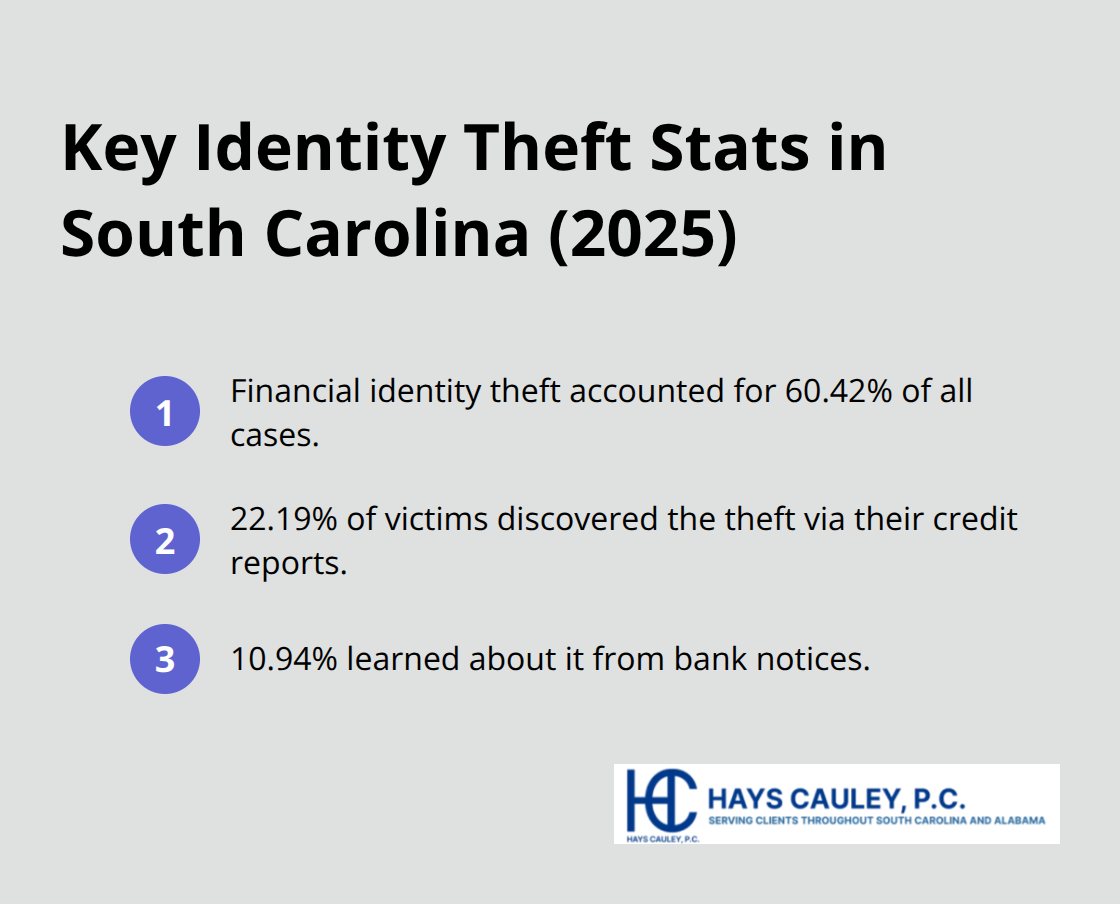
The most common way victims discover identity theft is through their credit reports, which happened in 22.19% of cases reported to South Carolina authorities in 2025. Bank notices came second at 10.94%, meaning criminals had already opened accounts in your name before you knew something was wrong. Financial identity theft accounts for 60.42% of all identity theft cases in South Carolina, making it the dominant threat.
Watch for warning signs that suggest someone is using your information: unexpected bills, missing mail that normally arrives, or unfamiliar accounts on your credit report. Check your credit card and bank statements monthly for charges you don’t recognize, and report them immediately. If bills stop arriving on time, someone may have changed your contact information to hide fraudulent activity.
Taking Action Immediately
The Federal Trade Commission provides a free Complaint Assistant online and a toll-free number at 1-877-FTC-HELP where you can file complaints that get shared with more than 1,800 law enforcement agencies. You can order one free credit report from each of the three national bureaus-Equifax, Experian, and TransUnion at annualcreditreport.com or by calling 1-877-322-8228. We recommend staggering your requests every four months for ongoing monitoring rather than pulling all three at once. This approach gives you regular visibility into your credit profile without waiting a full year between checks.
Once you spot fraudulent activity, the steps you take next determine how quickly you recover. Legal action becomes necessary when creditors refuse to remove fraudulent accounts or when debt collectors pursue you for debts you didn’t create.
What to Do Right After Identity Theft Is Discovered, Serving South Carolina, including Greenville, Columbia and Charleston
Act Within the First 24 Hours
The first 24 hours after discovering identity theft determine how much damage spreads. Contact the Federal Trade Commission immediately using their Complaint Assistant at 1-877-FTC-HELP to file a report that gets distributed to more than 1,800 law enforcement agencies across the country. Then contact your bank and credit card companies to report unauthorized transactions and request new account numbers.
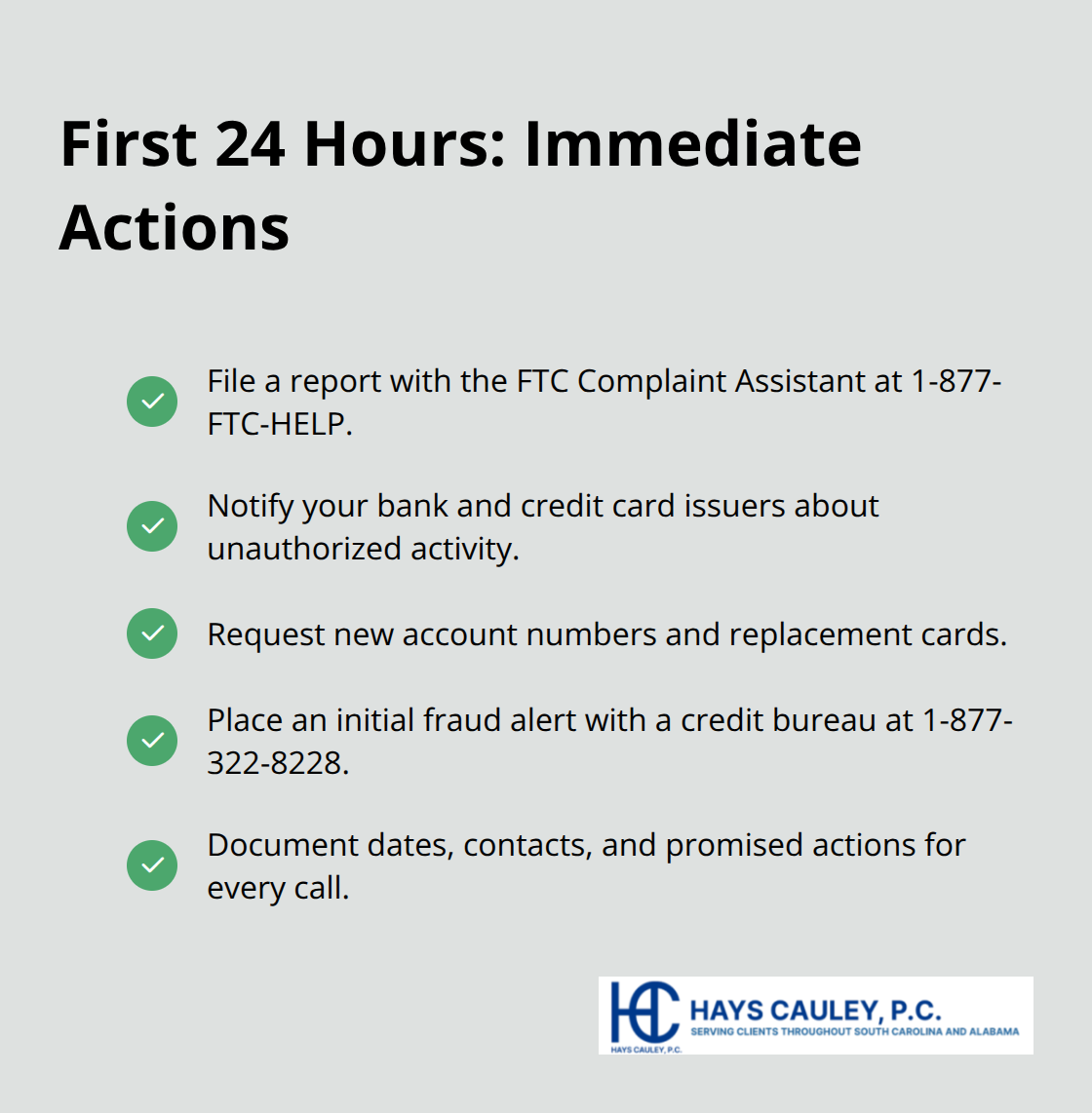
Place a fraud alert with at least one of the three credit bureaus-Equifax, Experian, or TransUnion-by calling 1-877-322-8228. A fraud alert tells creditors to verify your identity before opening new accounts, which stops many thieves cold.
Pull Your Credit Reports and Review Them
Pull your free credit reports immediately from annualcreditreport.com to see what accounts criminals opened in your name. The South Carolina Department of Consumer Affairs received 667 identity theft reports in 2025, and most victims failed to prevent additional fraud after the initial discovery because they didn’t act fast enough. Reviewing your reports within the first day reveals the full scope of the damage and helps you prioritize which accounts need immediate attention.
Document Every Action You Take
Document everything as you go. Write down the date and time of each call, the names of representatives you spoke with, what accounts were compromised, and what actions you requested. Keep these notes organized because you will need them when disputing fraudulent charges with creditors and credit bureaus. Many victims waste weeks going in circles because they failed to track who they called or what was promised. Request written confirmation from your bank and credit card companies confirming the fraud and the steps they are taking. If a creditor or debt collector pursues you for fraudulent debt, you will need this documentation to prove the account wasn’t legitimate.
Monitor Your Accounts on a Regular Schedule
Monitor your accounts weekly during the first three months after discovery, then shift to monthly reviews for at least a year. The FTC’s guide to identity theft recovery shows that victims who document their actions and stay persistent recover faster and suffer less long-term damage to their credit scores. This ongoing vigilance catches additional fraudulent activity before it compounds your losses. When you spot new unauthorized accounts or charges during these reviews, contact the creditor and credit bureaus immediately with your documentation in hand. The faster you respond to new fraud, the faster you can stop it and protect your remaining accounts.
Prepare for the Next Steps in Recovery
Your documentation and these initial actions form the foundation for disputing fraudulent accounts with creditors and credit bureaus. When companies refuse to remove fraudulent charges or when debt collectors pursue you for debts you didn’t create, you will have the evidence needed to fight back effectively.
What Laws Protect You After Identity Theft, Serving South Carolina, including Greenville, Columbia and Charleston
Federal Protections That Give You Legal Power
Federal law gives identity theft victims concrete rights that work in your favor. The Fair Credit Reporting Act requires credit bureaus to investigate disputes within 30 days when you report fraudulent accounts on your credit report. If the bureau cannot verify the fraudulent account belongs to you, they must remove it permanently. This is not a suggestion-it is a legal requirement. When you file a dispute, credit bureaus cannot simply ignore you or delay indefinitely. The FTC enforces this standard across all three major bureaus: Equifax, Experian, and TransUnion.
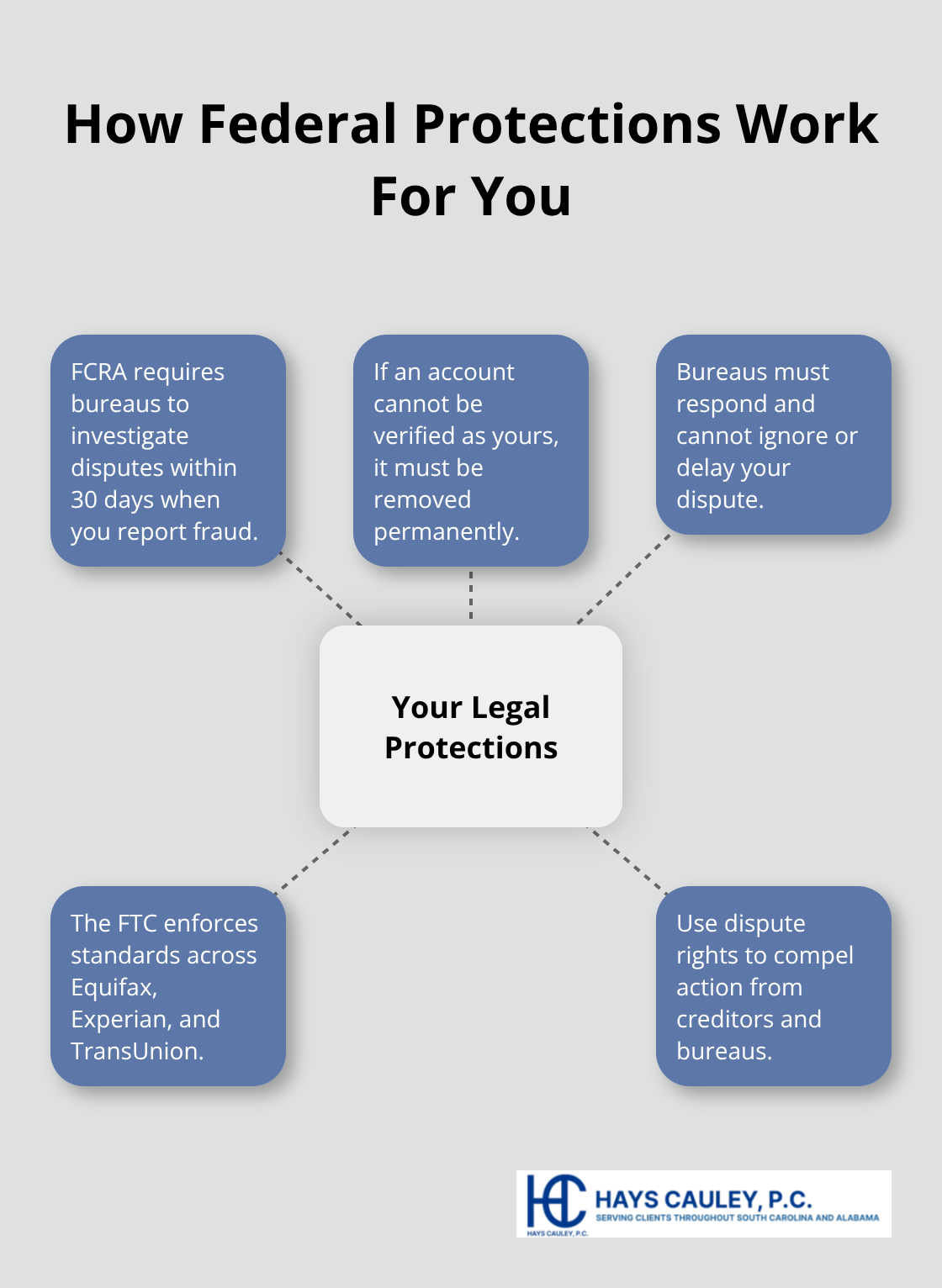
In practice, this means you have a legal weapon to force creditors and bureaus to act.
Your Rights as an Identity Theft Victim
The identity theft victim rights under federal law include the right to place a fraud alert that stops most thieves cold by forcing creditors to verify your identity before opening new accounts. You also have the right to request a security freeze from the three national credit bureaus, which prevents any new accounts from being opened without your explicit permission. The FTC’s guide to identity theft recovery, developed with the American Bar Association and Department of Justice, shows that victims who take legal action recover faster than those who try to resolve fraud on their own.
South Carolina’s Criminal Framework Protects You
South Carolina Code Section 16-13-510 makes unauthorized use of another person’s identifying information a crime, with financial identity theft carrying the most serious penalties including jail time, fines, and restitution orders that force defendants to repay victims. This criminal framework protects you because law enforcement takes identity theft seriously when you report it to the South Carolina Department of Consumer Affairs at 1-800-922-1594 or through consumer.sc.gov. The state recorded 667 identity theft reports in 2025, with victims losing $2,788,307 that year alone.
State and Federal Laws Work Together
South Carolina’s consumer protection laws work alongside federal protections to hold creditors and debt collectors accountable when they fail to remove fraudulent accounts or pursue you for debts you did not create. When a creditor or debt collector refuses to acknowledge fraudulent activity despite your documentation and dispute letters, legal action becomes necessary. A consumer protection law firm can intervene directly with creditors, credit reporting agencies, and debt collectors to resolve identity theft issues outside of court when possible. The strength of these protections depends on your willingness to act quickly and document everything as you go.
Final Thoughts
When creditors refuse to remove fraudulent accounts or debt collectors pursue you for debts you didn’t create, you need someone fighting on your side. We at Hays Cauley, P.C. intervene directly with creditors, credit reporting agencies, and debt collectors to resolve these situations. Our approach focuses on getting fraudulent accounts removed and stopping collection efforts without requiring you to go to court when possible.
The FTC’s recovery guide shows that victims who work with a consumer protection law firm recover faster and suffer less long-term damage to their credit scores. We take your documentation and dispute letters and push creditors and bureaus to act. If a creditor claims they verified the fraudulent account belongs to you, we challenge that claim with the evidence you gathered, and if a debt collector ignores your dispute letters, we send follow-up correspondence that carries legal weight.
Recovering damages means getting fraudulent accounts removed from your credit report, stopping collection calls, and sometimes obtaining compensation for the time and money you spent fixing the damage. South Carolina law requires defendants convicted of identity theft to pay restitution, meaning victims can recover losses through the criminal justice system. Contact Hays Cauley, P.C. to discuss your identity theft legal help options and determine the best path forward for your recovery.