

Identity theft monitoring in SC isn’t optional anymore. Criminals steal identities faster than most people realize, and waiting until fraud hits your accounts costs thousands in recovery time and money.
At Hays Cauley, P.C., we help South Carolina residents fight back against identity theft. This guide shows you what to watch for, how to choose the right monitoring service, and exactly what to do if your identity gets stolen.
How Identity Theft Happens in South Carolina, Including Greenville, Columbia and Charleston
Where Criminals Find Your Information
Criminals don’t need to break into your home to steal your identity. They grab your information from places you use every day. Your mailbox holds bank statements and credit card offers with your name and address. Your trash contains old bills, receipts, and documents with your Social Security number if you don’t shred them properly. Public Wi-Fi at coffee shops and airports exposes your financial data when you check your bank account. Data breaches from retailers and healthcare providers put millions of records into criminal hands each year.
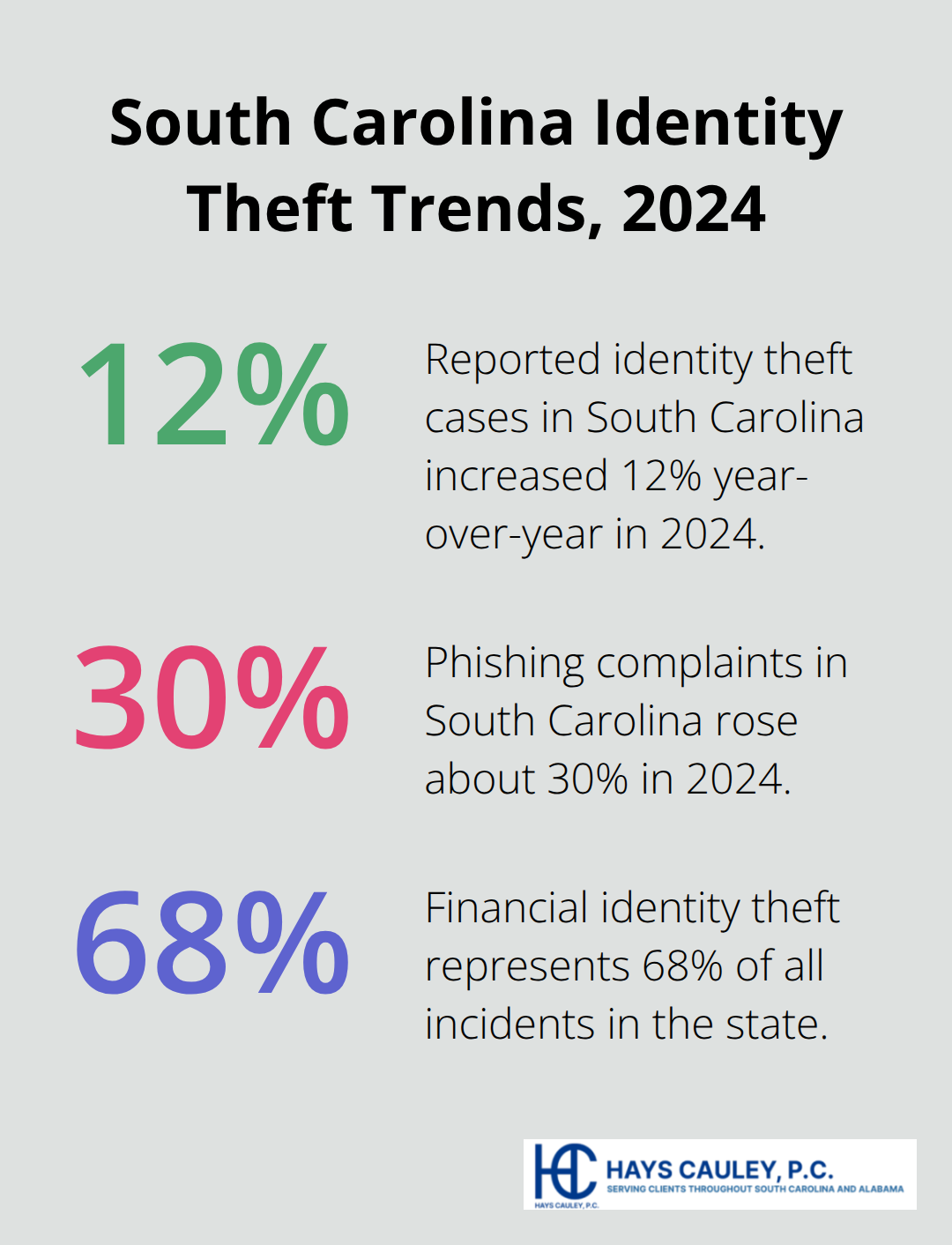
In 2024, South Carolina recorded over 15,000 identity theft cases, up 12% from the prior year, according to the Federal Trade Commission. Phishing complaints in South Carolina rose about 30% in 2024, and Charleston police discovered 25 credit card skimmers at point-of-sale locations. Thieves also harvest information from social media profiles, purchase stolen data on the dark web, and use skimming devices on gas pumps and ATMs to capture card details in seconds.
The Financial Damage Hits Fast
The average identity theft victim in South Carolina lost about $9,800 in 2024, with out-of-pocket expenses around $3,500 per person. Financial identity theft makes up 68% of all incidents in the state, while medical identity theft jumped 15% year-over-year. Waiting to act after fraud appears costs far more than acting immediately. Victims who contact banks and credit card issuers within 24 hours reduce average losses to about $1,200, compared to $4,800 for those who delay.
South Carolina’s Department of Revenue blocked more than 5,000 fraudulent tax returns in 2024, showing how tax fraud serves as another channel for broader identity theft. Without active monitoring, you’re essentially waiting for criminals to finish their work before you notice anything is wrong.
Why Passive Protection Fails
Passive protection like a basic password and occasional credit checks fails because criminals bypass these defenses regularly. Multi-bureau credit monitoring detects fraudulent activity about 30% faster than single-bureau systems, but even that detection often happens after some damage occurs. Real-time monitoring across all three major credit bureaus provides instant alerts on new accounts, inquiries, or changes to your personal information, letting you respond within hours instead of days.
Monitoring services that combine real-time alerts, dark web scanning, and recovery support offer meaningful protection, especially when paired with fraud alerts and credit freezes that you place yourself. The difference between catching fraud in hours versus days determines whether you lose $1,200 or $4,800-and that’s just the beginning of what active monitoring can prevent.
Choosing a Monitoring Service That Actually Works
Real-Time Alerts Stop Fraud Before It Spreads
Real-time alerts matter more than you think. When a thief opens a fraudulent account in your name, the difference between catching it within hours versus days determines your financial outcome. Services that monitor all three credit bureaus simultaneously detect suspicious activity about 30% faster than single-bureau systems, according to FTC data. Look for monitoring that sends alerts within minutes of new inquiries, account openings, or address changes rather than daily or weekly summaries. Identity Guard costs around $24.99 per month and offers continuous monitoring across all three bureaus, while basic credit monitoring ranges from free to about $39.95 monthly. The real value emerges when you respond quickly-victims who act within 24 hours average losses of $1,200 versus $4,800 for delayed responses. Dark web scanning adds another layer and flags your information if it appears in criminal marketplaces, though it cannot prevent breaches that already happened. Real-time transaction alerts through your bank’s app work alongside monitoring services and catch fraudulent charges within minutes of posting.
Coverage Depth Separates Effective Services From Inadequate Ones
Comprehensive monitoring should track financial accounts, credit inquiries, new accounts, changes to existing accounts, and address modifications across all three bureaus. Medical identity theft jumped 15% in South Carolina last year, so confirm your service monitors health insurance accounts and medical billing fraud, not just credit cards and loans. Restoration support matters significantly when fraud occurs-quality services include insurer coverage ranging from $500,000 to $1,000,000 and wage replacement benefits up to $2,000 per week for five weeks while you dispute fraudulent charges.
Start With Free Protections First
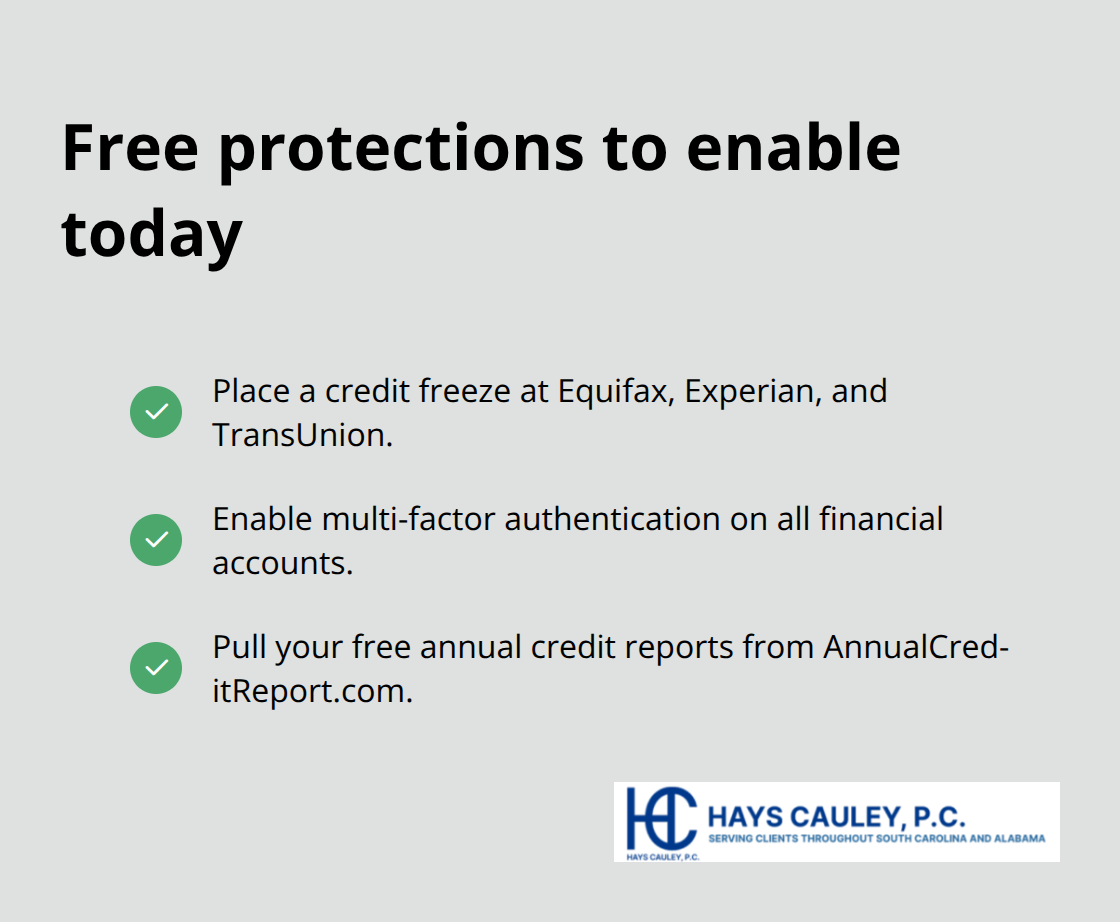
South Carolina’s Department of Consumer Affairs Identity Theft Unit at 803-734-4200 provides free assistance and can direct you to resources, but paid monitoring services handle much of the heavy lifting with creditors and bureaus. Place a credit freeze at all three bureaus at no cost, enable multi-factor authentication on financial accounts (which blocks about 99.9% of automated attacks according to Microsoft), and pull your free annual credit report from AnnualCreditReport.com. These foundational steps cost nothing and provide substantial protection for most South Carolina residents.
When To Upgrade to Paid Monitoring
Upgrade to paid monitoring if you’ve experienced prior fraud, operate a business with sensitive customer data, or have significant assets-high-net-worth individuals benefit most from comprehensive coverage. Many South Carolina residents can effectively manage risk with free tools combined with weekly bank statement reviews and daily credit card app monitoring. The decision hinges on your personal risk tolerance and financial situation rather than a one-size-fits-all approach.
Moving From Prevention to Response
Once you’ve selected your monitoring approach and activated alerts, you need a clear action plan for the moment fraud appears on your accounts. The next section walks you through exactly what to do when your identity is compromised, from the first hour through full credit restoration.
What To Do When Fraud Hits Your Accounts, Serving South Carolina, Including Greenville, Columbia and Charleston
Act Within the First Hour
The moment you detect unauthorized activity on your accounts, speed determines your financial outcome. Contact your bank and credit card issuers within the first hour, not the next day. Victims who act within 24 hours average losses of $1,200, according to FTC guidance, while those who delay face average losses of $4,800.
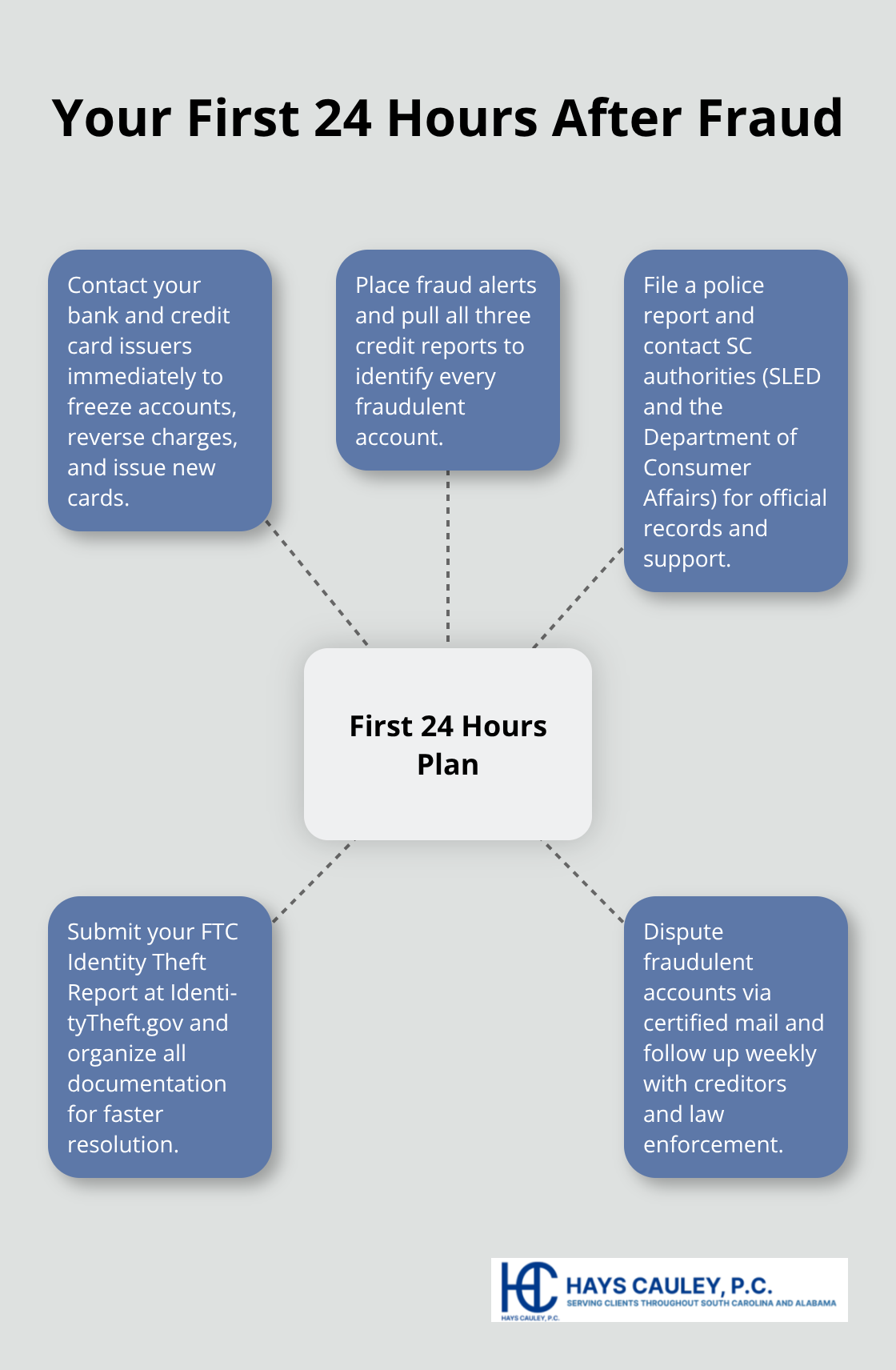
Your bank can freeze accounts, reverse fraudulent charges, and issue new cards the same day if you call directly rather than waiting for mail notification. Most major banks offer 24/7 fraud hotlines with dedicated teams trained to handle identity theft, and they can place temporary holds on suspicious transactions within minutes. Document everything during these calls: the date, time, representative name, and confirmation numbers.
Place Fraud Alerts and Pull Your Credit Reports
Place fraud alerts immediately with all three credit bureaus-Equifax, Experian, and TransUnion-which takes under 10 minutes per bureau and provides 90 days of initial protection. After placing fraud alerts, pull your credit reports from all three bureaus at AnnualCreditReport.com to identify every fraudulent account opened in your name. This report becomes your roadmap for the next steps and your evidence during disputes with creditors and collection agencies.
File a Police Report and Contact State Authorities
File a police report the same day you discover fraud, regardless of the dollar amount or where the theft occurred. South Carolina law Section 37-20-130 allows victims to initiate law enforcement investigations, and your police report number is essential for credit disputes, insurance claims, and legal proceedings. The State Law Enforcement Division maintains confidential victim records that support your case when creditors and collection agencies challenge your fraud claims. Contact the SC Department of Consumer Affairs Identity Theft Unit at 803-734-4200 during business hours (8:30 a.m. to 5 p.m. Monday through Friday) to request their Identity Theft Toolkit, which includes state-specific forms and checklists tailored to South Carolina’s legal protections.
Submit Your FTC Report and Organize Your Records
Submit the FTC Identity Theft Report at IdentityTheft.gov to generate an official recovery plan that creditors and government agencies nationwide accept. This report accelerates the dispute process significantly because it carries federal authority. Organize all correspondence, police reports, statements, and credit bureau responses in a dedicated file-victims who maintain organized records tend to resolve cases about 60% faster than those who don’t track their documentation.
Dispute Fraudulent Accounts and Follow Up Systematically
Dispute fraudulent accounts via certified mail to leave a paper trail, and follow up weekly with law enforcement and creditors. South Carolina’s Department of Revenue notes that victims who systematically follow this approach restore credit scores to pre-theft levels in 12 to 18 months, compared to 3 to 5 years for those without structured recovery plans. If you need guidance on credit disputes or identity theft recovery, Hays Cauley, P.C. helps South Carolina residents navigate these processes.
Final Thoughts
Identity theft monitoring SC works best when you combine real-time alerts with immediate action. Victims who respond within 24 hours lose $1,200 on average, while those who delay face losses exceeding $4,800. South Carolina recorded over 15,000 identity theft cases in 2024, and that number continues climbing each year.
Start with free protections today by placing credit freezes at all three bureaus, enabling multi-factor authentication on your financial accounts, and reviewing your free annual credit report from AnnualCreditReport.com. These steps cost nothing and block about 99.9% of automated attacks. If your risk tolerance is higher or you’ve experienced prior fraud, upgrade to paid monitoring services that track all three bureaus simultaneously and alert you within minutes of suspicious activity.
When fraud occurs, your response in the first hour determines your financial outcome. Contact your bank immediately, place fraud alerts with all three credit bureaus, file a police report the same day, and submit your FTC Identity Theft Report. If you need guidance on disputing fraudulent accounts or understanding your legal rights under South Carolina law, contact Hays Cauley, P.C. for assistance with credit disputes and identity theft recovery.