


Criminal identity theft affects over 1.3 million Americans annually, with victims facing arrest warrants and damaged reputations through no fault of their own.
Unlike financial fraud, this crime involves someone using your personal information to commit offenses, leaving you to deal with serious legal consequences. We at Hays Cauley, P.C. see firsthand how devastating these cases can become for innocent people.
What Makes Criminal Identity Theft Different
Criminal identity theft extends far beyond someone who steals your credit card number or opens unauthorized accounts. When criminals use your Social Security number, driver’s license, or other personal details during arrests, traffic stops, or court proceedings, you become linked to their criminal record. The Federal Trade Commission reports that criminal identity theft cases increased 51% between 2019 and 2021, with victims who spend an average of 165 hours to clear their names.
How Thieves Access Your Information
Criminals obtain personal data through data breaches, stolen mail, discarded documents, and phishing schemes. The Equifax breach alone exposed 147 million Social Security numbers, while smaller breaches at DMVs and court systems provide direct access to the exact documents criminals need for impersonation. Thieves also target mailboxes for tax documents, jury summons, and government correspondence that contain full names, addresses, and identification numbers.
The Real Cost of Criminal Impersonation
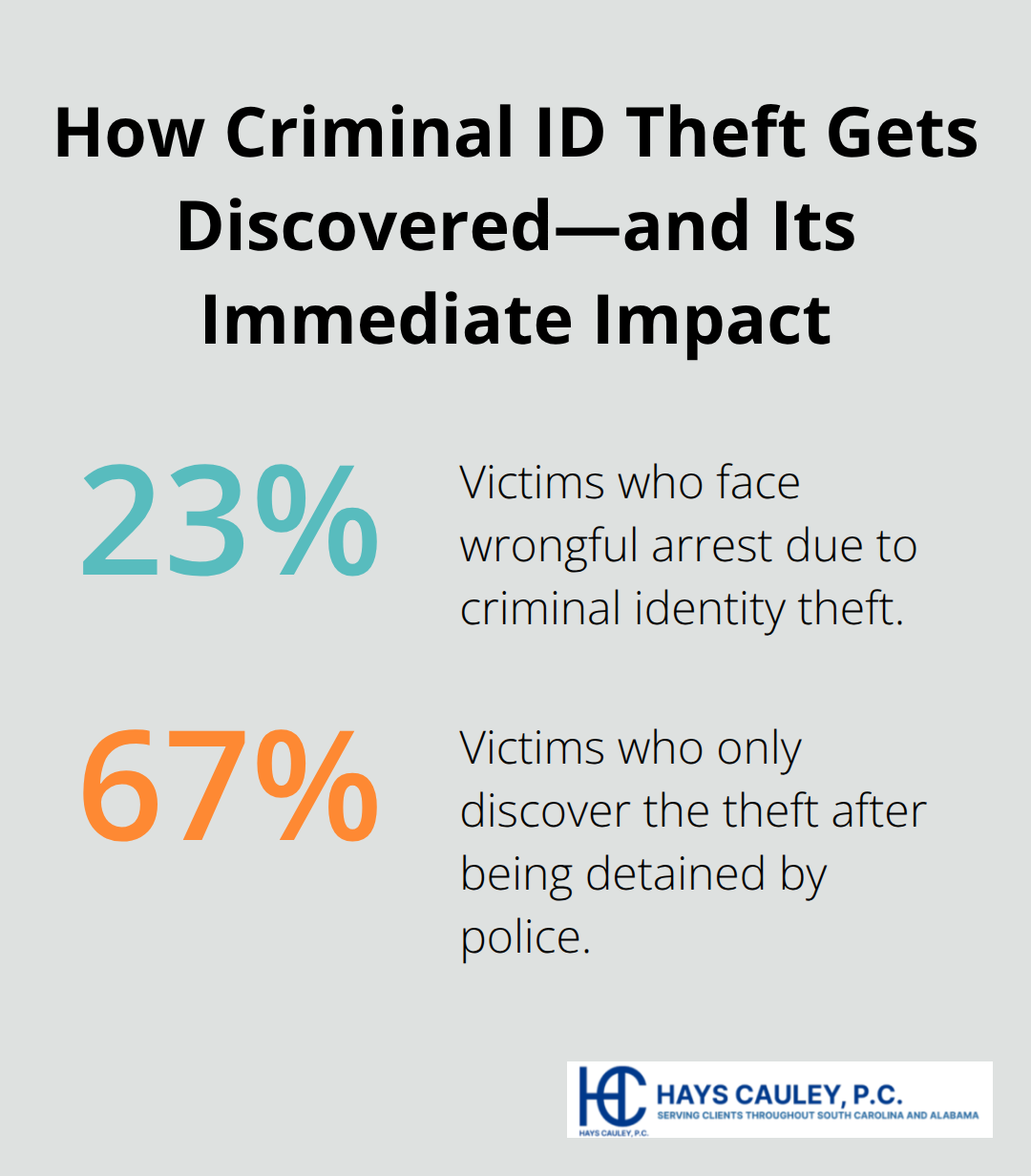
The Identity Theft Resource Center found that 23% of criminal identity theft victims face wrongful arrest, while 67% discover the theft only after police detain them. One documented case involved a California woman who police arrested six times over two years for crimes someone committed with her stolen identity in another state. Victims spend an average of $1,400 in legal fees and lost wages while they fight false charges (making this form of identity theft significantly more expensive than financial fraud cases).
Why Detection Proves So Difficult
Most victims learn about criminal identity theft months or years after the initial crime occurs. Police databases often lack real-time verification systems, which means officers arrest innocent people based on outdated warrant information. The National Crime Information Center processes over 12 million queries daily but relies on manual updates that can take weeks to reflect cleared charges or corrected records.
These delays create a dangerous window where you might face arrest for crimes you never committed, which makes early detection methods absolutely vital for your protection.
How Do You Know If Someone Stole Your Criminal Identity
Criminal identity theft detection requires active monitoring because victims often remain unaware until police arrest them for crimes they never committed. The Bureau of Justice Statistics found that 85% of criminal identity theft victims learn about the crime only after law enforcement contact, which makes early detection nearly impossible through passive methods. You need to check court records, criminal databases, and background check services every six months to catch fraudulent activity before it destroys your reputation.
Free Government Resources for Detection
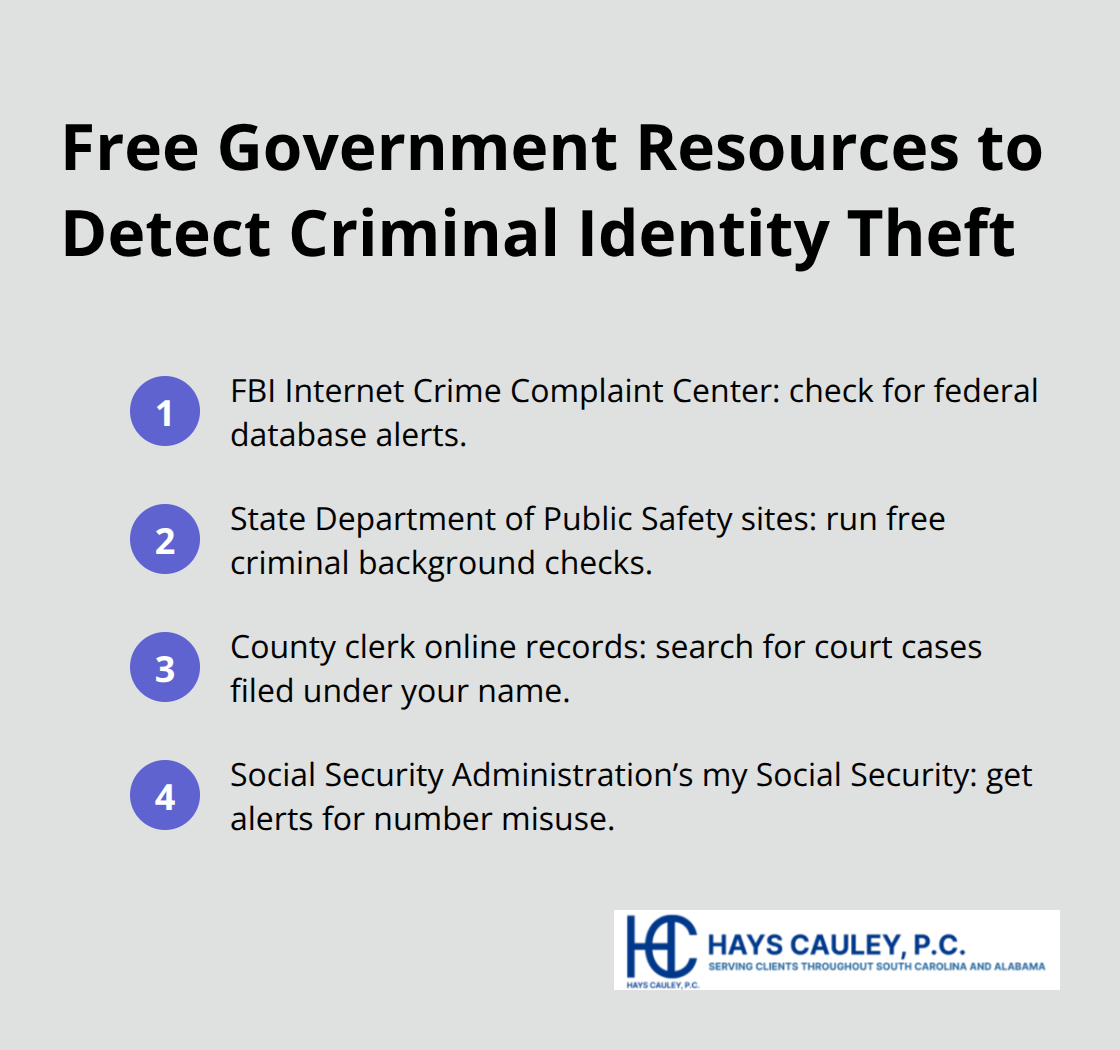
The FBI’s Internet Crime Complaint Center processes over 800,000 reports annually and provides free access to check if your name appears in federal criminal databases through their victim notification system. Most states offer free criminal background checks through their Department of Public Safety websites, while county clerk offices maintain searchable court records that show any cases filed under your name. The Social Security Administration’s my Social Security portal alerts you when someone uses your number for employment or benefits (which often precedes criminal impersonation).
When Police Contact Becomes Your First Warning
Traffic stops, employment background checks, or airport security screenings frequently reveal criminal identity theft for the first time. The National Association of Professional Background Screeners reports that 31% of criminal identity theft cases surface during routine employment verification, while TSA flagging accounts for another 18% of discoveries. If police question you about crimes you never committed, immediately request copies of all arrest records, booking photos, and fingerprint comparisons to document the fraudulent activity.
Signs That Appear Before Arrest
Several warning signs can alert you to criminal identity theft before police contact occurs. Employment applications may get rejected without explanation, while apartment rental applications face sudden denials despite good credit scores. Court summons arrive for cases you never heard of, or collection agencies contact you about fines from jurisdictions you never visited (these early indicators give you time to investigate before facing arrest).
Once you confirm someone has stolen your criminal identity, you must act quickly to prevent further damage and begin the complex process of clearing your name from false criminal records.
How Do You Stop Criminals From Stealing Your Identity
Protect your Social Security number with extreme caution because once criminals obtain it, they can impersonate you for years. Never carry your Social Security card in your wallet, and provide your number only when legally required for employment, taxes, or financial accounts. The Social Security Administration processes over 300 million wage reports annually with these numbers, which makes them the primary target for criminal impersonators who need authentic identification during arrests.
Store your Social Security card, passport, and birth certificate in a fireproof safe or bank safety deposit box. Make photocopies for legitimate applications while you keep originals secured at home.
Digital Security Measures That Actually Work
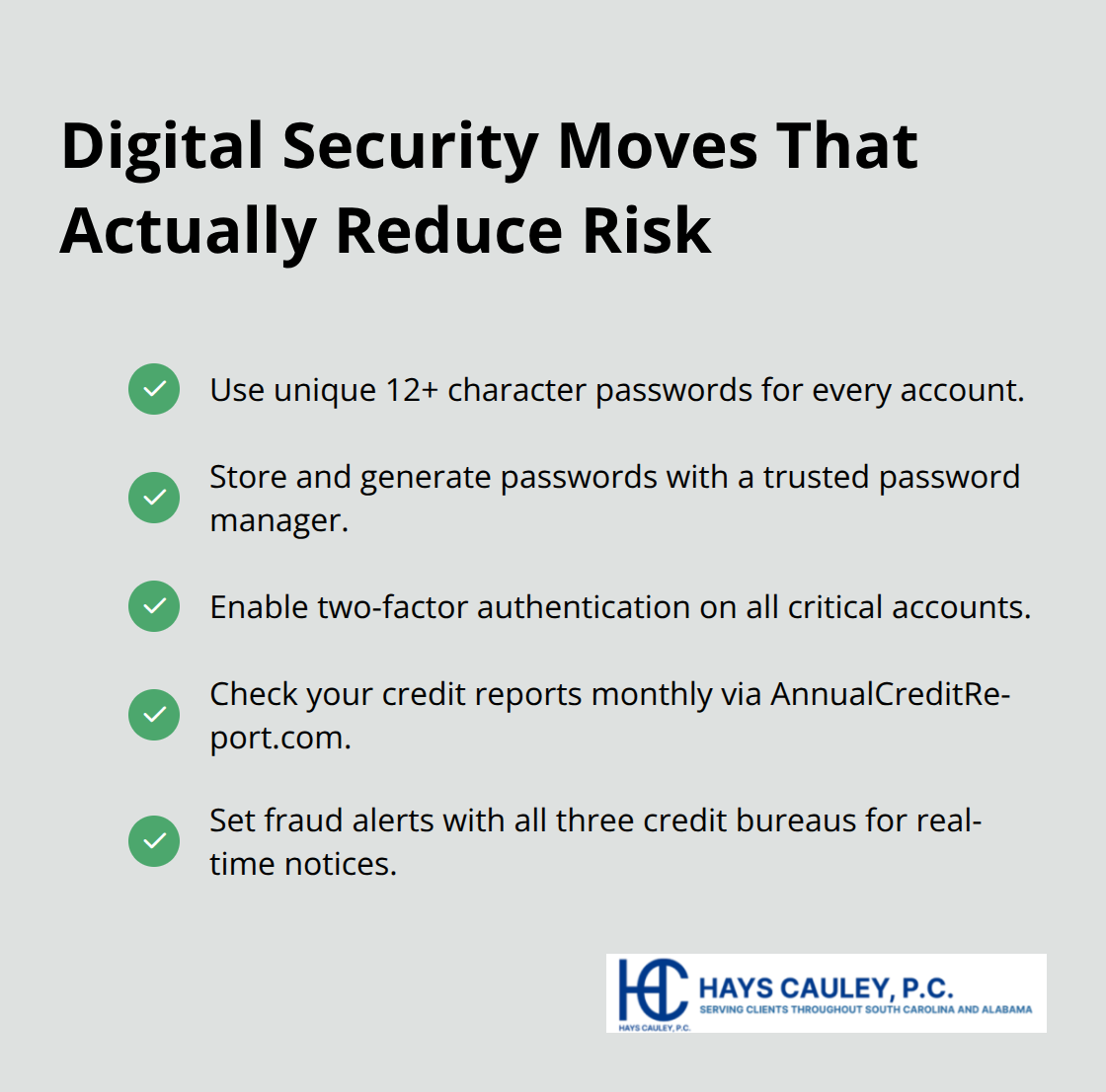
Strong password protection prevents 87% of credential theft attempts according to Verizon’s Data Breach Investigations Report, but most people still use weak passwords across multiple accounts. Create unique 12-character passwords for every online account. Combine uppercase letters, numbers, and symbols without personal information like birthdays or names.
Password managers like Bitwarden or 1Password generate random passwords and store them securely. Two-factor authentication adds another security layer that stops 99.9% of automated attacks according to Microsoft security researchers. Check your credit reports monthly through the official Annual Credit Report website, and set up fraud alerts with all three credit bureaus to receive immediate notification when someone attempts to open accounts with your personal information.
Physical Document Protection That Prevents Theft
Mail theft accounts for 23% of criminal identity theft cases, which makes secure mail practices absolutely necessary for protection. Install a locking mailbox or rent a post office box for sensitive documents, and collect mail daily to prevent criminals from stealing tax forms, court notices, or government correspondence.
Shred all documents that contain personal information with a cross-cut shredder that creates particles smaller than 4mm. Never throw intact documents in regular trash where thieves can retrieve them. The Postal Inspection Service reports that criminals target specific neighborhoods during tax season and court filing periods (making secure mail practices even more important during these high-risk months when identity thieves actively search for documents that contain Social Security numbers and legal information).
Final Thoughts
Criminal identity theft protection demands consistent action rather than one-time fixes. The 1.3 million Americans affected annually prove that passive approaches fail when criminals actively target personal information for fraudulent arrests and court proceedings. You must take control of your personal data security before thieves exploit it.
Monitor your criminal background every six months through state databases and court records. Secure your Social Security number in fireproof storage, use unique passwords with two-factor authentication, and install locking mailboxes to prevent document theft. These steps reduce your risk by over 80% (according to federal crime statistics).
If you become a victim, contact police immediately to file identity theft reports and request fingerprint comparisons. Document all fraudulent arrests and court cases with official records. We at Hays Cauley, P.C. help consumers navigate identity theft cases and credit issues that result from criminal impersonation. Criminal identity theft cases continue to rise as data breaches expose more personal information.