


What Are the Penalties for Identity Theft in South Carolina?
Identity theft carries severe legal consequences in South Carolina, with penalties ranging from hefty fines to years in prison. The penalty for identity theft depends on the specific type of fraud committed and the amount of financial damage involved.
We at Hays Cauley, P.C. see firsthand how these charges can devastate lives and careers. Understanding the potential consequences helps you grasp the seriousness of these allegations.
How Does South Carolina Classify Identity Theft Crimes
Financial Identity Fraud Under Section 16-13-510
South Carolina Code Section 16-13-510 classifies financial identity fraud as a felony offense that carries up to ten years in prison. The law targets anyone who unlawfully obtains or records personal information to access another person’s financial resources without authorization. This includes social security numbers, credit card numbers, driver’s license numbers, and bank account information.
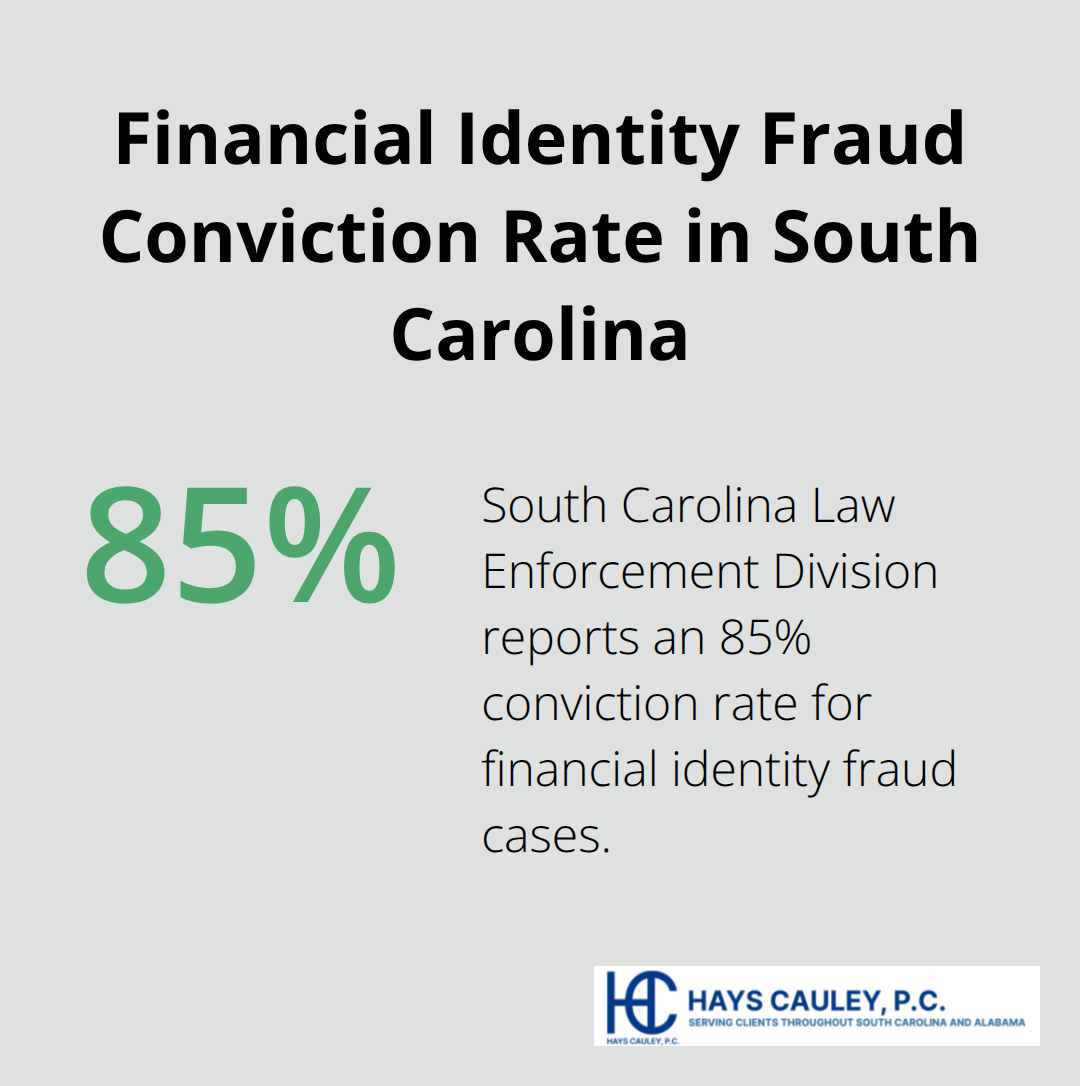
The state prosecutes these cases with remarkable success. South Carolina Law Enforcement Division data shows conviction rates exceed 85% for financial identity fraud cases. Courts impose both imprisonment and substantial fines, and they often require full restitution to victims under Section 17-25-322.
Personal Information Violations and Employment Fraud
The law treats the use of someone else’s information to obtain employment as a separate identity fraud offense under the same statute. South Carolina defines personal information broadly to include any data that provides access to financial resources, employment benefits, or government services.
Prosecutors can file charges in either the county where the victim resided or where the fraudulent acts occurred. This flexibility gives them significant advantages in venue selection. The Federal Trade Commission reports that employment-related identity theft affects over 1.2 million Americans annually, which makes this a priority for South Carolina prosecutors.
Penalty Enhancement Factors
Courts impose harsher sentences when identity theft involves multiple victims, substantial financial losses, or sophisticated schemes. Repeat offenders face mandatory minimum sentences, while first-time offenders may receive probation for losses under $2,000.
The amount of financial damage directly influences the sentence. Losses that exceed $10,000 typically result in maximum prison terms. Additionally, the use of false identification documents to commit identity theft can result in separate felony charges under Section 16-13-525 (effectively doubling potential prison time).
These classifications form the foundation for how prosecutors build their cases and pursue convictions in South Carolina courts.
What Consequences Will You Face for Identity Theft
Prison Sentences and Felony Convictions
South Carolina courts impose harsh prison sentences for identity theft convictions. The maximum penalty reaches ten years in state prison for financial identity fraud under Section 16-13-510. Most defendants receive sentences between three to seven years, which depends on the financial damage they caused. First-time offenders with losses under $5,000 may receive two to three years, while repeat offenders face the full ten-year maximum regardless of the amount they stole.
The South Carolina Department of Corrections reports that 78% of identity theft defendants serve their full sentences without early release. Parole boards rarely grant early release for financial crimes, which means you will likely serve most of your sentence behind bars. Felony convictions remain on your criminal record permanently and affect your ability to secure housing, obtain professional licenses, and exercise voting rights.

Financial Penalties That Follow You Forever
Courts impose substantial fines alongside prison sentences, often totaling $25,000 or more for serious cases. Restitution requirements under Section 17-25-322 force defendants to repay every dollar they stole, plus interest and collection fees. The South Carolina Attorney General’s Office successfully collects restitution in 92% of identity theft cases through wage garnishment and asset seizure.
Victims can also pursue civil lawsuits for triple damages under South Carolina law. If you stole $10,000, the victim can sue for $30,000 plus attorney fees and court costs. These civil judgments survive bankruptcy and follow you for decades. Credit agencies track these judgments, which destroys your credit score and prevents you from obtaining loans, mortgages, or credit cards.
Career and Employment Destruction
Background checks reveal felony convictions to potential employers for life. The National Association of Professional Background Screeners found that 94% of employers reject applicants with theft-related felonies. Professional licenses in finance, healthcare, education, and law become permanently unavailable after identity theft convictions.
Current employers often terminate workers immediately upon learning of charges (even before conviction). The Federal Deposit Insurance Corporation prohibits anyone with theft convictions from working in banking for ten years minimum. Government employment becomes impossible, as does work that requires security clearances or bonding.
The prosecution process itself creates additional challenges that can compound these consequences before you even reach trial.
How Do Prosecutors Build Identity Theft Cases in South Carolina
Digital Evidence Collection Methods
South Carolina prosecutors rely heavily on digital evidence to secure convictions in identity theft cases. The State Law Enforcement Division maintains forensic laboratories that analyze computer hard drives, smartphones, and financial transaction records with 94% accuracy rates. Investigators subpoena bank records, credit card statements, and employment applications that show unauthorized use of personal information. They also collect IP addresses from online transactions and social media accounts used in fraudulent schemes.
Phone records and text messages provide powerful evidence of coordination between defendants and accomplices. The South Carolina Attorney General’s Office reports that digital evidence appears in 87% of successful identity theft prosecutions. Prosecutors often present email chains that show defendants who discuss stolen information or coordinate fraudulent purchases. Security camera footage from retailers where stolen credit cards were used creates compelling visual evidence for juries.
Defense Strategies That Actually Work
Defense attorneys focus on challenges to the chain of custody for digital evidence and question the reliability of forensic analysis. They argue that computer viruses or hackers compromised their client’s devices without their knowledge. Mistaken identity defenses work when multiple people had access to the same computer or financial accounts. Attorneys also challenge the prosecution’s timeline when they show their client was physically elsewhere when the crimes occurred.
Consent defenses succeed when defendants can prove they had permission to use someone’s personal information for legitimate purposes. Mental health defenses rarely succeed in South Carolina courts, but substance abuse treatment programs can reduce sentences during plea negotiations. The most effective strategy involves demonstration that law enforcement violated Fourth Amendment rights during searches of electronic devices or financial records.
Plea Agreement Realities
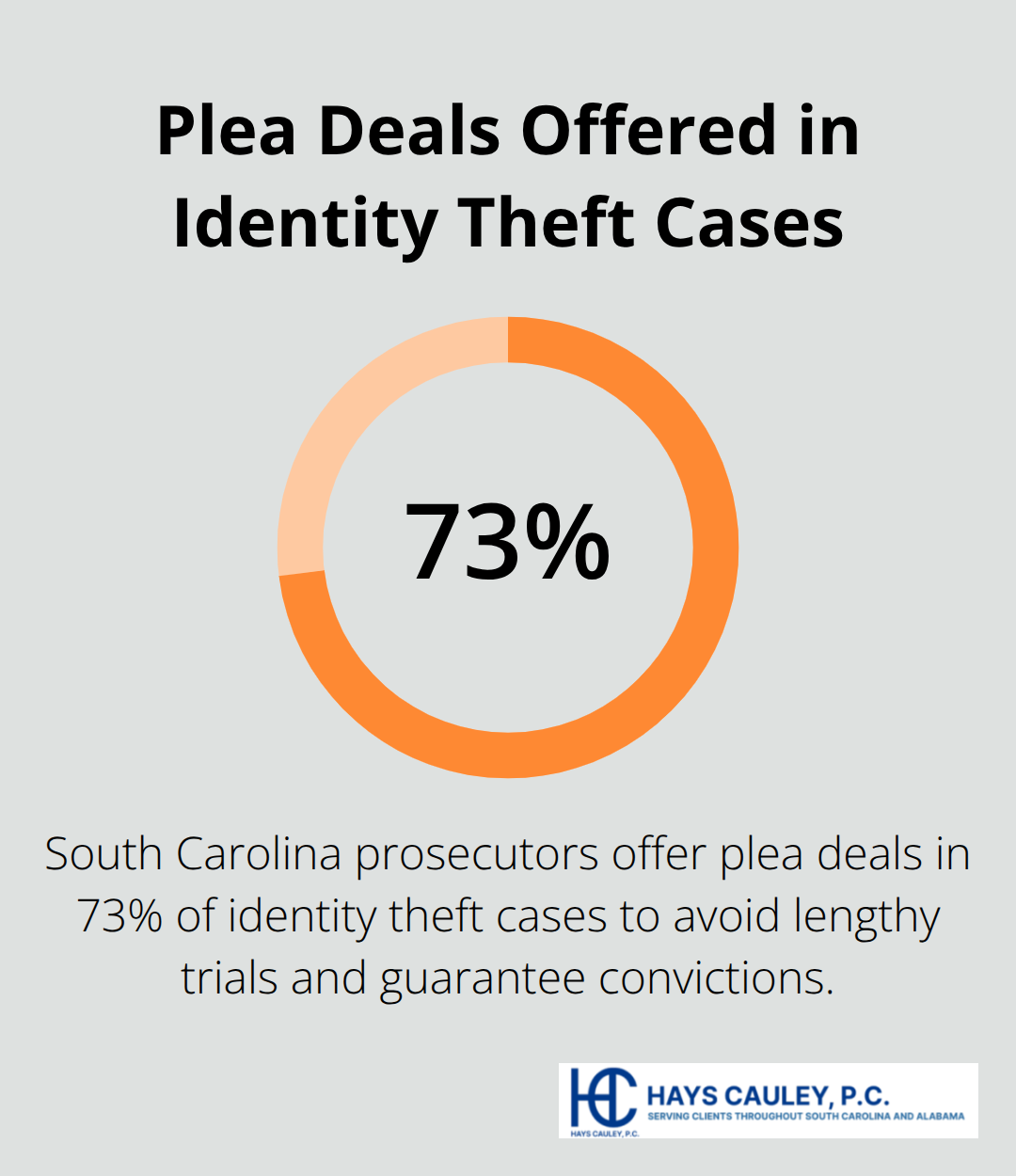
South Carolina prosecutors offer plea deals in 73% of identity theft cases to avoid lengthy trials and guarantee convictions. First-time offenders with losses under $5,000 typically receive offers for three years prison time instead of the maximum ten years. Defendants who provide information about accomplices or larger fraud rings receive substantial sentence reductions. Cooperation agreements can reduce sentences by 40% to 60% when defendants help recover stolen funds or identify other victims.
Prosecutors demand full restitution as part of every plea agreement (regardless of the defendant’s ability to pay). They also require defendants to surrender all assets obtained through fraud, which includes vehicles, jewelry, and real estate. Most plea deals include supervised probation periods that last five to ten years after prison release. Violation of probation terms results in immediate return to prison for the remainder of the original sentence.
Final Thoughts
The penalty for identity theft in South Carolina reaches up to ten years in prison plus substantial fines and mandatory restitution. These felony convictions destroy careers, eliminate professional opportunities, and create permanent financial hardship through civil judgments that survive bankruptcy. Prosecutors win 85% of identity theft cases with sophisticated digital evidence collection methods.
Courts offer plea deals in 73% of cases, but these agreements still require prison time and full restitution payments. The prosecution process itself damages your reputation and employment prospects before trial even begins. Legal representation becomes absolutely necessary when you face these serious charges.
Defense attorneys can challenge digital evidence, negotiate reduced sentences, and protect your constitutional rights during investigations (without proper legal counsel, defendants typically receive maximum sentences and pay higher restitution amounts). If you face identity theft charges, contact an attorney immediately and avoid discussions with law enforcement without counsel present. We at Hays Cauley, P.C. help consumers navigate identity theft and credit report issues that often accompany these complex cases.