


Identity Theft and the Fair Credit Reporting Act in South Carolina
Identity theft is a growing concern for South Carolina residents, with far-reaching consequences for victims. At Hays Cauley, P.C., we understand the importance of protecting your financial identity and credit reputation.
The Fair Credit Reporting Act (FCRA) plays a vital role in safeguarding consumers against identity theft and its aftermath. This post will explore how the FCRA helps South Carolinians combat identity theft and what steps to take if you become a victim.
What Is Identity Theft in South Carolina?
Identity theft in South Carolina is a serious crime that occurs when someone uses your personal information without your permission for financial gain. This includes using your name, Social Security number, credit card details, or other identifying information to open new accounts, make purchases, or commit fraud.
Types of Identity Theft
Financial identity theft is the most common form, where criminals use your information to access your bank accounts or open new credit lines. However, other significant concerns include:
- Medical identity theft: Someone uses your information to receive medical care.
- Criminal identity theft: A thief provides your information to law enforcement when arrested.
How Identity Thieves Operate
Identity thieves use various methods to obtain personal information:
- They dig through trash for discarded documents
- They steal mail
- They use sophisticated phishing scams to trick you into revealing sensitive data
- They exploit data breaches at companies holding your information
Identity Theft Statistics in South Carolina
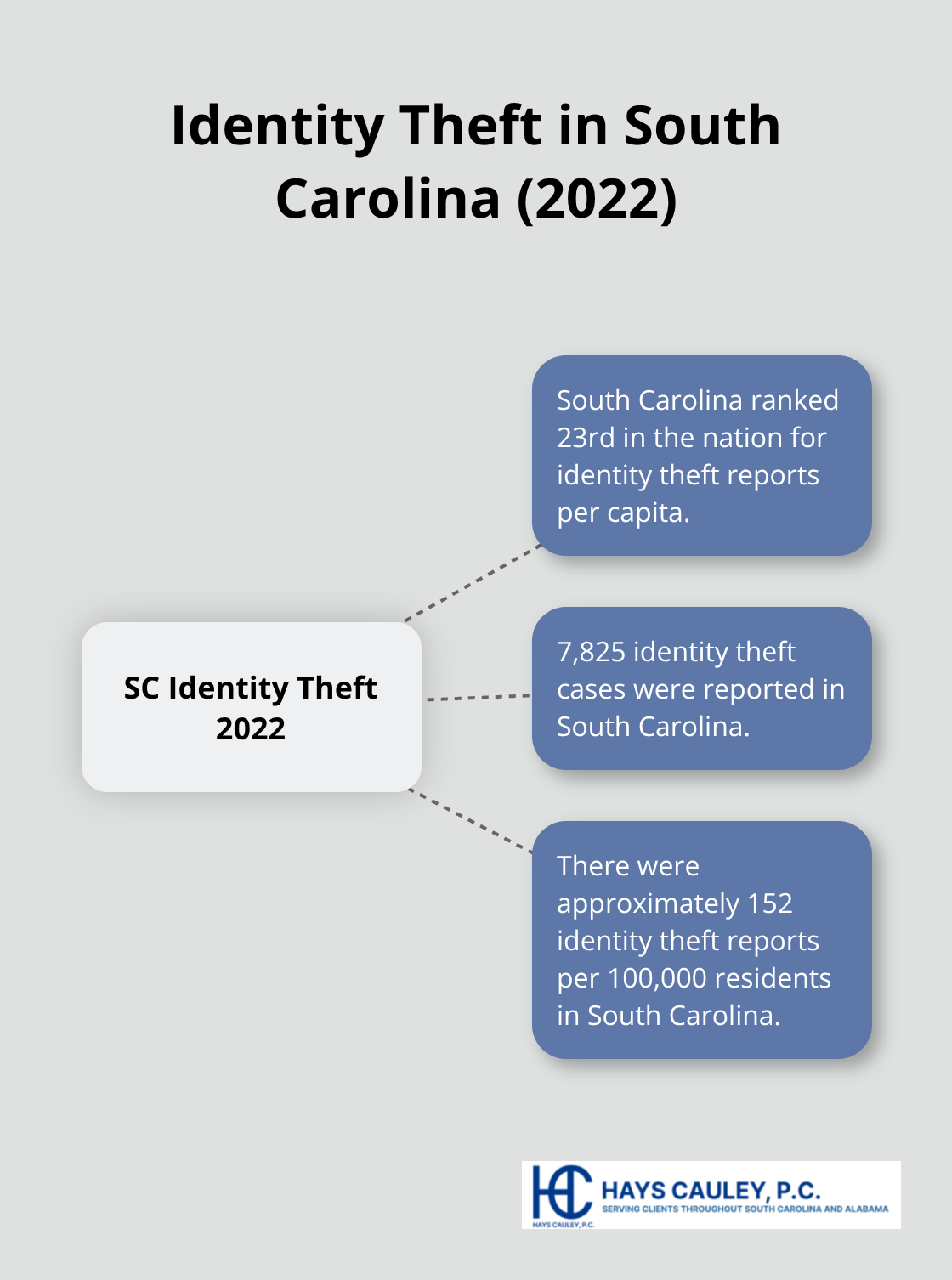
In 2022, the Federal Trade Commission reported over 1.1 million identity theft cases nationwide. South Carolina ranked 23rd in the nation for identity theft reports per capita, with 7,825 cases reported that year (about 152 reports per 100,000 residents). These numbers highlight the prevalence of this issue in our state.
Protecting Yourself from Identity Theft
To guard against identity theft, take these proactive steps:
- Monitor your credit reports regularly for suspicious activity
- Use strong, unique passwords for all online accounts
- Exercise caution when sharing personal information online or over the phone
- Shred documents containing sensitive information before discarding them
- Consider placing a fraud alert on credit reports to prevent unauthorized access
South Carolina residents can significantly reduce their risk of becoming identity theft victims through vigilance and these precautions. If you suspect you’ve been targeted, act quickly to report the issue and protect your financial well-being.
As we move forward, it’s important to understand how the Fair Credit Reporting Act (FCRA) provides additional protections against identity theft. This federal law offers crucial tools for consumers to safeguard their credit and personal information.
How the FCRA Protects You From Identity Theft
The Fair Credit Reporting Act (FCRA) serves as a powerful shield for South Carolina residents against identity theft. This federal law regulates how credit reporting agencies handle consumer information, providing essential safeguards for your financial identity.
Your Rights Under the FCRA
The FCRA grants you several key rights to protect your credit information:
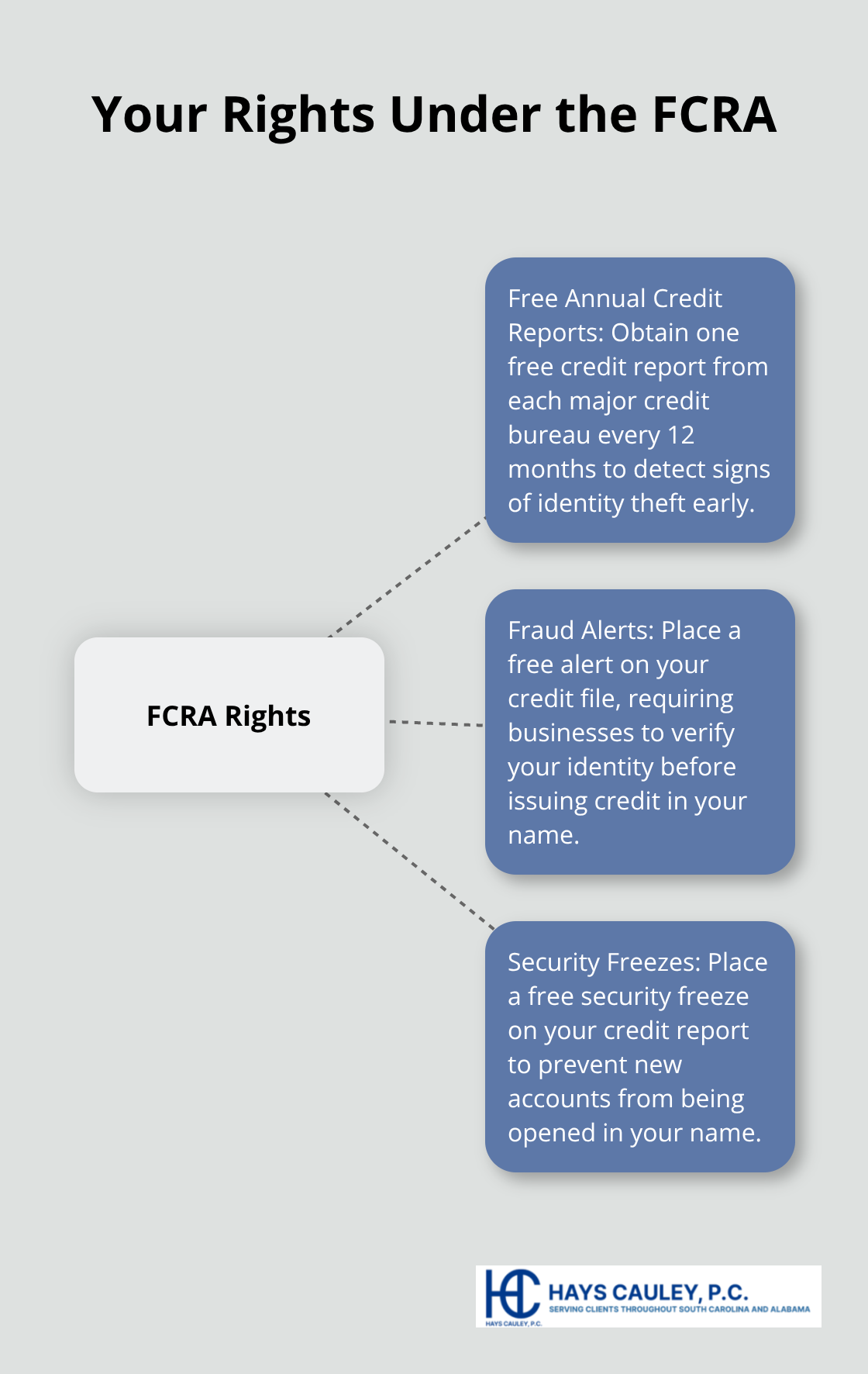
- Free Annual Credit Reports: You can obtain one free credit report from each major credit bureau (Equifax, Experian, and TransUnion) every 12 months. Regular reviews help you detect signs of identity theft early.
- Fraud Alerts: If you suspect identity theft, you can place a free fraud alert on your credit file. This alert requires businesses to verify your identity before issuing credit in your name (adding an extra layer of protection).
- Security Freezes: South Carolina law allows you to place a security freeze on your credit report at no cost. This freeze prevents new accounts from being opened in your name, effectively blocking identity thieves from accessing your credit information.
FCRA Protections Against Identity Theft
The FCRA includes specific provisions to combat identity theft:
- Information Blocking: As a victim of identity theft, you can request that fraudulent information be blocked from your credit report. Credit bureaus must comply within four business days of receiving your request and proper documentation.
- Active Duty Alerts: For military personnel, the FCRA provides active duty alerts. These alerts notify lenders that you’re on active military duty, prompting them to take extra steps to verify identity before granting credit.
- Identity Theft Reports: The FCRA recognizes identity theft reports filed with law enforcement. These reports are essential for exercising your rights and disputing fraudulent information on your credit report.
Disputing Inaccurate Information
If you find inaccurate information on your credit report due to identity theft, the FCRA outlines a process for disputing these entries:
- File a dispute with the credit bureau reporting the inaccurate information.
- The bureau must investigate within 30 days (45 days in some cases).
- If the information can’t be verified, it must be removed from your credit report.
Understanding and leveraging these FCRA protections can make a significant difference for identity theft victims in South Carolina. Knowledge of your rights under this law is your first line of defense against the lasting impacts of identity theft.
Now that you understand how the FCRA protects you, let’s explore the steps you should take if you become a victim of identity theft in South Carolina.
What Should You Do If You’re a Victim of Identity Theft in South Carolina?
Act Fast: The First 48 Hours
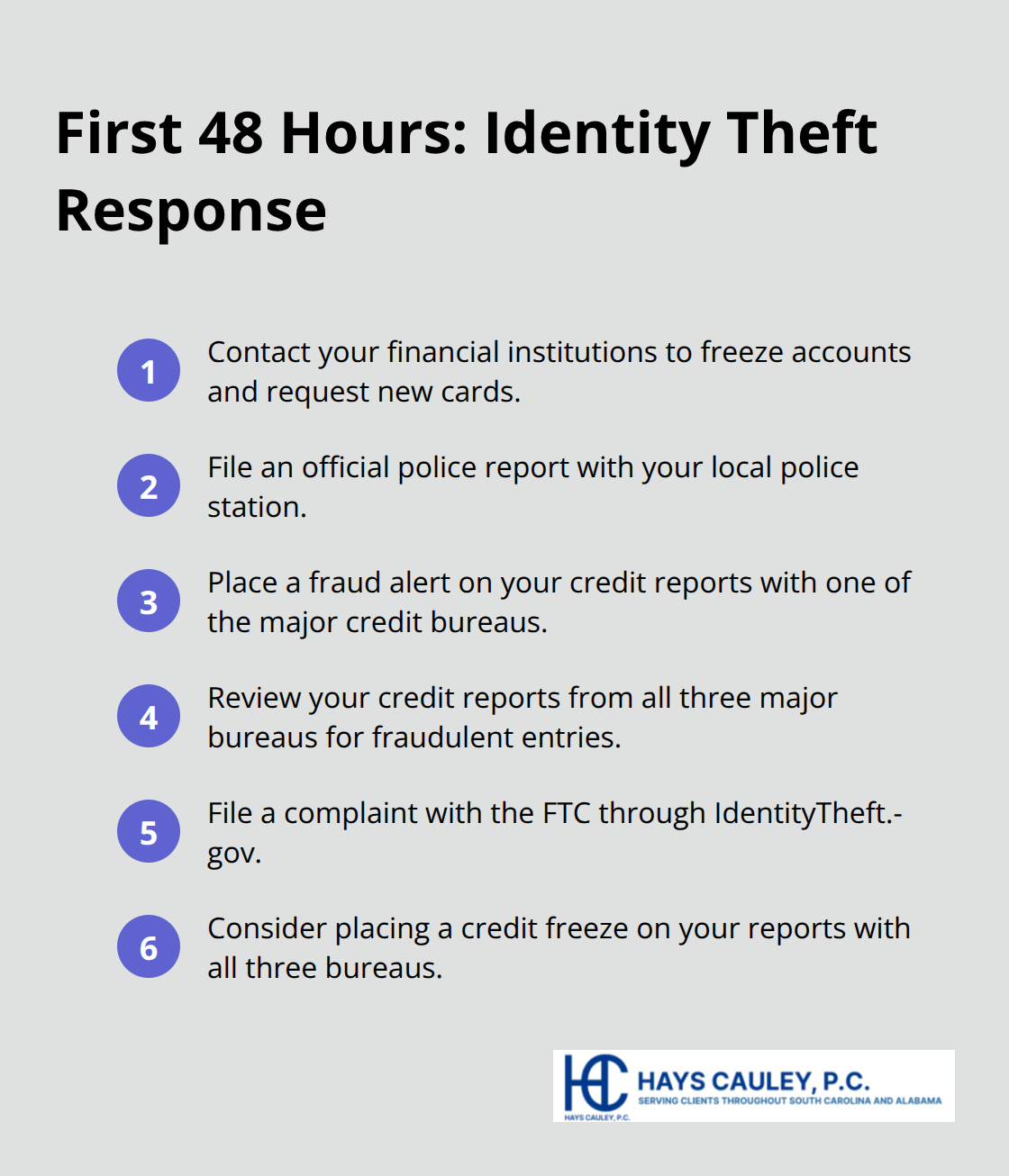
If you discover you’re a victim of identity theft in South Carolina, quick action is essential. The first 48 hours are critical to minimize damage and start the recovery process.
Contact Your Financial Institutions
Call your bank and credit card companies immediately. Inform them about the identity theft and ask them to freeze your accounts. This prevents further unauthorized transactions. Request new cards with different numbers for any compromised accounts.
File an Official Police Report
Go to your local police station to file an official identity theft report. This document is vital for disputing fraudulent charges and accounts. The South Carolina Law Enforcement Division (SLED) maintains a database of identity theft victims, which can aid in your recovery process.
Place a Fraud Alert on Your Credit Reports
Contact one of the three major credit bureaus (Equifax, Experian, or TransUnion) to place a fraud alert on your credit report. This alert lasts for one year and makes it harder for thieves to open new accounts in your name. The bureau you contact will notify the other two.
Review Your Credit Reports
Obtain free copies of your credit reports from all three major bureaus. Examine them for any accounts or inquiries you don’t recognize. Create a list of all fraudulent entries – you’ll need this for the dispute process.
File a Complaint with the FTC
Submit a complaint to the Federal Trade Commission (FTC) through their IdentityTheft.gov website. This generates an Identity Theft Report, which is essential for disputing fraudulent information on your credit reports.
Dispute Fraudulent Information
Send dispute letters to the credit bureaus for each fraudulent item on your credit reports. Include copies of your police report and FTC Identity Theft Report. Under the FCRA, credit bureaus must investigate and remove unverifiable information within 30 days (a requirement that protects consumers from long-term damage).
Consider a Credit Freeze
For long-term protection, place a credit freeze on your reports with all three bureaus. This makes it nearly impossible for anyone to open new accounts in your name. In South Carolina, credit freezes are free and can be lifted temporarily when you need to apply for credit.
Recovering from identity theft can be a complex process. If you feel overwhelmed, try to seek legal assistance. A consumer protection law firm (such as Hays Cauley, P.C.) can help South Carolina residents navigate the aftermath of identity theft and enforce their rights under the FCRA.
Final Thoughts
Identity theft poses a significant threat to South Carolina residents. The Fair Credit Reporting Act (FCRA) provides essential protections and rights to consumers who face the aftermath of identity theft. South Carolinians can reduce their risk through regular credit report monitoring, securing personal information, and staying informed about current scams.
Quick action limits damage if identity theft occurs. Contacting financial institutions, filing police reports, and placing fraud alerts initiate the recovery process. The South Carolina Department of Consumer Affairs and the Federal Trade Commission’s IdentityTheft.gov website offer valuable resources for victims.
Consumer protection attorneys can assist with the complexities of identity theft recovery and FCRA rights enforcement. We at Hays Cauley, P.C. stand ready to help South Carolina residents protect their financial well-being (and navigate the challenges of identity theft recovery).