

Identity theft is growing faster in South Carolina than many residents realize. Criminals are targeting personal data through methods that range from data breaches to stolen mail, and the consequences can take years to resolve.
At Hays Cauley, P.C., we help South Carolina residents recover from identity theft and understand how to prevent it. This guide covers identity theft tips for SC residents, practical protection steps, and what to do if theft happens to you.
How Identity Theft Happens in South Carolina
Criminals in South Carolina use remarkably simple methods to steal personal information, and data breaches occur far more frequently than most residents realize. The SC Department of Consumer Affairs tracks security breach notices dating back to 2015, revealing that breaches expose millions of records annually. Phishing emails remain one of the most effective tactics-criminals pose as legitimate companies to trick you into revealing Social Security numbers, bank account details, or credit card information. Mail theft poses an equally serious threat; criminals steal checks, tax documents, and financial statements directly from mailboxes. Public Wi-Fi networks at coffee shops and airports create another vulnerability, allowing hackers to intercept unencrypted financial transactions. Data breaches at retailers, healthcare providers, and financial institutions account for a significant portion of identity theft cases, often without your knowledge until fraudulent charges appear on your accounts.
Why Criminals Target South Carolina Residents
South Carolina’s population includes many retirees and small business owners-groups that criminals actively pursue because they often hold substantial financial assets and may lack familiarity with modern fraud tactics. The state’s growing digital economy means more personal data flows through business systems, which increases breach opportunities.
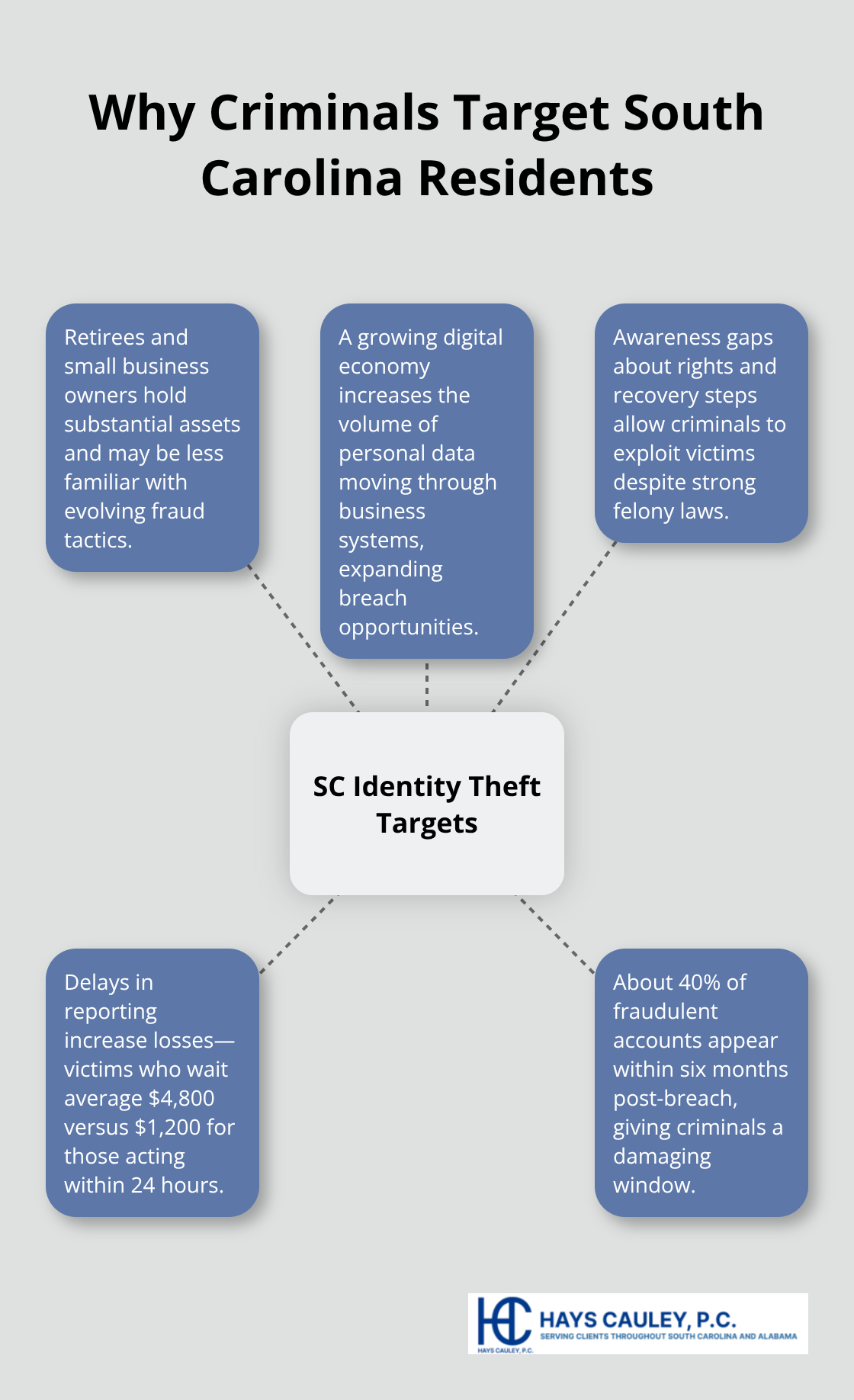
Criminals also understand that South Carolina law treats identity fraud as a felony, yet they rely on victims not knowing their rights or the recovery process. Federal Trade Commission data shows that victims who delay reporting lose an average of $4,800 compared to $1,200 for those who act within 24 hours-a gap that motivates criminals to target residents who won’t immediately contact authorities. Additionally, criminals know that about 40% of fraudulent accounts appear within six months after a breach, which gives them a window to cause substantial damage before detection.
The Speed of Financial Damage
Victims who follow systematic dispute processes typically restore pre-theft credit within 12 to 18 months, but those who delay or handle recovery haphazardly face 3 to 5 years of financial complications. The SC Department of Consumer Affairs notes that victims who document theft within 30 days resolve fraudulent debt issues about 85% faster than those who wait. When identity theft involves tax fraud, student loans, or misuse of government-issued identification, the recovery becomes exponentially more complex. Criminals can drain accounts, open credit lines, and file fraudulent tax returns within days once they possess your personal identifying information (Social Security number, driver’s license, or credit card numbers).
What Happens Next in Your Recovery
Understanding how identity theft occurs in South Carolina is the first step, but knowing what to do immediately after discovery determines whether you regain control of your finances quickly or spend years fighting fraudulent accounts. The actions you take in the first 24 hours can reduce your losses by up to 75% and accelerate your path to recovery.
How to Stop Identity Theft Before It Starts: Serving South Carolina, including Greenville, Columbia and Charleston
Monitor Your Credit Reports and Catch Fraud Early
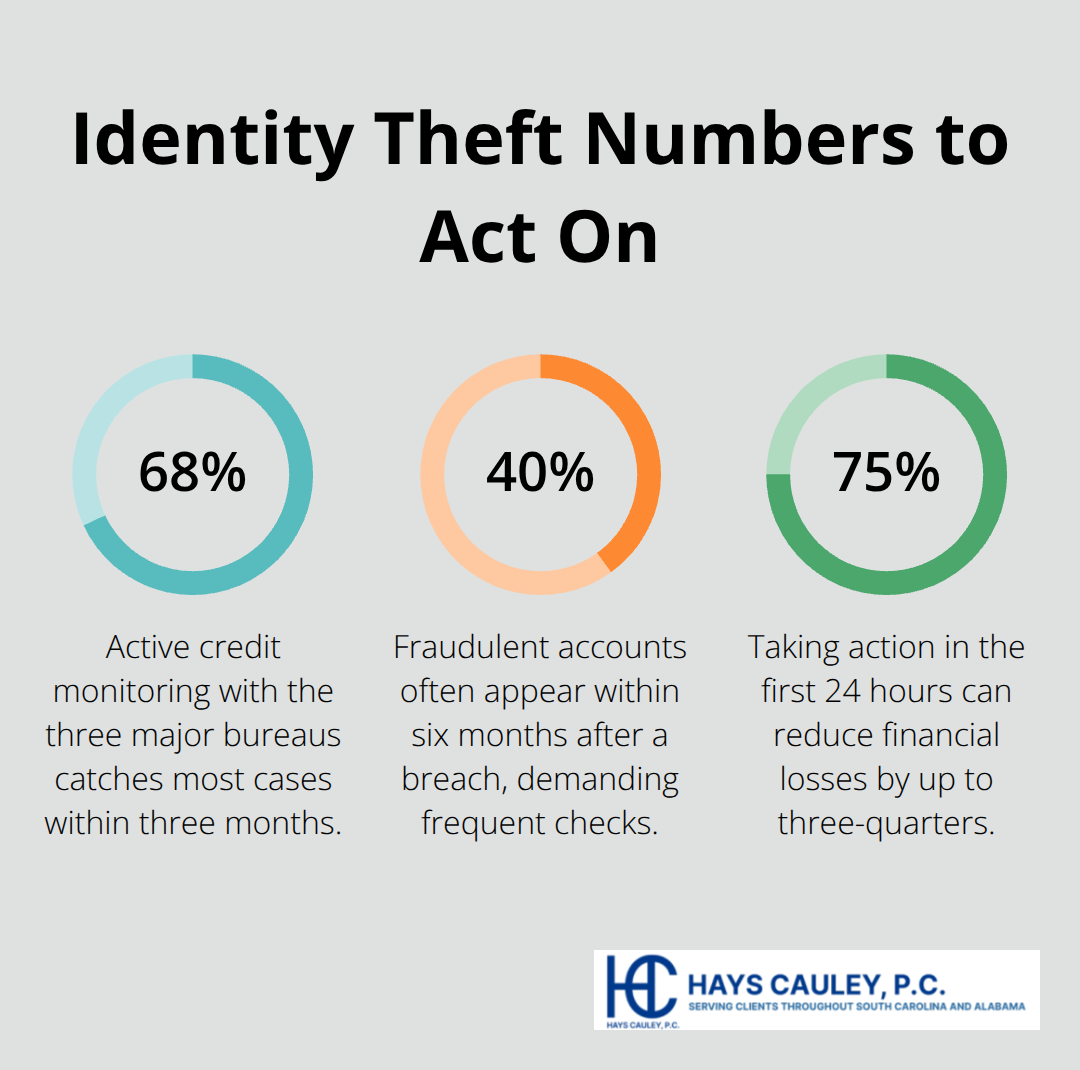
The Federal Trade Commission found that credit monitoring with the three major bureaus catches about 68% of identity theft cases within three months when victims actively monitor their accounts. Your vigilance directly determines whether fraud gets detected early or spirals into years of recovery. Obtain free credit reports from Equifax, Experian, and TransUnion through AnnualCreditReport.com and review them for unauthorized accounts, inquiries, or charges you don’t recognize. Check these reports at least quarterly, though monthly monitoring proves far more effective since about 40% of fraudulent accounts appear within six months of a breach.
Look specifically for new credit cards, loans, or accounts opened in your name, which indicate someone has already obtained your personal identifying information.
The SC Department of Consumer Affairs emphasizes that victims who document suspicious activity within 30 days resolve fraudulent debt issues about 85% faster than those who delay. The moment you spot something wrong, contact your bank or card issuer within 24 hours to limit losses and request fraud alerts with all three credit bureaus. This immediate action reduces your average loss from $4,800 to $1,200.
Protect Your Social Security Number and Financial Documents
Your Social Security number, driver’s license, and financial documents require the same protection you’d give to cash. Never carry your Social Security card in your wallet, never post identifying information on social media, and never share personal details via email or unsecured messaging platforms. Criminals actively monitor public Wi-Fi networks at coffee shops and airports, intercepting unencrypted financial transactions, so avoid checking bank accounts or making purchases over public internet connections.
Shred or securely destroy documents containing personal information before discarding them, as criminals still conduct dumpster diving for checks, tax documents, and statements. Place a credit freeze with all three bureaus if you’re not actively seeking new credit. In South Carolina, credit freezes cost nothing and must be processed within five business days, blocking criminals from opening accounts in your name even if they possess your Social Security number.
Strengthen Your Passwords and Enable Two-Factor Authentication
Use strong, unique passwords for each financial and government account, combining uppercase letters, numbers, and symbols, then enable two-factor authentication on every account that offers it. Two-factor authentication adds a second verification step that makes unauthorized access significantly harder. Consider using a password manager to generate and store complex passwords, eliminating the temptation to reuse weak ones across multiple accounts.
These protective measures create multiple barriers that stop criminals from accessing your accounts even when they obtain partial information. However, protection alone isn’t enough if theft has already occurred-knowing how to respond immediately after discovery determines whether you regain control of your finances quickly or spend years fighting fraudulent accounts.
What to Do Immediately After Identity Theft: Serving South Carolina, including Greenville, Columbia and Charleston
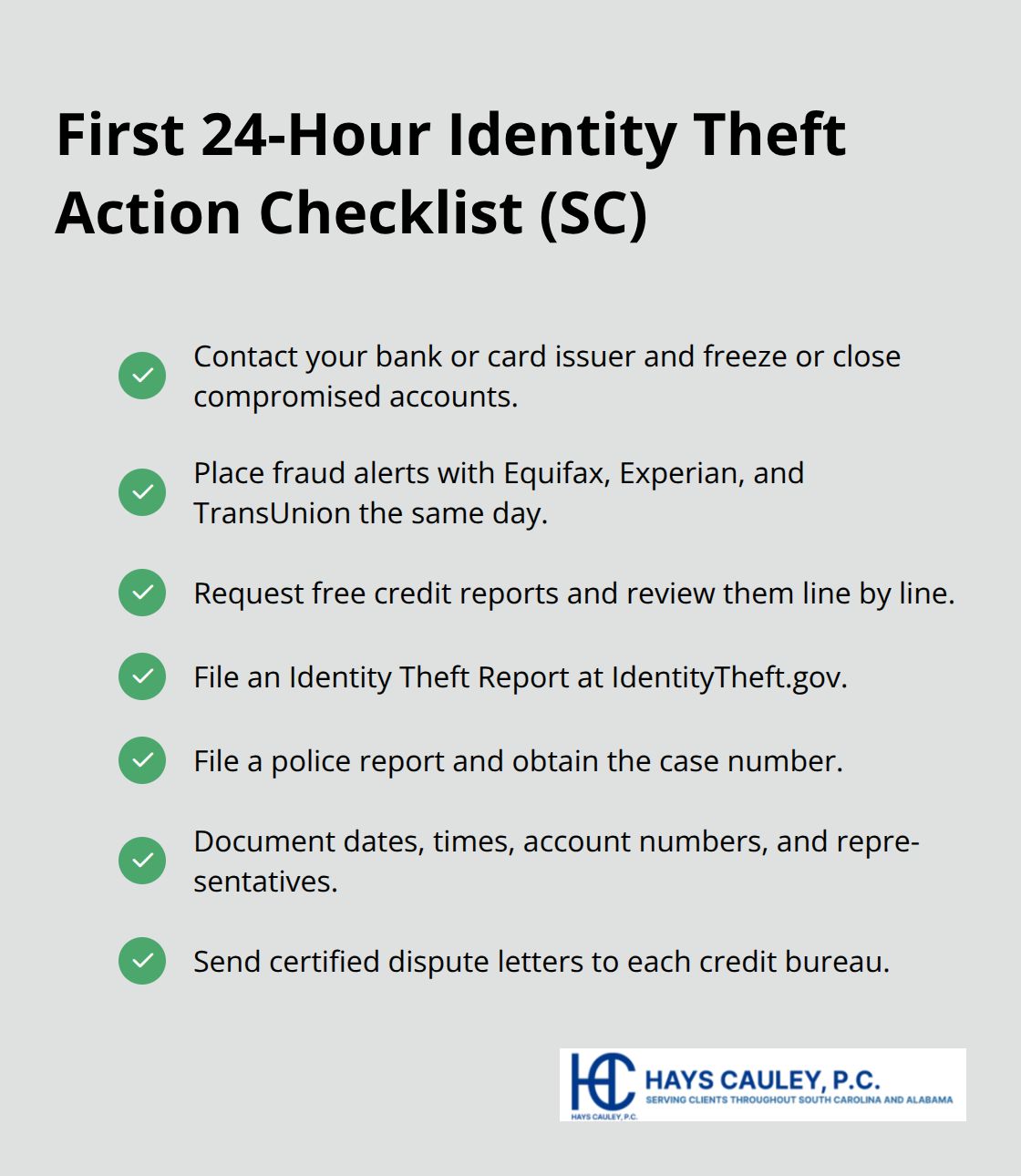
The first 24 hours after discovering identity theft determine whether you limit losses to around $1,200 or face an average loss of $4,800. Contact your bank or credit card issuer immediately if you notice fraudulent charges, and request that they freeze or close compromised accounts. Call all three credit bureaus-Equifax, Experian, and TransUnion-to place fraud alerts on your accounts within the same day. Fraud alerts typically process in under 10 minutes per bureau and provide 90 days of protection that prevents criminals from opening new accounts in your name.
Act Fast: Secure Your Credit Reports
Request free credit reports from all three bureaus through AnnualCreditReport.com and examine them line by line for accounts you didn’t open, credit inquiries you didn’t authorize, or addresses that don’t match your records. Document everything you find in writing, noting dates, times, account numbers, and the names of representatives you spoke with. This documentation becomes critical evidence if you later need to dispute fraudulent accounts or work with law enforcement. File an official Identity Theft Report at IdentityTheft.gov, which generates a recovery plan that creditors and government agencies accept as proof of your status as a victim.
The SC Department of Consumer Affairs confirms that victims who document suspicious activity within 30 days resolve fraudulent debt issues about 85% faster than those who delay action.
File Police Reports and Coordinate with Authorities
File a police report with your local law enforcement agency regardless of where the theft occurred or the amount involved, and request a case number and copies of the report for your records. South Carolina law treats identity fraud as a felony under SC Code § 16-13-510, which means law enforcement takes these cases seriously when you provide documentation of the crime. The State Law Enforcement Division (SLED) maintains confidential victim records that support your claims in disputes with creditors and credit bureaus.
Send written dispute letters to each credit bureau using certified mail with return receipt requested, listing every fraudulent account and explaining why each entry is inaccurate. Credit bureaus must investigate your disputes within 30 days and remove inaccurate information or provide written explanation if they believe the information is accurate. Follow up weekly with detectives investigating your case, as persistence directly influences whether they prioritize your file. Victims who actively engage with investigators and follow systematic dispute processes typically restore pre-theft credit within 12 to 18 months, compared to 3 to 5 years for those who handle recovery haphazardly.
Replace Compromised Documents and Accounts
Replace all compromised documents promptly, including your driver’s license, Social Security card, and any financial accounts that were accessed fraudulently. Request new accounts from banks and credit card issuers with different account numbers and PINs to prevent criminals from accessing the same compromised accounts. These steps create a fresh financial foundation and eliminate pathways that criminals used to cause damage.
Pursue Legal Action for Complex Cases
Identity theft cases involving tax fraud, student loans, or misuse of government-issued identification require professional legal assistance because these crimes create complications that standard dispute processes cannot resolve. Under South Carolina law, victims can recover civil damages of three times actual losses or $3,000 per incident, whichever is greater, and courts can mandate restitution from the perpetrator. An attorney helps you file for judicial determination of factual innocence if crimes used your stolen identity, which removes the burden of proving your innocence in future disputes. Complex cases also benefit from professional negotiation with creditors who may be unwilling to remove fraudulent accounts without legal pressure. Contact the SC Department of Consumer Affairs at 803-734-4200 or 800-922-1594 if you need guidance on local resources, or reach out to Hays Cauley, P.C. to discuss your specific situation and recovery options.
Final Thoughts
Identity theft prevention in South Carolina requires immediate action, consistent monitoring, and professional support when theft occurs. The identity theft tips SC residents need most are straightforward: monitor credit reports monthly, protect your Social Security number, use strong passwords with two-factor authentication, and act within 24 hours if fraud appears. Victims who document suspicious activity within 30 days resolve fraudulent debt issues about 85% faster than those who delay, making speed your most valuable asset in recovery.
South Carolina provides substantial resources through the SC Department of Consumer Affairs, which offers free credit freezes, security breach notices dating back to 2015, and the Identity Theft Toolkit with state-specific forms and checklists. Contact them at 803-734-4200 or 800-922-1594 for guidance on local resources and community education presentations. File your official Identity Theft Report at IdentityTheft.gov to generate a recovery plan that creditors accept, and file a police report with your local law enforcement agency to create documented evidence of the crime.
Complex cases involving tax fraud, student loans, or government-issued identification require legal assistance that standard dispute processes cannot provide. We at Hays Cauley, P.C. help South Carolina residents recover from identity theft by handling credit reporting disputes, negotiating with creditors, and pursuing civil damages on your behalf. Contact Hays Cauley, P.C. to discuss your specific situation and recovery options.